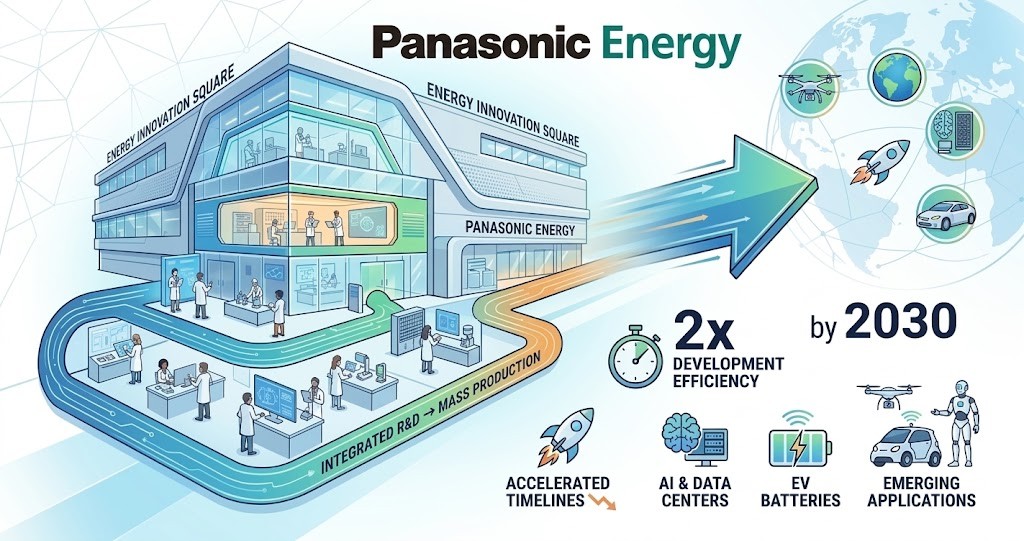
パナソニックグループの電池事業を担うパナソニック エナジーが、国内最大級の新たな研究開発拠点を本格稼働させました。EV市場やAI技術の急速な発展に伴い、高機能なリチウムイオン電池の需要が高まる中、開発体制の一元化によるスピードアップとグローバル競争力の強化を目指す取り組みです。
ニュースの概要と関連情報を以下にまとめます。
ニュースの概要
- 拠点名称と場所: 「エナジーイノベーションスクエア」(大阪府門真市)
- 施設の規模: 6階建て、延べ床面積 約2万4,500平方メートル
- 開発体制:
- 企画・技術開発・解析部門などの約500人を集約。
- 量産技術開発を担う住之江拠点(大阪市)と合わせ、国内最大級となる約800人体制を構築。
- 主な目標:
- 材料開発・設計・試作から量産化までの一貫体制を確立。
- 輸送期間を15パーセント以上短縮し、デジタル基盤(シミュレーションと実機データの連携)を活用。
- 2030年度までに開発効率を2023年度比で2倍に向上させる。
- 対象分野: 車載用、AIデータセンター用、将来的なドローン・ロボタクシー・ヒューマノイドロボット用など。
関連情報(背景・補足)
- 車載用電池(4680セルなど)の開発背景:
- パナソニック エナジーは、テスラをはじめとするEVメーカー向けに次世代の円筒形リチウムイオン電池「4680」などの開発を進めています。高容量化と高耐久化、さらにコスト削減が世界的に激しい開発競争の焦点となっています。
- AIデータセンター向け需要の急増:
- 生成AIの普及に伴い、データセンターの消費電力が急増しています。停電時のバックアップ電源や電力負荷の平準化(蓄電システム)として、高出力かつ安全性の高いリチウムイオン電池の重要性が急高長しています。
- グローバル生産拠点との連携:
- 同社は米ネバダ州の既存工場に加え、カンザス州に大規模なEV用電池工場を建設するなど北米での投資を強化しています。門真の新拠点(マザー機能)で開発・確立した先端技術や生産ノウハウを、これら海外工場へ迅速に横展開(マザー工場体制)する戦略をとっています。
出典:https://www.nikkei.com/article/DGXZQOUF165NL0W6A910C2000000/
Panasonic Energy Aims to Double Efficiency through Consolidated R&D: New Kadoma Base “Energy Innovation Square” Operational
Panasonic Energy, the battery arm of the Panasonic Group, has fully launched operations at a new, major R&D center in Japan. Amid rising demand for high-performance lithium-ion batteries driven by the rapid growth of the EV market and AI technologies, this initiative aims to accelerate speed and boost global competitiveness by centralizing the development system.
Below is a summary of the news and related context.
News Summary
- Facility Name & Location: “Energy Innovation Square” (Kadoma City, Osaka Prefecture)
- Facility Scale: 6 stories, total floor area of approximately 24,500 square meters
- Development Structure:
- Consolidated approximately 500 employees from planning, technology development, and analysis departments.
- Combined with the Suminoe base (Osaka City), which handles mass-production technology development, the total workforce reaches about 800 people, forming one of the largest battery development hubs in Japan.
- Key Goals:
- Establish an integrated system covering material development, design, prototyping, and mass production.
- Reduce transport-related development time by over 15 percent and utilize digital infrastructure (integrating simulation and actual vehicle evaluation data).
- Double development efficiency by FY2030 compared to FY2023.
- Target Applications: Automotive, AI data centers, and future uses such as drones, robotaxis, and humanoid robots.
Related Context (Background & Supplemental Info)
- Development Background of Automotive Batteries (4680 Cells, etc.): Panasonic Energy is advancing the development of next-generation cylindrical lithium-ion batteries, such as the 4680 cell, for EV manufacturers including Tesla. Achieving higher capacity, greater durability, and cost reductions are key focal points in a fiercely competitive global market.
- Surging Demand for AI Data Centers: With the spread of generative AI, power consumption in data centers is growing rapidly. High-output, safe lithium-ion batteries are becoming increasingly vital for backup power during outages and load balancing in energy storage systems.
- Integration with Global Production Bases: The company is strengthening its investments in North America, expanding its existing plant in Nevada and building a large-scale EV battery plant in Kansas. Its strategy is to rapidly deploy advanced technologies and production know-how developed at the Kadoma mother site to these overseas facilities.
コメント