中国の車載電池大手であるCATL(寧徳時代新能源科技)が、欧州の展示会において商用車向けの次世代電池ソリューションを発表しました。商用車の電動化(eモビリティ)は、長距離走行や急速充電、積載量の確保といった課題が多く、各社が開発にしのぎを削る領域です。今回発表された新技術は、航続距離の大幅向上だけでなく、車両メーカーの開発コスト削減や大手物流企業との連携まで見据えた包括的な戦略となっています。
ニュースの概要と関連情報を以下にまとめます。
ニュースの概要
- 発表内容: 次世代商用車向け電池ソリューション「TECTRANS II」を国際見本市「IAAトランスポーテーション」で発表。
- 主な性能と特徴:
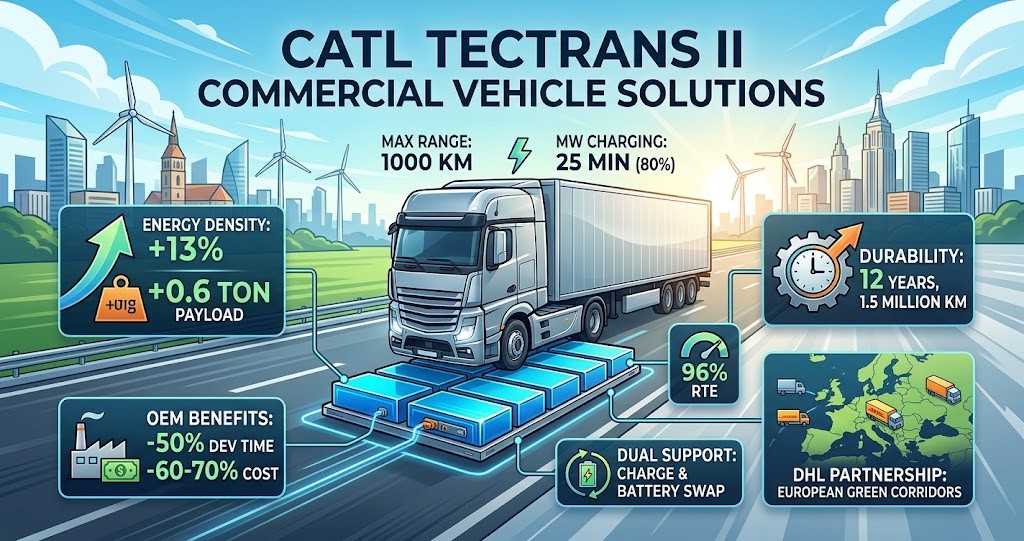
- 航続距離: 標準化された電池パックの組合せにより、最大1000キロメートルの走行が可能。
- 充電・充電方式: 充電と電池交換(バッテリースワップ)の両方に対応。メガワット級の急速充電により25分で80パーセントまで充電可能。
- エネルギー密度: 質量エネルギー密度は170ワット時毎キログラム(Wh/kg)で、業界平均を約13パーセント上回る。車両積載量を約0.6トン向上。
- 寿命と効率: 往復効率(RTE)96パーセントを達成。大型トラック向けで12年・150万キロメートルの耐用年数(容量維持率70パーセント)を想定。
- メーカー・市場側のメリット:
- モジュラー設計と共通規格化により、車両開発サイクルを50パーセント短縮、開発コストを60から70パーセント削減。
- 連携事業: 独物流大手DHLグループと覚書を締結し、欧州全域で「グリーン貨物輸送回廊」の構築や実証導入を推進。
関連情報(背景・補足)
- 商用車EV化の課題とメガワット充電:
- 乗用車に比べ重量が大きく長距離を走るトラックなどの商用車では、従来の急速充電器では充電に膨大な時間がかかる点が普及の壁でした。そのため、出力が1メガワット(1000キロワット)を超えるメガワット充電システム(MCS)規格の導入や、電池自体を丸ごと交換するステーションの活用がグローバルで急ピッチに進められています。
- CATLのグローバル戦略と欧州市場:
- CATLは世界最大の車載電池メーカーであり、中国国内にとどまらず欧州への展開を強化しています。ハンガリーでの大規模な電池工場の建設などを通じ、欧州の自動車メーカーや物流企業とのサプライチェーン構築を急速に進めています。
- 標準化・モジュール化の潮流:
- 電池のサイズや通信規格を標準化(モジュール化)することで、複数の車体デザインに同じ電池パックを使い回せるようになります。これにより、新車開発の初期投資を抑え、商用車メーカーが電動化へ参入するハードルを劇的に下げる狙いがあります。
出典:https://www.auto-affairs.com/freearticles/129274-2026-09-16-04-54-26.html
CATL Unveils Next-Generation Commercial Vehicle Batteries, Achieving 1,000 km Range and 25-Minute Fast Charging
CATL (Contemporary Amperex Technology Co., Limited), the Chinese automotive battery giant, announced its next-generation battery solution for commercial vehicles at a trade show in Europe. Commercial vehicle electrification (e-mobility) presents numerous challenges, such as securing long driving ranges, fast charging, and sufficient payload capacity, making it a field where companies are competing fiercely. The newly announced technology is part of a comprehensive strategy that not only significantly improves driving range, but also aims to reduce development costs for vehicle manufacturers and facilitate partnerships with major logistics companies.
Below is a summary of the news overview and related background information.
News Overview
- Announcement: Unveiled “TECTRANS II,” a battery solution for next-generation commercial vehicles, at the IAA Transportation international trade fair.
- Key Performance and Features:
- Driving Range: Enables a maximum range of up to 1,000 kilometers by combining standardized battery packs.
- Charging Method: Supports both plugging-in and battery swapping. Megawatt-level fast charging allows an 80 percent charge in 25 minutes.
- Energy Density: Gravimetric energy density reaches 170 watt-hours per kilogram (Wh/kg), exceeding the industry average by approximately 13 percent. Increases vehicle payload capacity by about 0.6 tons.
- Lifespan and Efficiency: Achieves a system round-trip efficiency (RTE) of 96 percent. Designed for heavy-duty trucks with an expected lifespan of 12 years or 1.5 million kilometers (retaining a 70 percent capacity retention rate).
- Benefits for Manufacturers and the Market: Modular design and standardization reduce vehicle development cycles by 50 percent and cut development costs by 60 to 70 percent.
- Partnerships: Signed a memorandum of understanding (MOU) with German logistics giant DHL Group to build a “Green Freight Corridor” across Europe and promote trial deployments.
Related Information (Background and Context)
- Challenges in Commercial EV Adoption and Megawatt Charging: For heavy, long-haul commercial vehicles like trucks, long charging times with conventional fast chargers have been a bottleneck. As a result, the global adoption of the Megawatt Charging System (MCS) standard (exceeding 1 megawatt or 1,000 kilowatts) and the use of battery swapping stations are rapidly accelerating.
- CATL’s Global Strategy and the European Market: As the world’s largest automotive battery maker, CATL is expanding aggressively into Europe. Through projects like building a large-scale battery plant in Hungary, the company is swiftly establishing supply chains with European automakers and logistics firms.
- Trend Toward Standardization and Modularity: Standardizing battery dimensions and communication protocols allows the same battery packs to be shared across various vehicle designs. This lowers initial investment costs for new vehicle development and significantly reduces the entry barrier for commercial vehicle manufacturers entering the EV market.
コメント