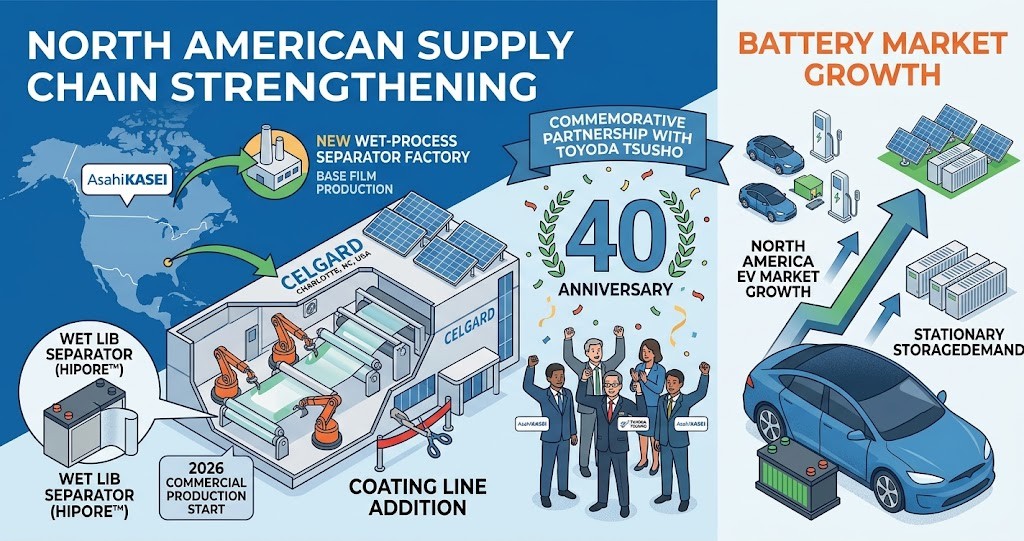
北米における電気自動車(EV)や蓄電池市場の成長を見据え、大手総合化学メーカーである旭化成が電池材料の現地サプライチェーン強化に向けた大きな一手を図りました。ニュースの要点と、セパレーター技術の背景や同社の北米戦略などの関連情報をまとめて解説します。
ニュースの要点
- 新ラインの開設: 旭化成は米国ノースカロライナ州シャーロットのCelgard(セルガード)製造施設内に、湿式リチウムイオン電池セパレーター「Hipore(ハイポア)」のコーティングラインを増設し開所式を開催しました。
- 稼働開始時期: 2023年に投資決定された本設備は、2026年度下半期に商業生産を開始する予定です。
- 提携と節目: Celgardの40周年と重なる開所式には、生産能力に関する契約を結んだ豊田通商の代表者らが出席しました。
- 地域供給体制の確立: カナダで建設が進む湿式セパレーターの製膜工場と今回のシャーロットのコーティングラインを組み合わせることで、北米内での一貫した湿式セパレーター供給網を構築します。
関連情報・解説
1. 電池セパレーターと「湿式」「乾式」の違い セパレーターはリチウムイオン電池の正極と負極を隔離し、ショートを防ぎつつイオンを行き来させる重要部材です。
- 乾式(Celgardブランド): 機械的に伸ばして微細な孔をあける手法。製造コストが低く熱安定性に優れるため、エネルギー貯蔵システム(ESS)などに強みを持ちます。
- 湿式(Hiporeブランド): 溶剤を使って孔をあける手法。薄く均一で強度が極めて高いため、高エネルギー密度が求められる乗用EV向けに多く採用されます。
今回の増設により、旭化成は北米現地で「乾式」と「湿式」の両方をカバーする強固な製品ポートフォリオを完成させました。
2. 北米市場(IRA法)と地産地消の重要性 米国のインフレ削減法(IRA)などの影響により、北米市場では電池部材の現地調達比率を高めることが要求されています。セパレーター市場の競争は激化しているものの、旭化成が生産・加工拠点を北米に近接させることで、自動車メーカーや電池メーカーの需要に迅速かつ税制優遇に沿った形で応えることが可能となります。
3. エネルギー・インフラ分野を掲げる旭化成の戦略 旭化成は中期経営計画において、電池材料を含むエネルギー・インフラ分野を最重点の成長事業(10 Growth Drivers)の筆頭に掲げています。EV需要の短期的な変動にとどまらず、需要拡大が著しいエネルギー貯蔵システム(ESS)向けを含めた中長期的な北米エネルギー市場の成長を取り込む狙いがあります。
Asahi Kasei Opens New Line in North Carolina, Strengthening Its North American Supply Chain for Wet-Process Battery Separators
Looking ahead to the growth of the electric vehicle (EV) and energy storage system markets in North America, major diversified chemical manufacturer Asahi Kasei has taken a major step toward strengthening its local supply chain for battery materials. Below is a summary of the main news points, along with relevant contextual information including the background of separator technology and the company’s North American strategy.
Key Highlights of the News
- Opening of a New Line: Asahi Kasei added a coating line for its “Hipore” wet-process lithium-ion battery separator at the Celgard manufacturing facility in Charlotte, North Carolina, USA, and held a grand opening ceremony.
- Commercial Operation Date: Decided upon in 2023, the facility is scheduled to begin commercial production in the second half of fiscal year 2026.
- Partnership and Milestone: The opening ceremony, which coincided with the 40th anniversary of Celgard, was attended by representatives from Toyota Tsusho, with whom an agreement regarding manufacturing capacity was concluded.
- Establishing a Regional Supply System: By combining the coating line in Charlotte with the wet-process separator membrane manufacturing plant under construction in Canada, Asahi Kasei will build an integrated wet-process separator supply chain within North America.
Related Context and Analysis
1. Difference Between “Wet-Process” and “Dry-Process” Battery Separators Separators are critical components that isolate the positive and negative electrodes of lithium-ion batteries to prevent short circuits while allowing ions to pass through.
- Dry-Process (Celgard Brand): A method that forms micropores by stretching the material mechanically. Offering lower manufacturing costs and excellent thermal stability, it excels in applications such as energy storage systems (ESS).
- Wet-Process (Hipore Brand): A method that creates pores using solvents. Thin, uniform, and exceptionally strong, it is widely used in passenger EVs where high energy density is required.
With this expansion, Asahi Kasei has completed a robust product portfolio in North America covering both “dry” and “wet” processes locally.
2. The North American Market (IRA) and the Importance of Local Production for Local Consumption Driven by measures such as the US Inflation Reduction Act (IRA), the North American market demands a higher ratio of locally sourced battery components. Although competition in the separator market remains intense, positioning production and processing bases close to North American customers enables Asahi Kasei to respond swiftly to the needs of automakers and battery manufacturers while aligning with tax incentive requirements.
3. Asahi Kasei’s Strategy for the Energy & Infrastructure Sector In its medium-term management plan, Asahi Kasei positions the Energy & Infrastructure sector, including battery materials, as a primary growth driver among its “10 Growth Drivers.” Beyond short-term fluctuations in EV demand, the company aims to capture the mid- to long-term growth of the North American energy market, including the rapidly expanding demand for energy storage systems (ESS).
コメント