ハンガリー政府が電気自動車(EV)用バッテリー工場や関連産業に対する環境規制を大幅に強化することを発表しました。政権交代に伴う産業政策の転換や、相次ぐ環境汚染トラブルを受けた今回の措置について、要点と背景情報をまとめています。
要約と関連解説
1. 今回の発表の要点
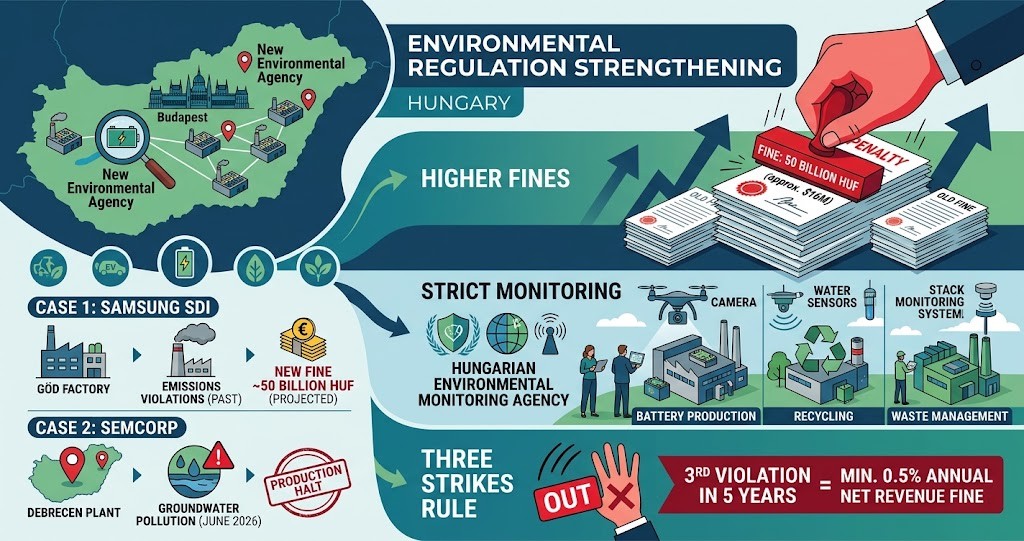
- 新監視機関の設立: バッテリーの製造、リサイクル、廃棄工程を厳格に監督・監視する新たな環境機関を立ち上げ。
- 最高罰金額の大幅引き上げ: 環境違反に対する最高罰金額を50億フォリント(約1,600万ドル)に増額。
- 「スリーストライク制」の導入: 大企業が5年以内に3度の環境規制違反を犯した場合、最低でも年間純収益の0.5 %に相当する厳罰を適用。
- 具体例としてのサムスンSDIへの言及: 過去に排出基準超過で複数回の罰金を受けていたサムスンSDI(Samsung SDI)のゴド工場を挙げ、新制度下では約50億フォリント規模の最低罰金が科される見通しを示唆。
- 環境汚染による操業停止事例: 2026年6月に中国の電池部材大手セムコープ(Semcorp)のデブレツェン工場で地下水(アルミニウム)汚染が発覚し、当局により生産許可が停止された事例などが背景。
2. 関連情報・背景解説
オルバン前政権の「バッテリーハブ構想」からの転換
ハンガリーは前首相のヴィクトル・オルバン(Viktor Orban)政権下で、アジア企業の誘致を積極的に推進してきました。中国のCATLやセムコープ、韓国のサムスンSDIやSK Onなどの巨大工場を誘致し、ハンガリーを「ヨーロッパにおけるEVバッテリー製造の世界的拠点」とすることを目指していました。しかし、2026年4月の政権交代により、経済優先から住民の健康や環境保全を重視する方針へと明確な転換が行われました。
バッテリー工場を巡る地域住民の反発と環境リスク
バッテリー製造およびリサイクル工程では、大量の工業用水の使用、有害化学物質(NMPなどの有機溶媒や重金属)の管理、有害物質を含む排水・排気の抑制が課題となります。ハンガリー国内では、地下水汚染や有毒物質の漏洩リスクに対する地域住民の不安が急速に高まっており、各地で抗議デモや操業停止を求める運動が激化していました。
バッテリー業界およびサプライチェーンへの影響
ハンガリーに大規模な生産拠点を置く韓国系・中国系のバッテリーメーカーや部材メーカーは、環境対策投資の増額、水処理・排気処理プロトコルの刷新、法務リスクの再評価を余儀なくされます。EU域内での環境・ESG規制(EUバッテリー規制など)が強まる中、工場運用におけるコンプライアンスの遵守がより一層厳しく問われることになります。
Shockwaves Through the European EV Supply Chain: Hungary Sets Maximum Fine of $16 Million for Environmentally Non-Compliant Battery Plants
The Hungarian government has announced a major tightening of environmental regulations targeting electric vehicle (EV) battery plants and related industries. Below is a summary of the key takeaways and background information surrounding this measure, driven by a shift in industrial policy following a government change and a series of environmental contamination issues.
Summary and Contextual Overview
- Key Takeaways from the Announcement
- Establishment of a New Oversight Body: Launching a new environmental agency to strictly supervise and monitor battery manufacturing, recycling, and disposal processes.
- Substantial Increase in Maximum Fines: Raising the maximum penalty for environmental violations to 5 billion HUF (approximately $16 million).
- Introduction of a “Three-Strikes” Rule: Large corporations committing three environmental violations within a five-year period will face a severe penalty equivalent to at least 0.5% of their annual net revenue.
- Explicit Reference to Samsung SDI: Citing Samsung SDI’s God plant, which had previously faced multiple fines for exceeding emission standards, and indicating that under the new system, it would face a minimum fine of approximately 5 billion HUF.
- Cases of Suspended Operations Due to Contamination: Background includes incidents such as June 2026, when authorities suspended the production permit for Chinese battery component giant Semcorp’s Debrecen plant after discovering groundwater (aluminum) contamination.
- Related Context and Background Analysis
Shift Away from the Former Orban Administration’s “Battery Hub” Vision Under former Prime Minister Viktor Orban, Hungary aggressively promoted the attraction of Asian enterprises. By bringing in mega-factories from China’s CATL and Semcorp, as well as South Korea’s Samsung SDI and SK On, the administration aimed to make Hungary a global epicenter for European EV battery manufacturing. However, following the change of government in April 2026, a clear pivot occurred from prioritizing economic growth to emphasizing public health and environmental protection.
Local Resistance and Environmental Risks Surrounding Battery Plants Battery manufacturing and recycling processes involve heavy industrial water usage, management of toxic chemicals (such as organic solvents like NMP and heavy metals), and the suppression of hazardous wastewater and gas emissions. In Hungary, public anxiety over groundwater contamination and toxic leak risks surged rapidly, triggering intensified protests and campaigns demanding plant shutdowns across various regions.
Impact on the Battery Industry and Supply Chain South Korean and Chinese battery and component manufacturers operating large-scale production bases in Hungary will now be forced to increase environmental compliance investments, overhaul water and air treatment protocols, and re-evaluate legal risks. As environmental and ESG regulations tighten across the EU (such as the EU Battery Regulation), strict adherence to compliance in plant operations will be demanded more rigorously than ever.
コメント