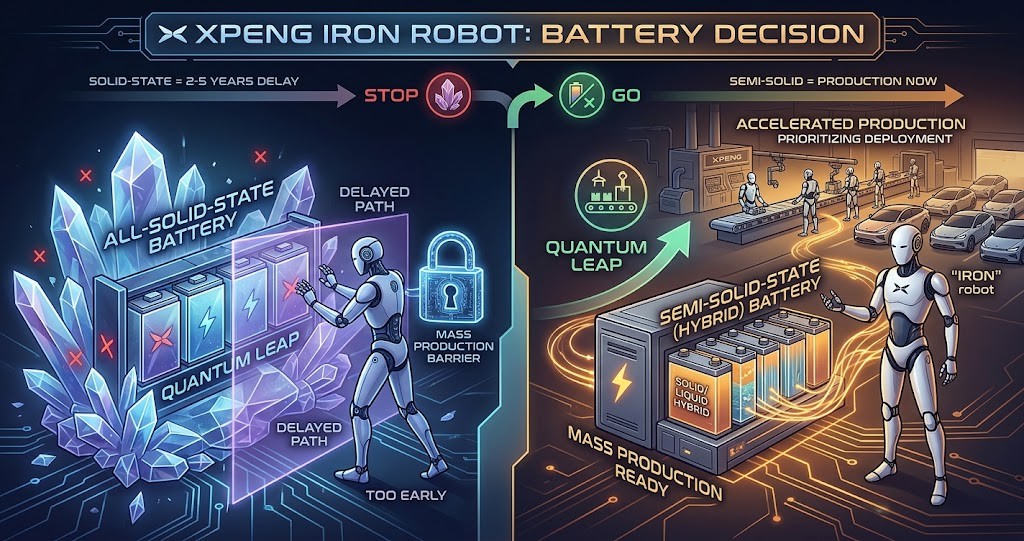
EV大手の中国・小鵬汽車(Xpeng)が、開発中の人型ロボット「Iron」への全固体電池の搭載を見送り、半固体電池(固体・液体ハイブリッド型電池)の採用へと切り替えたことが報じられました。量産スケジュールを優先した実用的な判断と、全固体電池が直面する量産化の壁、人型ロボット市場と電池技術の関係性についての要点と背景情報をまとめています。
要約と関連解説
1. 今回の発表の要点
- バッテリー戦略の変更: Xpengは人型ロボット「Iron」の量産版において、全固体電池から高エネルギー型の半固体電池(固体・液体ハイブリッド型)への移行を決定。
- 背景と理由: 2025年11月時点では全固体電池の搭載を公表していたが、主要メーカーからの調達が要件を満たさず、2026年末に予定されているIronの量産開始に向けた供給リスクを抑えるため戦略を修正。
- 採用セルの形態とサプライヤー: 円筒形ではなくエネルギー密度と安全性に優れる「パウチ型」を採用。主要サプライヤーとして中国のセカンドティア電池メーカーを選定しつつ、他社サンプルのテストも継続。
- Ironの量産・販売ロードマップ: 2026年末までに自社店舗や工場向けに量産を開始し、2027年に一般販売を予定。ロボット事業を手掛ける傘下のDogotixは、9億ドル以上の資金調達を実施し企業価値が63億ドルを超過。
2. 関連情報・背景解説
全固体電池の工業化における壁と段階的アプローチ
全固体電池は、高いエネルギー密度と優れた安全性を兼ね備え、次世代電池の本命とされています。しかし、コスト、性能の安定性、大量生産時の一貫性(歩留まり)など課題が多く、依然として実験室レベルからパイロット生産の域を出ていません。CATLのロビン・ゼン会長も、全固体電池の量産準備度をレベル1から9までの段階で「レベル4」と評価しており、本格的な量産化には時間を要するのが実情です。そのため、液体電解質と固体電解質を組み合わせた「半固体電池」が、現実的な過渡的ソリューションとして実用化で先行しています。
人型ロボットが次世代電池の「実地検証プラットフォーム」となる理由
人型ロボットはEVと比較して車両コストに対する感度が比較的低い一方、重量制限や連続稼働時間の観点から、エネルギー密度と安全性への要求が非常に厳しくなります。この特性から、最先端電池の「初期適用市場(アーリーアダプター)」として最適な環境を提供します。
ロボット市場の規模と電池需要の実像
人型ロボット1台あたりのバッテリー容量は2 kWh程度と小さく、業界予測(GGIIデータ)によると2030年の世界販売台数が約34万台に達したとしても、バッテリー総需要は0.68 GWh未満です。これは60 kWhのバッテリーを載せたEV約1万1000台分に過ぎません。したがって、電池メーカーにとってロボット市場は大規模な出荷量を稼ぐ場ではなく、次世代電池の信頼性や実走行データを収集・検証するための実地試験場(実証プラットフォーム)としての価値が主体となります。
出典:https://cnevpost.com/2026/09/03/xpeng-iron-shifts-to-semi-solid-batteries/
XPENG Abandons All-Solid-State Batteries for Humanoid Robot: Pivots to Semi-Solid Batteries for Late 2026 Mass Production
Leading Chinese EV maker XPENG has reportedly abandoned its plan to equip its “Iron” humanoid robot with all-solid-state batteries, switching instead to high-energy semi-solid (solid-liquid hybrid) batteries. Below is a summary of the key takeaways and background information surrounding this practical decision to prioritize the mass production schedule, the industrialization hurdles of all-solid-state batteries, and the relationship between humanoid robots and advanced battery technologies.
Summary and Contextual Overview
- Key Takeaways from the Announcement
- Shift in Battery Strategy: XPENG has decided to transition the production version of its “Iron” humanoid robot from all-solid-state batteries to high-energy semi-solid (solid-liquid hybrid) batteries.
- Background and Rationale: Although XPENG announced the adoption of all-solid-state batteries in November 2025, solutions sourced from major battery manufacturers failed to meet installation requirements. XPENG revised its strategy to mitigate supply chain risks ahead of Iron’s scheduled mass production by the end of 2026.
- Cell Format and Supplier Selection: Rather than using cylindrical cells, XPENG selected pouch cells, which offer higher energy density and superior safety. A second-tier Chinese battery manufacturer has been selected as the primary supplier, while XPENG continues to test samples from other companies.
- Production and Sales Roadmap: XPENG plans to begin mass production by late 2026 for internal deployment in its own stores and industrial parks, followed by an official commercial launch in 2027. Its robotics subsidiary, Dogotix, recently raised over $900 million, boosting its post-money valuation to over $6.3 billion.
- Related Context and Background Analysis
Hurdles in Commercializing All-Solid-State Batteries and a Phased Approach
All-Solid-State batteries are considered the ultimate next-generation battery technology due to their high energy density and enhanced safety. However, they face significant hurdles regarding cost, performance stability, and manufacturing consistency (yield rates), remaining largely confined to laboratory validation and pilot lines. CATL Chairman Robin Zeng rated the industry’s readiness for all-solid-state mass production at “Level 4” on a scale of 1 to 9, indicating that full-scale commercialization will take time. Consequently, semi-solid batteries—which combine liquid and solid electrolytes—are taking the lead as a practical transitional solution.
Why Humanoid Robots Serve as Real-World Testbeds for Next-Generation Batteries
Compared to electric vehicles, humanoid robots are less sensitive to vehicle unit costs. However, due to strict weight constraints and operational endurance demands, they require exceptionally high energy density and safety, making them an ideal early application market for cutting-edge battery technologies.
Robot Market Scale vs. Battery Demand Realities
Each humanoid robot carries a relatively small battery capacity of around 2 kWh. According to GGII industry data, even if global humanoid robot sales reach approximately 340,000 units by 2030, total battery demand would remain under 0.68 GWh—equivalent to the battery volume of only about 11,000 EVs equipped with 60 kWh packs. Therefore, for battery manufacturers, the primary value of the robot market lies not in generating massive order volumes, but in providing a real-world testing ground to validate the performance and reliability data of next-generation batteries.
コメント