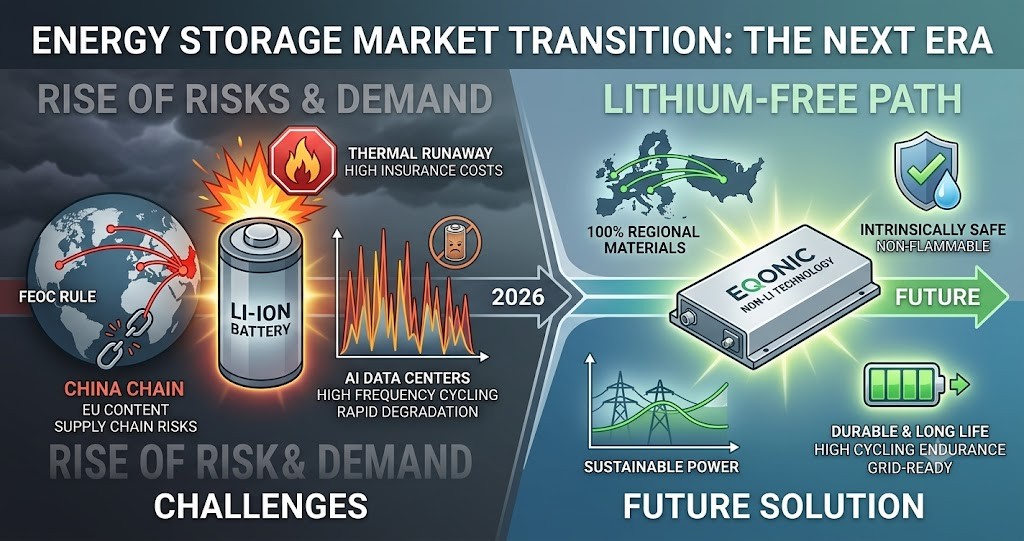
現在、世界のエネルギー貯蔵市場は大きな転換期を迎えています。長年、コストとエネルギー密度の両面で市場を独占してきたリチウムイオン電池ですが、2026年現在、地政学的リスク、安全性、そしてAI(人工知能)の爆発的普及に伴うデータセンターの電力需要急増といった新たな課題に直面しています。
本まとめでは、英国のバッテリー技術企業「EQONIC」の視点から、欧米市場がリチウムイオン電池依存からの脱却(再考)を急ぐ理由を、最新の関連規制や市場背景とともに解説します。
- 1. 大西洋を挟んだ規制の強化と脱・中国サプライチェーン
- 2. 安全性危機の顕在化と保険コストの高騰
- 3. AI時代・次世代電力網が求める「高頻度充放電」への対応
- 4. EQONIC社が提示する次世代の選択肢
- まとめ:市場の転換点はすでに到来している
- 1. Transatlantic Regulatory Tightening and Decoupling from the Chinese Supply Chain
- 2. Emerging Safety Crises and Skyrocketing Insurance Costs
- 3. Addressing High-Frequency Charging and Discharging Demands in the AI Era and Next-Generation Grids
- 4. Next-Generation Alternatives Presented by EQONIC
- Conclusion: The Market Turning Point Is Already Here
1. 大西洋を挟んだ規制の強化と脱・中国サプライチェーン
欧米諸国は、中国が原鉱石の採掘から加工、セル製造までバリューチェーンの大部分を支配している現状を経済安保上のリスクと捉え、強力な規制を敷いています。
- 米国の動き: 「懸念外国企業(FEOC)」規則を導入し、中国関連の部品や原材料を含むバッテリープロジェクトを連邦クリーンエネルギー税額控除の対象外としました。
- 欧州(EU)の動き: 「産業加速法案」等により、公的支援を受ける再エネ・蓄電池プロジェクトに対し、EU製の部品(セル、インバーター、管理システムなど)の使用を義務付ける現地調達規則を強化しています。中国製EVへの相殺関税もその一環です。
- 英国の動き: 「重要輸入・サプライチェーン戦略」を掲げ、調達先を国内や同盟国のサプライヤーへと誘導し、単一国への戦略的依存を排除する再編を急速に進めています。
【関連情報・補足】 バッテリーの主要国である韓国(LG、サムスン、SK等)の製品を採用しても、その原材料や前駆体の多くが中国の加工施設に依存しているため、根本的な解決にはなりません。このため、サプライチェーンそのものを西側諸国で完結させる「主権確保」が2026年の最重要テーマとなっています。
2. 安全性危機の顕在化と保険コストの高騰
リチウムイオン電池に付きまとう「熱暴走(発火・爆発)」のリスクが、商業・金融面での大きな足かせになり始めています。
- 事故事例の教訓: 世界最大級の蓄電施設である米国カリフォルニア州のモスランディングなどで相次いだ火災事故は、人口密集地や重要インフラ周辺への設置に対する懸念を決定付けました。
- 経済的影響: 火災リスクの上昇に伴い、プロジェクトの保険料が高騰しています。また、山火事リスクの高い地域での設置許可取得の長期化や、地域住民の反対運動など、目に見えないコストが事業性を圧迫しています。
3. AI時代・次世代電力網が求める「高頻度充放電」への対応
再生可能エネルギーの主力化に加え、AIを駆使する巨大データセンターやEV充電ハブの普及により、蓄電システムへの負荷は劇的に変化しています。
- リチウムイオンの限界: 現代の電力網では、1日に複数回に及ぶ急速な充放電サイクルが求められます。しかし、従来のリチウムイオン電池はこうした高負荷・高頻度の使用条件下では、容量低下や効率悪化(劣化)が急速に進行し、当初想定した投資回収期間を縮める要因になります。
4. EQONIC社が提示する次世代の選択肢
こうした構造的圧力を予見していたEQONIC社は、リチウムを一切使用しない独自の非リチウム電池化学技術を開発しています。
- 完全な地政学的独立: リチウム、ニッケル、コバルトを100パーセント排除し、英国、EU、米国で豊富に確保できる代替原料のみを使用。中国の輸出規制や地政学的ショックから完全に免れます。
- 絶対的な安全性: 不燃性の化学組成を採用しているため、データセンターや重要インフラに隣接して設置しても火災リスクがなく、保険コストを劇的に抑えられます。
- 高い耐久性: 高頻度の充放電サイクルや長時間の稼働を想定して設計されており、電力網が要求する過酷な環境下でも長寿命を維持します。
まとめ:市場の転換点はすでに到来している
リチウムイオン電池が今すぐ市場から完全に消え去るわけではありません。しかし、「安くてエネルギー密度が高い」という従来の評価軸だけでは、2026年現在の厳しい規制や安全基準、激しい電力需要には対応できなくなっています。
西側諸国における現地調達率の法制化、安全性の経済学の変容、そして電力網のダイナミズムの変化により、「リチウムフリー」「不燃性」「国内調達可能」な次世代技術への移行(技術の多様化)は、もはや未来の予測ではなく、現在進行形の不可逆な現実となっています。
Tectonic Shift in the Western Energy Storage Market: Moving Away from Lithium-Ion and Securing Supply Chain Sovereignty
The global energy storage market is currently undergoing a massive turning point. While lithium-ion batteries have dominated the market for years in terms of both cost and energy density, as of 2026, they face new challenges. These include geopolitical risks, safety concerns, and a massive surge in power demand from data centers driven by the explosive growth of artificial intelligence (AI).
From the perspective of UK-based battery technology company EQONIC, this summary explains why the Western market is urgently reconsidering its reliance on lithium-ion batteries, alongside the latest regulations and market context.
1. Transatlantic Regulatory Tightening and Decoupling from the Chinese Supply Chain
Western nations view China’s dominance over most of the value chain—from raw mineral mining and processing to cell manufacturing—as an economic security risk and are implementing strict regulations.
- US Actions: The Foreign Entity of Concern (FEOC) rules were introduced, making battery projects that include Chinese-related components or raw materials ineligible for federal clean energy tax credits.
- EU Actions: Through initiatives like the proposed Net-Zero Industry Act, the EU is tightening local content rules. These rules mandate the use of EU-made components (such as cells, inverters, and battery management systems) for renewable energy and battery storage projects receiving public support. Countervailing duties on Chinese electric vehicles (EVs) are also part of this strategy.
- UK Actions: Centered around its Critical Imports and Supply Chains Strategy, the UK is rapidly restructuring its approach by steering procurement toward domestic or allied suppliers to eliminate strategic dependence on a single nation.
Related Information & Context: Even if developers choose products from major battery-producing countries like South Korea (e.g., LG, Samsung, SK), this is not a fundamental solution, as many of their raw materials and precursors still depend on Chinese processing facilities. Consequently, securing supply chain sovereignty by keeping the entire value chain within Western nations has become the most critical theme of 2026.
2. Emerging Safety Crises and Skyrocketing Insurance Costs
The risk of thermal runaway (fire and explosion) inherent to lithium-ion batteries is becoming a major bottleneck financially and commercially.
- Lessons from Past Incidents: Consecutive fire incidents at Moss Landing in California, USA—one of the world’s largest battery storage facilities—have raised serious concerns about installing large-scale lithium-ion facilities near densely populated areas or critical infrastructure.
- Economic Impact: Due to rising fire risks, project insurance premiums are skyrocketing. Furthermore, hidden costs are squeezing project viability, including prolonged permitting processes in wildfire-prone areas and pushback from local communities.
3. Addressing High-Frequency Charging and Discharging Demands in the AI Era and Next-Generation Grids
In addition to the integration of renewable energy, the load on energy storage systems is changing dramatically due to the spread of massive AI-driven data centers and EV charging hubs.
- The Limitations of Lithium-Ion: Modern grids require storage systems to undergo rapid charge and discharge cycles multiple times a day. However, under such high-load and high-frequency conditions, conventional lithium-ion batteries suffer from rapid capacity fade and efficiency degradation. This shortens the asset life faster than originally forecasted, undermining project economics.
4. Next-Generation Alternatives Presented by EQONIC
Anticipating these structural pressures, EQONIC has developed proprietary, lithium-free alternative battery chemistries.
- Complete Geopolitical Independence: By eliminating lithium, nickel, and cobalt 100 percent, the technology relies solely on raw materials abundantly available in the UK, EU, and US. This completely insulates the technology from Chinese export restrictions and geopolitical supply shocks.
- Absolute Safety: Utilizing a non-flammable chemical composition, there is zero fire risk even when installed adjacent to data centers or critical infrastructure, drastically reducing insurance costs.
- High Durability: Designed specifically for high-frequency cycling and long-duration operations, the batteries maintain high performance and a long lifespan even under the harsh conditions demanded by modern power grids.
Conclusion: The Market Turning Point Is Already Here
Lithium-ion batteries will not disappear overnight. However, the traditional evaluation metrics of being cheap and energy-dense are no longer sufficient to meet the strict regulations, safety standards, and intense power demands of 2026.
Driven by localized content mandates in Western economies, the shifting economics of safety, and changing grid dynamics, the transition toward next-generation technologies that are lithium-free, non-flammable, and domestically sourced is no longer a future prediction—it is an irreversible reality happening right now.
コメント