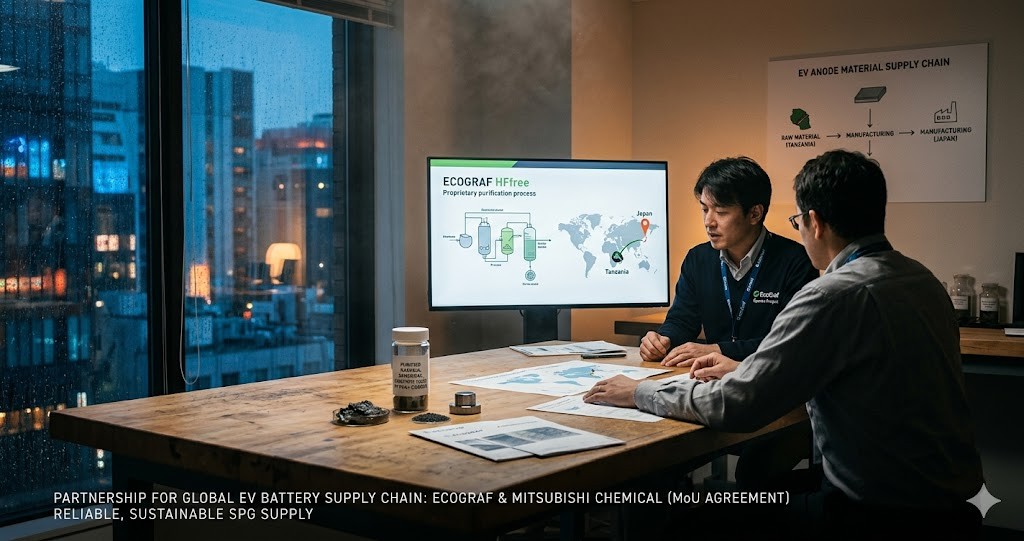
電気自動車(EV)市場の急拡大に伴い、リチウムイオン電池の主要材料である負極材の確保が世界的な課題となっています。こうした中、オーストラリアのEcoGraf社と日本の三菱ケミカル株式会社が、タンザニア産天然グラファイトの供給および商用化に向けた重要な合意に至りました。
本提携は、環境負荷の低い精製技術を用いた垂直統合型の供給網構築を目指すものであり、次世代の電池材料サプライチェーンにおいて重要な役割を果たすと期待されています。
1. 提携の概要と主要合意事項
EcoGraf(ASX: EGR)と三菱ケミカルは、天然フレークグラファイトおよび球状グラファイト(SpG)の供給、品質評価、長期商用化に関する拘束力のない覚書(MoU)を締結しました。
- 供給検討量: * 未精製および精製SpG:年間 10,000トン
- または、-100メッシュ天然フレークグラファイト:年間約 16,500トン
- 提携の背景: これまで両社間で進められてきた広範な技術協議と製品サンプル評価の結果、良好な連携が確認されたことで、正式な協力関係へと発展しました。
2. 両社の戦略とプロジェクトの役割
今回の提携は、両社の強みを融合させ、安定した電池材料の供給体制を整えることを目的としています。
- 三菱ケミカルの動向:
- 日本最大の化学企業であり、負極活物質の世界的大手サプライヤー。
- 香川県の電池負極工場の生産能力を、2026年10月から年間 11,000トンに拡張することを発表済み。
- EcoGrafの垂直統合戦略:
- タンザニアの「エパンコ・プロジェクト(Epanko Project)」を中核とした負極材事業を展開。
- エパンコ鉱山では、第1段階で年間 73,000トンの黒鉛精鉱を生産予定。
- 機械成形施設による未精製SpGの生産も計画しています。
3. 環境対応技術と製品の競争力
EcoGraf社は、従来のフッ化水素酸を使用しない独自の精製技術「EcoGraf HFfree」を強みとしています。
- 高純度と環境性能: HFfree技術を用いることで、SpGを 99.95% 以上の高純度炭素へとアップグレード。環境意識の高い欧米市場のメーカーへの供給を視野に入れています。
- 市場への供給路: 高性能な負極材として、アジア、ヨーロッパ、北米のEV・バッテリーメーカーに提供される予定です。
4. まとめと今後の展望
EcoGrafのアンドリュー・スピンクス氏は、今回の提携を「ティア1の負極材およびバッテリーメーカーとの長期的な関係構築という戦略を支えるもの」と評価しています。
ガソリン車からEVへのシフトが加速する中、三菱ケミカルのような大手化学メーカーがEcoGrafの高品質かつ低環境負荷な材料に注目したことは、今後の電池材料市場のトレンドを象徴する動きと言えるでしょう。グローバルな供給網の安定化に向け、両社の協力体制が今後どのように具体化していくか注目が集まります。
Mitsubishi Chemical and EcoGraf Partner: Toward Long-Term Supply and Commercialization of Tanzanian Graphite
With the rapid expansion of the electric vehicle (EV) market, securing anode materials—a key component of lithium-ion batteries—has become a global challenge. Against this backdrop, Australia’s EcoGraf and Japan’s Mitsubishi Chemical Group have reached a significant agreement regarding the supply and commercialization of natural graphite from Tanzania.
This partnership aims to establish a vertically integrated supply chain using low-environmental-impact purification technology and is expected to play a crucial role in the next-generation battery material supply chain.
1. Partnership Overview and Key Agreements
EcoGraf (ASX: EGR) and Mitsubishi Chemical have signed a non-binding Memorandum of Understanding (MoU) regarding the supply, quality evaluation, and long-term commercialization of natural flake graphite and spherical graphite (SpG).
- Proposed Supply Volumes:
- 10,000 tons per year of unpurified and purified SpG.
- OR approximately 16,500 tons per year of -100 mesh natural flake graphite.
- Background: This formal cooperation follows extensive technical discussions and product sample evaluations between the two companies, which confirmed a strong technical alignment.
2. Strategic Roles of Both Companies
This collaboration aims to integrate the strengths of both companies to establish a stable supply system for battery materials.
- Mitsubishi Chemical’s Outlook:
- Japan’s largest chemical company and a leading global supplier of anode active materials.
- The company has already announced an expansion of its battery anode plant in Kagawa Prefecture, increasing production capacity to 11,000 tons per year starting October 2026.
- EcoGraf’s Vertically Integrated Strategy:
- Developing an anode material business centered on the “Epanko Project” in Tanzania.
- The Epanko mine is expected to produce 73,000 tons of graphite concentrate per year in its first stage.
- Plans are also in place for a mechanical shaping facility to produce unpurified SpG.
3. Environmental Technology and Competitiveness
EcoGraf’s core strength lies in its proprietary “EcoGraf HFfree” purification technology, which eliminates the use of traditional hydrofluoric acid.
- High Purity and Eco-Performance: By utilizing HFfree technology, SpG is upgraded to a high-purity carbon of 99.95% or greater. The company is targeting supply to environmentally conscious manufacturers in the US and European markets.
- Global Distribution: The high-performance anode materials are intended for supply to EV, battery, and anode manufacturers across Asia, Europe, and North America.
4. Summary and Future Outlook
EcoGraf Managing Director Andrew Spinks described the partnership as a move that “supports our strategy to build long-term relationships with Tier 1 anode and battery manufacturers.”
As the shift from internal combustion engines to EVs accelerates, the fact that a major chemical manufacturer like Mitsubishi Chemical is focusing on EcoGraf’s high-quality, low-impact materials symbolizes a significant trend in the future battery materials market. Attention is now focused on how the cooperation between these two companies will materialize to stabilize the global supply chain.
コメント