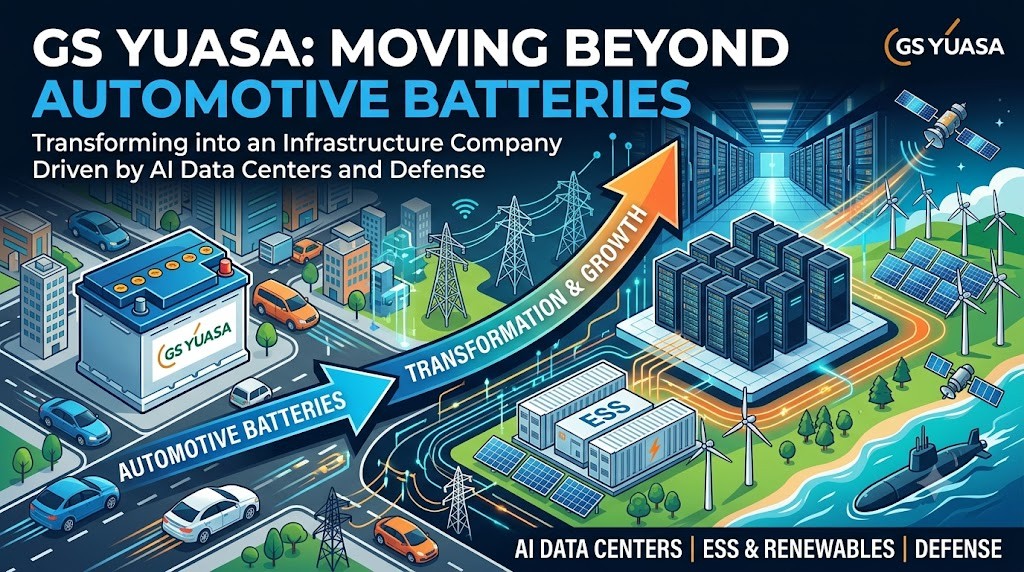
ジーエス・ユアサ コーポレーションは、国内トップシェアを誇る自動車用鉛蓄電池のリーディングカンパニーです。近年は、従来の自動車向け中心のビジネスモデルから、AIデータセンターの急増に伴うバックアップ電源需要、再生可能エネルギーの普及に向けた蓄電システム(ESS)、そして国家安全保障に関わる防衛分野など、「社会インフラを支える総合電池メーカー」への大胆なポートフォリオ転換を推進しています。
主要事業の動向と業績(2026年3月期)
2026年3月期は、売上高6,089億円(前期比4.9%増)、営業利益601億円(同20.3%増)と、産業用・車載用リチウムイオン電池の成長が牽引し、大幅な増収増益を達成しました。
1. 産業電池電源事業(データセンター・再エネ向け)
- 売上高: 1,240億円(前期比9.7%増)
- 特徴: AIデータセンターの拡大に伴う非常用バックアップ電源(UPS)の需要が追い風となっています。また、再生可能エネルギー(太陽光・風力など)の出力安定化に欠かせない大容量蓄電システム(ESS)の導入も拡大しています。これらは一度導入されると定期的なメンテナンスや交換需要(ストックビジネス)が発生するため、高い利益率と安定性を誇ります。
2. 車載用リチウムイオン電池事業
- 売上高: 899億円(前期比8.6%増) / セグメント利益: 49億円(同3.5倍)
- 特徴: 主要顧客であるホンダ向けのハイブリッド車(HEV)用電池の価格改定や販売数量増が寄与し、課題だった収益性が劇的に改善しました。世界的なHEVシフトも追い風となっています。
3. 自動車用鉛蓄電池事業(基盤事業)
- 売上高: 3,725億円(前期比2.9%増) / セグメント利益: 361億円(同23.1%増)
- 特徴: 国内市場シェア約7割を誇る絶対的な収益柱です。3から4年で定期的な交換需要が発生する補修用電池が中心であるため景気変動に強く、国内の価格是正や東南アジア・欧州での好調な販売が業績を下支えしています。
今後の見通しと成長戦略(2027年3月期以降)
2027年3月期の業績予想(会社計画)
- 売上高: 6,600億円(前期比8.4%増) ※過去最高更新を計画
- 営業利益: 600億円(同0.3%減)
【ポイント】 売上は大きく伸びるものの、利益は横ばいを見込んでいます。これは、急成長中のESSやAIデータセンター向けビジネスが立ち上げ段階にあり、先行投資等で一時的に利益率が低くなることや、地政学リスク・物流コスト上昇を織り込んだ保守的な計画であるためです。ただし、鉛電池の価格改定効果などによる上振れ期待もあります。
中長期成長戦略「Vision 2035」と防衛分野への投資
同社は2035年に向けて、営業利益の構成比を「モビリティ 50%:社会インフラ 50%」へと変革する方針を掲げています。
- ESS事業の強化: 第七次中期経営計画において850億円の成長投資を計画。新工場の建設を進めており、中期経営計画の終盤から本格稼働を予定しています。
- 防衛分野での独自ポジション: 特殊電池分野では、海上自衛隊の潜水艦向けリチウムイオン電池や、特殊飛翔体向けの熱電池などを手掛けており、国家の安全保障政策に伴う防衛費増額を背景に、増産投資を加速させています。
結論・まとめ
GSユアサは、圧倒的なシェアを持つ「自動車用鉛蓄電池」という安定した現金創出源(キャッシュカウ)を武器に、その利益を「AIデータセンター」「再生可能エネルギー(ESS)」「防衛」という国策かつ成長分野へと投資する理想的な循環を作っています。短期的には先行投資による利益の伸び悩みが見られる可能性はあるものの、中長期的な社会インフラ企業への脱皮と企業価値の向上に大きな期待がかかる企業です。
出典:https://kabutan.jp/news/marketnews/?b=n202606191209
GS Yuasa: Moving Beyond Automotive Batteries – Transforming into an Infrastructure Company Driven by AI Data Centers and Defense
GS Yuasa Corporation is a leading company holding the top share of the domestic market for automotive lead-acid batteries. In recent years, the company has been driving a bold portfolio transformation from its traditional automotive-centered business model to become a comprehensive battery manufacturer supporting social infrastructure. This shift is fueled by growing demand for backup power sources amid the rapid surge of AI data centers, energy storage systems (ESS) for the expansion of renewable energy, and the defense sector, which is vital to national security.
Trends and Financial Results of Major Businesses (Fiscal Year Ended March 2026)
For the fiscal year ended March 2026, the company achieved significant growth in both sales and profits, driven by the expansion of the industrial and automotive lithium-ion battery sectors. Net sales reached 608.9 billion yen (up 4.9 percent year-on-year), and operating income stood at 60.1 billion yen (up 20.3 percent year-on-year).
1. Industrial Batteries and Power Supplies Business (For Data Centers and Renewable Energy)
- Net Sales: 124.0 billion yen (up 9.7 percent year-on-year)
- Key Features: The expanding AI data center market is providing a strong tailwind for the demand for emergency uninterruptible power supply (UPS) systems. Furthermore, the deployment of large-capacity energy storage systems (ESS), which are essential for stabilizing the output of renewable energy sources such as solar and wind power, is also growing. Because these systems generate recurring demand for regular maintenance and replacement once installed, this stock-type business boasts high profit margins and excellent stability.
2. Automotive Lithium-ion Batteries Business
- Net Sales: 89.9 billion yen (up 8.6 percent year-on-year) / Segment Income: 4.9 billion yen (a 3.5-fold increase)
- Key Features: Profitability, which had been a challenge, improved drastically. This was driven by price revisions and increased sales volume of batteries for hybrid electric vehicles (HEVs) supplied to Honda, a major customer. The global shift toward HEVs is also providing a strong tailwind.
3. Automotive Lead-Acid Batteries Business (Core Business)
- Net Sales: 372.5 billion yen (up 2.9 percent year-on-year) / Segment Income: 36.1 billion yen (up 23.1 percent year-on-year)
- Key Features: This business remains the absolute mainstay of the company’s earnings, boasting an approximate 70 percent share of the domestic market. Since it primarily focuses on replacement batteries—which generate regular demand every 3 to 4 years—it is highly resilient to economic fluctuations. Price corrections in Japan and strong sales performance in Southeast Asia and Europe have effectively supported overall earnings.
Future Outlook and Growth Strategy (From Fiscal Year Ending March 2027 Onward)
Earnings Forecast for the Fiscal Year Ending March 2027 (Company Plans)
- Net Sales: 660.0 billion yen (up 8.4 percent year-on-year) *Planning to record historic highs
- Operating Income: 60.0 billion yen (down 0.3 percent year-on-year)
Key Point: While net sales are projected to grow significantly, operating income is expected to remain flat. This is because the rapidly growing ESS and AI data center businesses are still in their launch phases, which can temporarily lower profit margins due to upfront investments. Additionally, the company has set a conservative plan that factors in geopolitical risks and rising logistics costs. However, there are expectations for upward revisions driven by the ongoing effects of price corrections in the lead-acid battery business.
Mid-to-Long-Term Growth Strategy “Vision 2035” and Investments in the Defense Sector
Looking toward 2035, the company has set a policy to transform its operating income composition to a 50:50 ratio between Mobility and Social Infrastructure.
- Strengthening the ESS Business: The company plans to allocate 85 billion yen for growth investments under its Seventh Mid-Term Management Plan. Construction of a new factory is underway, with full-scale operations scheduled to begin toward the final phase of the mid-term plan.
- Unique Positioning in the Defense Sector: In the specialized battery segment, the company supplies lithium-ion batteries for the Japan Maritime Self-Defense Force’s submarines and thermal batteries for specialized missiles. Backed by the government’s increase in defense spending under national security policies, GS Yuasa is accelerating its investments to expand production capacity.
Conclusion
GS Yuasa has created an ideal virtuous cycle. It uses its automotive lead-acid battery business—a stable cash cow backed by an overwhelming market share—as a foundation to fund investments into high-growth, state-backed sectors such as AI data centers, renewable energy (ESS), and defense. Although upfront investments may lead to sluggish profit growth in the short term, the company holds great promise over the mid-to-long term as it sheds its old skin to become a social infrastructure enterprise and enhances its corporate value.
コメント