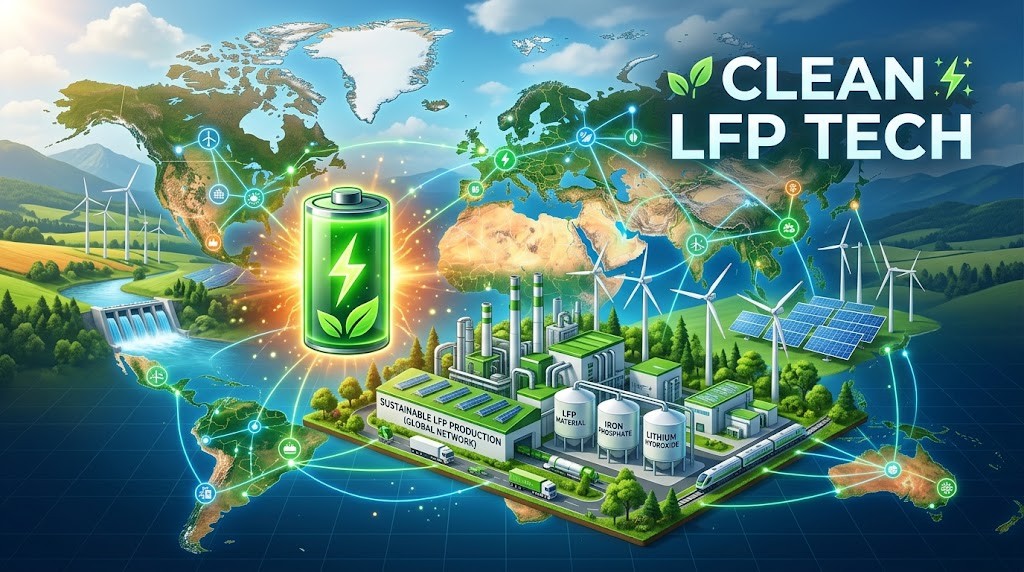
近年、電気自動車(EV)や定置型エネルギー貯蔵システム(BESS)、防衛産業における安全性の確保やサプライチェーンの地域化に伴い、リン酸鉄リチウム(LFP)正極材の需要が中国国外で急速に高まっています。欧米各国の環境・安全保障政策の強化を受け、中国企業に依存しない持続可能な正極材製造プロセスおよび供給体制の構築が急務となっています。
以下に、カナダの正極材プロセス技術企業であるナノワン・マテリアルズ社(Nano One Materials Corp.)が発表したLFP正極材のグローバル戦略に関するプレスリリース内容と、関連する背景情報をまとめました。
ナノワン社 LFP正極材グローバル戦略の概要と進捗
1. 市場環境と自国生産推進の背景
- 爆発的な需要増大: LFPは2025年の世界リチウムイオン電池セル需要の約60%(約1.0 TWh)を占め、BESS分野では設置容量の90%以上を占めています。中国以外の需要は2035年までに年間2.1 TWh(年間25,000トン規模の工場で約168拠点分に相当)に達し、市場規模は2026年の年間80億~100億米ドルから2035年には年間約400億米ドルへ成長すると試算されています。
- 政策による脱中国化の加速: G7首脳の共同声明、米国の国防権限法(NDAA)による2028年以降の外国規制対象法人からの電池調達禁止、国際エネルギー機関(IEA)による中国の輸出規制に関する警告などを受け、欧米市場でのLFP地域生産の重要性が高まっています。
2. ナノワン社のコア技術「One-Pot(ワンポット)プロセス」の特長
- 前駆体を介さない直接製造: 硫酸塩以外の金属や酸化物原料から直接正極材を製造するため、中国企業が優位性を持つ前駆体工程への依存を排除できます。
- 環境負荷の低減と許認可取得の容易化: 廃水や副産物廃棄物を排除・削減でき、プロセスを簡素化することで設備投資額(CAPEX)、エネルギー消費量、環境負荷を抑え、プラント建設の許認可取得を容易にします。
3. 資本効率を高める「DevCo」モデルとライセンス戦略
- 開発会社(DevCo)の設立: 各対象地域において合弁事業型の開発会社(DevCo)を設立・参加します。ナノワン社は技術・エンジニアリング・サービスの提供に専念してプロジェクトの単独所有リスクを避け、建設資本や製品の引き取り(オフテイク)はパートナー企業が担うことで資本効率の高い成長を図ります。
- 柔軟な導入パッケージ: 「Design One, Build Many(一箇所で設計し、多数を建設)」の考えに基づき、直接の技術ライセンスから完全統合パッケージまで提供します。FID(最終投資決定)前の開発支援から試運転、継続的なO&M(運用・保守)サービスまで提供し、ライセンス料およびロイヤリティ収入を積み上げるモデルを構築します。
4. 事業の実施状況と今後の予定
- キャンディアック工場(ケベック州)の拡張: 年間約800トン規模への生産能力拡張に向けた詳細設計が85%完了しており、2027年前半の稼働開始を予定しています。既存の年間約200トンパイロットラインは顧客サンプル提供および認定に使用されています。
- 商業契約の試算: 防衛およびBESS向け顧客と少量の初期商業供給に関する協議を進めており、2026年末までに最初の商業契約締結を目指しています。
関連情報・参考背景
- ナノワン・マテリアルズ社(Nano One Materials Corp.)について: バンクーバーに本社を置くプロセス技術企業です。ブリティッシュコロンビア州バーナビーのイノベーションセンターで製品開発を行い、ケベック州キャンディアックの拠点でパイロット実証・商業生産を実施しています。カナダ・米国・ケベック州の各国政府から助成を受けているほか、住友金属鉱山、リオ・ティント、ウォーレイなどのグローバル企業と戦略的提携を結んでいます。
- ナトリウムイオン電池など新興技術への応用展開: ナノワン社は主力のLFPに加えて、原料の事前認定やリサイクルを含むサプライチェーンのノウハウを活かし、将来的なナトリウムイオン電池などの新興化学組成への技術応用や展開可能性についても継続的な監視・評価を行っています。
- 防衛用途におけるLFP調達の重要性: 軍用ドローン、通信機器、戦術車両などの防衛資材において、高い安全性と熱安定性、長寿命を備えるLFP電池の導入が進んでいます。安全保障上の観点から「脱中国サプライチェーン」の構築が義務付けられる中、北米・同盟国内で完結する正極材プロセスの確保が防衛産業において強い追い風となっています。
Canada’s Nano One Announces Global Licensing Strategy for LFP Cathode Materials to Reduce Reliance on China
In recent years, global demand for lithium iron phosphate (LFP) cathode materials outside of China has risen rapidly, driven by the need to ensure safety and localize supply chains across electric vehicles (EVs), stationary battery energy storage systems (BESS), and defense applications. In response to stricter environmental and national security policies in Western nations, establishing sustainable cathode manufacturing processes and supply networks independent of Chinese entities has become an urgent industry priority.
Below is a summary of the press release detailing the global LFP strategy announced by Canadian process technology company Nano One Materials Corp., alongside relevant background context.
Overview and Progress of Nano One’s Global LFP Cathode Strategy
1. Market Environment and Drivers for Localized Production
- Explosive Demand Growth: LFP chemistries accounted for approximately 60% of global lithium-ion battery cell demand in 2025 (roughly 1.0 TWh) and represent over 90% of energy storage installations. Annual demand outside China is projected to reach 2.1 TWh by 2035—equivalent to about 168 new LFP cathode plants with an annual capacity of 25,000 tonnes each. The addressable LFP market outside China is estimated at 8 billion to 10 billion USD annually in 2026, reaching approximately 40 billion USD annually by 2035.
- Policy-Driven Decoupling: Localization is accelerating following joint declarations by G7 leaders, the U.S. National Defense Authorization Act (NDAA) prohibiting battery procurement from foreign entities of concern starting in 2028 (while maintaining 45X manufacturing credits at 35 USD/kWh), and warnings from the International Energy Agency (IEA) regarding Chinese export restrictions.
2. Features of Nano One’s Core “One-Pot” Process Technology
- Direct Manufacturing Without Precursors: By manufacturing cathode active materials directly from non-sulfate metals or oxide feedstocks, the technology eliminates reliance on precursor cathode active material (pCAM) production, a segment currently dominated by Chinese suppliers.
- Environmental Benefits and Streamlined Permitting: The process eliminates wastewater and byproduct waste, reducing capital expenditure (CAPEX), energy consumption, and environmental footprint, thereby easing the regulatory permitting process for plant construction.
3. Capital-Light “DevCo” Joint Venture and Licensing Strategy
- Establishing Development Companies (DevCos): Nano One plans to establish or participate in localized joint-venture-style development vehicles (DevCos) in target regions. Nano One contributes technology, engineering, and support services to de-risk projects, while consortium partners provide construction capital and offtake commitments.
- Flexible Deployment Packages: Based on a “Design One, Build Many” strategy, Nano One offers flexible adoption packages ranging from direct technology licensing to fully integrated packages. This model generates recurring licensing fees, royalties, and ongoing engineering support revenues across pre-FID development, commissioning, and continuous operations and maintenance (O&M).
4. Execution and Roadmap
- Candiac Facility Expansion (Quebec): Detailed engineering for expanding capacity to approximately 800 tonnes per annum (tpa) is 85% complete, with commissioning targeted for the first half of 2027. The existing operational ~200 tpa pilot line supports ongoing customer sampling and qualification.
- Commercialization Milestones: Discussions regarding initial small-volume commercial supply are ongoing with defense and energy storage customers, with the first commercial agreements targeted for execution by the end of 2026.
Related Context and Background
- About Nano One Materials Corp.:Headquartered in Vancouver, Nano One is a process technology company conducting product development at its Burnaby Innovation Center and pilot/demonstration manufacturing at its Candiac, Quebec facility. Backed by funding from the Canadian, U.S., Quebec, and British Columbia governments, the company maintains strategic alliances with global partners including Sumitomo Metal Mining, Rio Tinto, and Worley.
- Application to Emerging Chemistries (e.g., Sodium-Ion):While focusing on its core LFP market, Nano One is evaluating the application of its process know-how, feedstock pre-qualification, and recycling capabilities to emerging battery chemistries, such as sodium-ion batteries.
- Strategic Importance of LFP Sourcing in Defense:LFP batteries are increasingly integrated into military equipment, including tactical vehicles, drones, and communication systems, due to their superior thermal stability and long cycle life. With mandates requiring non-foreign entity battery sourcing, establishing domestic and allied LFP cathode manufacturing processes provides a significant growth tailwind within defense procurement supply chains.


コメント