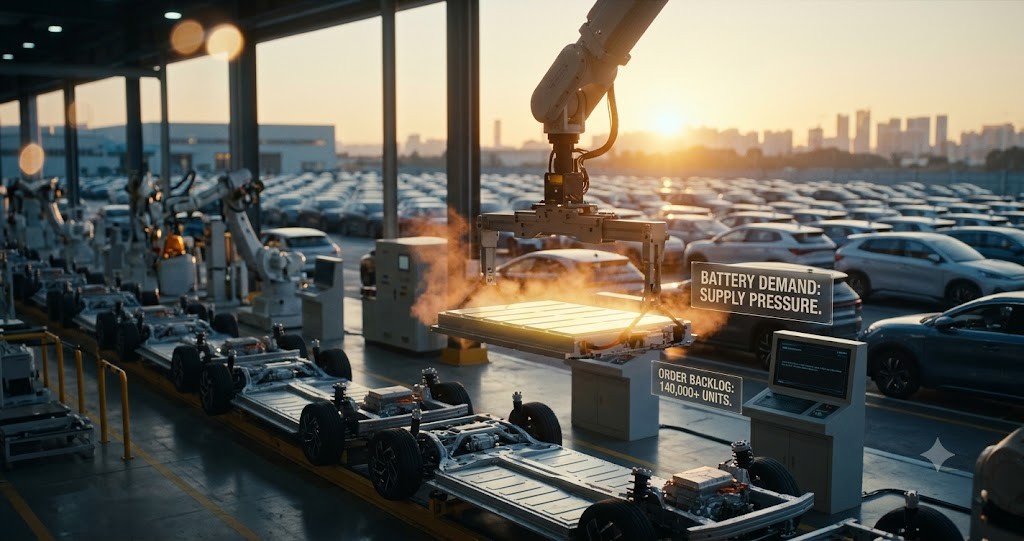
中国の電気自動車(EV)最大手であるBYDは、最新の「第2世代ブレードバッテリー」と超高速充電技術(フラッシュチャージ)を搭載した新型モデルの市場投入を急速に進めています。しかし、この革新的な急速充電EVへの需要が同社の予想を上回るペースで激増した結果、足元では深刻なバッテリー供給逼迫(ボトルネック)に直面しています。本稿は、2026年5月に開催されたビジネス会議における王伝福(ワン・チュアンフー)会長の発言や最新の市場データをもとに、BYDのバッテリー供給圧力の背景、超高速充電に伴う熱管理の課題、充電インフラの拡充、そして欧州を中心とした海外生産計画などの関連情報を分かりやすくまとめたものです。
- 1. 急速充電EVへの需要爆発とバッテリー供給の現状
- 2. バッテリー出荷実績と中国国内の市場シェア
- 3. 第2世代ブレードバッテリーの性能と浮上した「熱管理」の課題
- 4. 国内充電インフラの拡充:「フラッシュチャージング・チャイナ」構想
- 5. 海外展開と欧州における生産現地化戦略
- Demand Explodes for BYD’s Fast-Charging EVs: Chairman Wang Chuanfu Reveals Current Battery Supply Pressures
- 1. Exploding Demand for Fast-Charging EVs and Current State of Battery Supply
- 2. Battery Shipment Results and Domestic Market Share in China
- 3. Second-Generation Blade Battery Performance and Emergence of “Thermal Management” Challenges
- 4. Expanding Domestic Charging Infrastructure: The “Flash Charging China” Initiative
- 5. Overseas Expansion and Production Localization Strategy in Europe
1. 急速充電EVへの需要爆発とバッテリー供給の現状
BYDの会長兼社長である王伝福氏は、同社が展開する主要ブランド(Dynasty、Ocean、Denza、Yangwangなど)で複数の一挙な新型モデルの増産に入ったことで、バッテリー供給の制約に直面していることを明らかにしました。
- 受注残の急増 中国国内の市場推計によると、第2世代ブレードバッテリーを搭載した急速充電対応の新型モデル(Feng Cheng Bao Ti 7 EVやDenza Z9 GTなど)の未納車台数は、すでに14万台を超えている可能性があるとされています(公式発表は未公認)。
- 新型急速充電モデルの攻勢 フラッシュチャージに対応した「Denza B5」や「B8」、240kWのリアモーターを搭載したクロスオーバーSUV「Atto 3」など、ここ数ヶ月で超高速充電に対応したEVを相次いで発表・発売しており、これが需要を大きく牽引しています。
- 王会長の展望 現在の生産能力は依然として逼迫しているものの、今後のバッテリー工場の増強・稼働率向上に伴い、月間の車両販売台数は今後も右肩上がりで成長し続けると予想しています。
2. バッテリー出荷実績と中国国内の市場シェア
BYDは自社車両への搭載だけでなく、外部への供給も含めたバッテリー製造能力を急速に拡大していますが、国内向け設置量は総出荷量の一部に留まります。
バッテリー出荷・設置データ(2026年4月時点)
- 世界総出荷量(2026年4月単月): 20.98 GWh
- 世界累計出荷量(2026年1月-4月): 81.2 GWh
- 中国国内EV向け設置量(2026年4月単月): 10.49 GWh
- 中国国内市場シェア: 16.83% (同月の中国全体のEVバッテリー総設置量は前年同月比15.2%増の62.4 GWh)
3. 第2世代ブレードバッテリーの性能と浮上した「熱管理」の課題
BYDが2026年3月に正式発表した第2世代の「Blade Battery(ブレードバッテリー)」は、従来のリン酸鉄リチウム(LFP)電池の常識を覆す超高速充電性能を誇ります。
- 圧倒的な充電スピード 適切な環境条件下において、バッテリー残量10%から70%までわずか5分、10%から97%までわずか9分で充電可能とされています。
- 熱管理に関する議論 この驚異的な超高速充電デモンストレーションの直後、中国のインターネット上でライブストリーム配信されたテストにおいて、高速充電中にバッテリーの表面温度が76度C(76℃)を超えたことが記録されました。これにより、超高速充電時におけるバッテリーの安全性や冷却システム、熱管理(サーマルマネジメント)の最適化について、業界内外で大きな議論が巻き起こっています。
4. 国内充電インフラの拡充:「フラッシュチャージング・チャイナ」構想
BYDは急速充電対応車両の普及と同時に、ユーザーの利便性を高めるための自社充電ネットワークの構築を猛烈なスピードで進めています。
- ステーション数の急増 2026年5月上旬のわずか1週間の間に新たに55カ所の急速充電ステーションを追加し、全国312都市に合計5,979カ所のステーション(完成基数は5,924基以上)を設置。累計充電量は2100万 kWhを突破しています。
- ユーザー基盤の拡大 BYDの急速充電専用アプリのユーザー数はすでに100万人を突破しました。
- 他社との戦略的提携 4月には地図プラットフォーム大手「AutoNavi(高徳地図)」と戦略的協力協定を締結。地図上にBYDの急速充電ステーションの位置情報や空き状況を直接統合し、ナビゲーションの利便性を向上させています。
- 2026年末の目標 同社が進める「フラッシュチャージング・チャイナ(閃充中国)」構想では、2026年末までに中国全国に2万基のフラッシュ充電ステーションを設置することを目指しています。
5. 海外展開と欧州における生産現地化戦略
中国国内でのサプライチェーン逼迫への対応と並行し、BYDは地政学的リスクや関税を回避するため、海外での生産体制の構築(現地化)を急いでいます。
- 欧州の既存工場の活用 BYDのステラ・リー副社長は、欧州の複数の自動車メーカーとの間で、現地にある稼働率の低い既存工場の設備やラインを活用・買収する可能性について継続的な協議を行っていることを明かしました。
- 輸出から現地生産へのシフト これまでの中国からの完成車輸出主導の戦略から、欧州をはじめとする主要市場での現地生産(アセンブリおよびバッテリー戦略)へと段階的に移行し、グローバルブランドとしての地位確立を狙っています。王会長は「中国の製造業者にとって、現在はグローバルブランドを構築するための最高の歴史的時期(黄金期)だ」と強調し、自身の業務時間の約半分を技術と製品戦略の立案に費やしていると述べています。
【関連情報の補足:急速充電に伴うLFPバッテリーの技術的課題】
BYDのブレードバッテリーに代表されるLFP(リン酸鉄リチウム)電池は、コストが安く熱安定性に優れる一方で、エネルギー密度が低く、特に「超高速充電時の内部抵抗による発熱」や「低温時の性能低下」が技術的な弱点とされてきました。今回のライブストリームで観測された76度Cという表面温度は、超高速充電時に発生する膨大な熱をいかに効率的に逃がすか、あるいは車載液体冷却システムをいかに強化するかが、BYDの第2世代ブレードバッテリーのさらなる増産とグローバル普及における最大の技術的テーマであることを物語っています。
Demand Explodes for BYD’s Fast-Charging EVs: Chairman Wang Chuanfu Reveals Current Battery Supply Pressures
BYD, China’s largest electric vehicle (EV) manufacturer, is rapidly accelerating the market launch of new models equipped with its latest “Second-Generation Blade Battery” and ultra-fast charging technology (Flash Charge). However, demand for these innovative, fast-charging EVs has surged at a pace far exceeding company forecasts, causing the firm to face severe battery supply constraints (bottlenecks) at present. Based on remarks made by Chairman Wang Chuanfu at a business conference in May 2026 and the latest market data, this article provides a clear overview of the background behind BYD’s battery supply pressures, thermal management challenges during ultra-fast charging, charging infrastructure expansion, and overseas production plans centered on Europe.
1. Exploding Demand for Fast-Charging EVs and Current State of Battery Supply
Wang Chuanfu, Chairman and President of BYD, revealed that the company is facing battery supply constraints as it scales up production for multiple new models simultaneously across its major brands, including Dynasty, Ocean, Denza, and Yangwang.
- Surge in Backlogs According to market estimates circulating within China, the backlog of undelivered orders for new fast-charging models equipped with the second-generation Blade battery (such as the Fang Cheng Bao Bao 7 EV and Denza Z9 GT) may already exceed 140,000 units. BYD has not officially confirmed this figure.
- Offensive of New Fast-Charging Models Over the past few months, the company has introduced and launched a succession of EVs supporting ultra-fast charging, substantially driving demand. These include the Flash Charge-capable Denza B5 and B8, as well as the Atto 3 crossover SUV featuring flash-charging capabilities and a 240 kW rear motor.
- Chairman Wang’s Outlook While current production capacity remains tight, Wang expects monthly vehicle sales to maintain a continuous upward trajectory as battery production capacity scales up and factory utilization rates improve.
2. Battery Shipment Results and Domestic Market Share in China
While BYD is rapidly expanding its battery manufacturing capabilities for its own vehicles and external supply, its domestic installations account for only a portion of its total shipments.
Battery Shipment and Installation Data (As of April 2026)
- Total Global Shipments (Single month of April 2026): 20.98 GWh
- Cumulative Global Shipments (January–April 2026): 81.2 GWh
- China Domestic EV Installations (Single month of April 2026): 10.49 GWh
- China Domestic Market Share: 16.83% (Total EV battery installations across China reached 62.4 GWh in the same month, a 15.2% increase year-on-year)
3. Second-Generation Blade Battery Performance and Emergence of “Thermal Management” Challenges
Officially unveiled by BYD in March 2026, the second-generation Blade Battery boasts ultra-fast charging performance that challenges conventional assumptions about lithium iron phosphate (LFP) batteries.
- Exceptional Charging Speeds Under optimal environmental conditions, the battery can reportedly charge from 10% to 70% in just 5 minutes, and from 10% to 97% in just 9 minutes.
- Debate Over Thermal Management Shortly after these impressive ultra-fast charging demonstrations, a livestreamed test broadcasted on the Chinese internet recorded the battery’s surface temperature exceeding 76 degrees C (76 degrees Celsius) during a high-speed charging session. This has sparked intense discussion within and outside the industry regarding battery safety, cooling systems, and the optimization of thermal management during ultra-fast charging.
4. Expanding Domestic Charging Infrastructure: The “Flash Charging China” Initiative
In parallel with the rollout of fast-charging vehicles, BYD is rapidly building out its own proprietary charging network to maximize user convenience.
- Rapid Increase in Stations During a single week in early May 2026, BYD added 55 new fast-charging stations, bringing its nationwide total to 5,979 stations across 312 cities (with over 5,924 completed charging piles). The cumulative charging volume has surpassed 21 million kWh.
- Growing User Base The number of registered users on BYD’s dedicated fast-charging app has officially crossed the 1 million milestone.
- Strategic Partnership with AutoNavi In April, BYD signed a strategic cooperation agreement with mapping platform giant AutoNavi. This partnership integrates the locations and real-time availability of BYD fast-charging stations directly into the digital map platform, enhancing navigation convenience.
- End of 2026 Target Under its “Flash Charging China” initiative, BYD aims to install 20,000 flash-charging stations across the nation by the end of 2026.
5. Overseas Expansion and Production Localization Strategy in Europe
To mitigate geopolitical risks, circumvent tariffs, and manage domestic supply chain bottlenecks, BYD is moving swiftly to establish localized overseas manufacturing bases.
- Utilizing Existing Factories in Europe BYD Executive Vice President Stella Li disclosed that the company is engaged in ongoing discussions with several European automakers regarding the potential utilization or acquisition of underutilized production lines and factory facilities in the region.
- Shifting from Exports to Local Production BYD is gradually shifting from an export-driven strategy based on Chinese-built finished vehicles to a localized production model (covering vehicle assembly and battery strategies) in major international markets like Europe to secure its position as a global brand. Chairman Wang emphasized that Chinese manufacturers have entered a golden era for building global brands, adding that he dedicates roughly half of his operational time to formulating technology and product strategies.
[Supplementary Information: Technical Challenges of LFP Batteries Under Fast Charging]
LFP (lithium iron phosphate) batteries, represented by BYD’s Blade Battery, offer excellent thermal stability and cost advantages, but have historically faced lower energy densities and technical weaknesses, specifically low-temperature performance degradation and heat generation caused by internal resistance during ultra-fast charging. The surface temperature of 76 degrees C observed in the recent livestream highlights that effectively dispersing the massive amounts of heat generated during ultra-fast charging—and further upgrading on-board liquid cooling systems—remains the paramount technical challenge for BYD as it scales up production and drives global adoption of its second-generation Blade Battery.

コメント