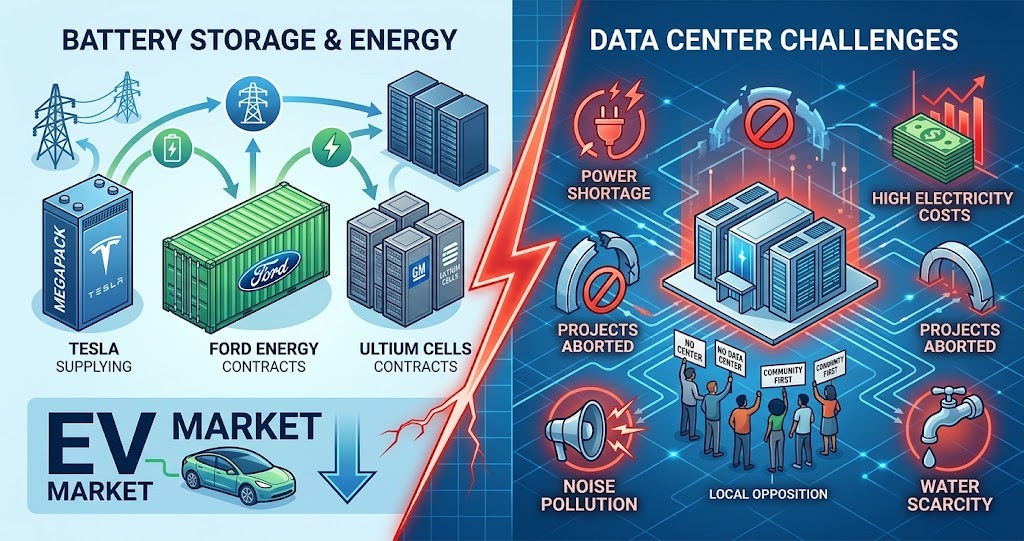
EVの普及スピードが当初の予測を下回る中、自動車メーカーは建設したバッテリー工場の稼働率を維持し、新たな収益源を確保するため、電力網やデータセンター向けの定置型蓄電システム(BESS)事業を急速に拡大しています。
しかし現在、AI需要の急増に伴うデータセンターの建設ラッシュに対し、電力供給不足、電気料金の高騰、大量の水消費、騒音、土地利用を巡る地域社会の反対運動が全米で過去最高レベルに達しています。この反対運動の波が、システムを供給する自動車メーカーにも及ぶリスクが懸念されています。
1. 主要自動車メーカーの定置型蓄電池に関する動向
- Tesla(テスラ): 巨大蓄電システム「Megapack」を展開。同社のエネルギー部門はデータセンター等の大規模顧客向け供給で最も実績があり、2026年第2四半期にはSpaceX単体へ2億9500万ドル相当を納入しました。
- Ford(フォード): 「Ford Energy」を通じて2027年までにケンタッキー州の工場で年間生産能力20 GWhの定置型蓄電池システムを展開予定。電力会社や製造業、データセンターとの契約を進めています。
- GM(ゼネラル・モーターズ): LG Energy Solutionとの合弁「Ultium Cells」のテネシー州スプリングヒル工場(7000万ドル投資)にて、蓄電用LFP(リン酸鉄リチウム)電池の生産を開始。さらにPeak Energyと提携し2028年からナトリウムイオン電池の展開を計画するほか、Redwood Materialsと電池の二次利用(セカンドライフ)も推進しています。
2. データセンターに対する反対運動の激化
- プロジェクトの頓挫: 「Data Center Watch」の報告によると、住民反対などの影響により、2026年第1四半期だけで約1300億ドル相当・少なくとも75件のプロジェクトが頓挫しました。
- 政治的争点化: ミシガン州では用途地域変更の否決や一時停止措置が相次ぎ、データセンター開発の是非が2026年の州予備選挙における主要な争点となりました。住民の反発には、インフラへの負荷だけでなく、AIや自動化による雇用喪失への不安も反映されています。
【関連情報】定置型蓄電事業の市場構造と自動車メーカーのジレンマ
電力網(グリッド)安定化という本質的メリット
反対運動が激化する一方で、定置型蓄電池(BESS)自体は以下のような電力網の安定化に不可欠な役割を果たします。
- ピークシフトと再生可能エネルギー受入: 太陽光や風力などの発電量が多い時間帯に充電し、需要ピーク時に放電することで、急増するデータセンター需要による電力網への負荷を緩和します。
- 停電防止: データセンター側にとっては、バックアップ電源として非常用ディープサイクル発電機への依存を減らし、脱炭素化と安定稼働を両立する手段となります。
自動車メーカーが直面するブランド・政治リスク
- 直接的な運営責任と供給責任の混同: 電池を供給するだけの自動車メーカーであっても、物議を醸す大規模データセンター開発の「共犯者」として消費者に認知されるブランドリスクが存在します。
- 特定の企業におけるリスク増大: 特にTeslaのように、CEOであるElon Musk氏および同社がAI事業やデータセンターそのものと強力に結びついている場合、この政治的反発の直撃を受けやすい構造にあります。
- ディーラーおよび自動車業界全体への波及: バッテリー事業の多角化は自動車メーカーに新たな収益をもたらす反面、従来の「自動車の製造・販売」というフレームワークを超えた地域政治や環境訴訟に巻き込まれるリスクを孕んでいます。
Dark Clouds over the Battery Business Born from EV Slowdown: Escalating Nationwide Data Center Backlash and Political Risks for Auto Giants
As EV adoption falls below initial forecasts, automakers are rapidly expanding their stationary battery energy storage systems (BESS) business for power grids and data centers to maintain utilization rates at their battery plants and secure new revenue streams. However, community opposition to the rush of data center construction driven by surging AI demand—fuelled by concerns over power supply shortages, spiking electricity bills, massive water consumption, noise, and land use—has reached record levels across the United States. Concerns are now rising that this wave of backlash could extend to the automakers supplying these systems.
- Stationary Battery Initiatives by Major Automakers
- Tesla: Deploys the massive “Megapack” energy storage system. Its energy division has the most established track record in supplying large-scale customers such as data centers, delivering 295 million dollars worth of Megapacks to SpaceX alone in the second quarter of 2026.
- Ford: Plans to roll out stationary battery storage systems with an annual production capacity of 20 GWh by 2027 at its Kentucky plant through “Ford Energy.” The company is securing contracts with electric utilities, manufacturing industries, and data centers.
- GM (General Motors): Began production of lithium iron phosphate (LFP) cells for stationary storage at the Spring Hill, Tennessee plant (a 70 million dollar investment) of Ultium Cells, its joint venture with LG Energy Solution. GM also plans to launch sodium-ion battery cells for storage starting in 2028 through a partnership with Peak Energy, while separately pursuing second-life battery applications with Redwood Materials.
- Escalation of Opposition to Data Centers
- Project Disruptions: According to a report by “Data Center Watch,” at least 75 projects valued at approximately 130 billion dollars were disrupted in the first quarter of 2026 alone, driven by local resident opposition and related friction.
- Becoming a Political Issue: In Michigan, successive rejections of zoning changes, project withdrawals, and municipal moratoriums turned data center development into a central issue in the 2026 state primary elections. Local pushback reflects not only infrastructure strain but also broader anxiety over job losses tied to AI and automation.
Related Information: Market Dynamics and the Automaker Dilemma in Stationary Energy Storage Core Benefits for Grid Stabilization While opposition intensifies, stationary battery energy storage systems (BESS) themselves play an indispensable role in stabilizing the power grid through the following mechanisms:
- Peak Shifting and Renewable Energy Integration: Charging during hours of high solar or wind generation and discharging during peak demand periods mitigates strain on the electrical grid caused by surging data center demand.
- Outage Prevention: For data centers, storage systems provide a means to balance decarbonization and operational stability by reducing reliance on emergency diesel backup generators.
Brand and Political Risks Facing Automakers
- Confusion Between Direct Operation and Supply Responsibility: Even as mere component suppliers, automakers face brand risks if consumers perceive them as complicit in controversial large-scale data center developments.
- Amplified Risk for Specific Companies: Companies like Tesla, where CEO Elon Musk and the brand itself are prominently tied to both AI ventures and data centers, are structurally more exposed to direct political backlash.
- Ripple Effects Across Dealers and the Automotive Industry: While diversifying into the battery storage business opens new revenue streams, it carries the risk of entangling automakers in local politics and environmental litigation that extend far beyond traditional vehicle manufacturing and sales.
コメント