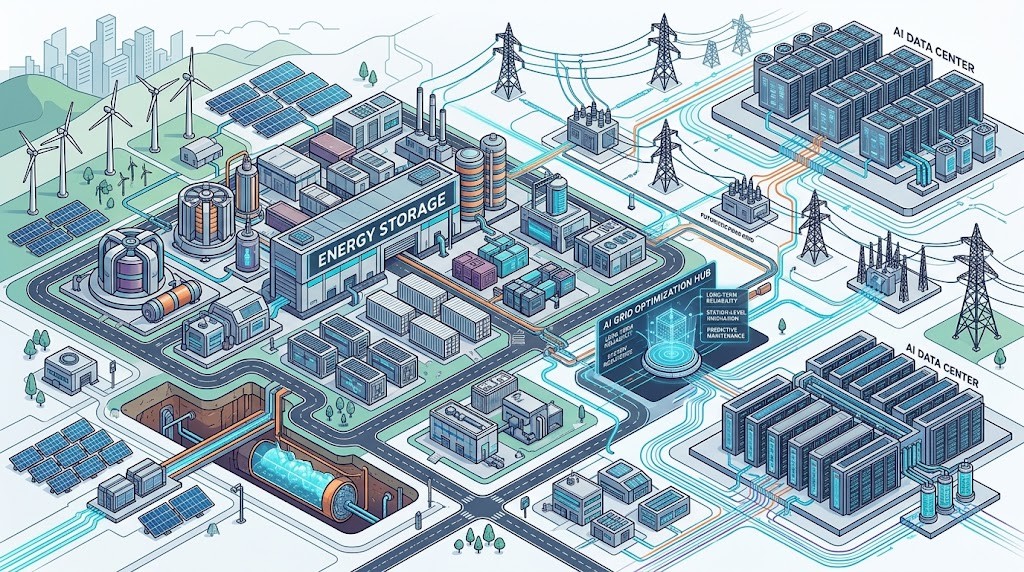
CATLの会長兼CEOであるロビン・ゼン(Robin Zeng)博士は、急速な拡大を遂げる世界のエネルギー貯蔵市場において、業界の焦点が「単なる設備導入量の拡大」から「長期的なシステム信頼性と電力系統(グリッド)インフラとしての適合性」へとシフトしていると提言しました。過酷な運用環境や地域のニーズ、そしてAIデータセンターの急増による複雑な負荷特性に対応するため、セル単体ではなく発電所レベル(ステーションレベル)での検証と根本的な技術革新の重要性を強調しています。
【ニュースの概要と主要ポイント】
- エネルギー貯蔵の役割変化:
- SNE Researchによると、2026年上半期の世界のエネルギー貯蔵用バッテリー出荷量は前年同期比71%増と急成長を記録。中国以外の市場が初めて総出荷量の半数以上を占めた。
- 再生可能エネルギーの増大と併せ、AIデータセンターなどの電力集約型施設の急速な増加が電力需要を牽引し、エネルギー貯蔵は電力インフラの中核へと進化している。
- CATLが掲げる3つの重要能力:
- 多様なグリッド要件に対応するエンドツーエンドソリューション:
- ヨーロッパ(柔軟な供給体制)、米国(AIデータセンター向け高信頼性)、東南アジア・アフリカ(電圧・周波数維持)など地域ごとに異なる要件に対し、セル・電子制御・運用最適化を統合。
- オーストラリアの大型プロジェクト「Supernode」や、南アフリカのハイブリッド再生可能エネルギープロジェクト「Hydra」への導入実績。
- 複雑な運用シナリオに応える根本的イノベーション:
- 高温・寒冷地や急激な負荷変動に対応するため、材料・電気化学レベルでの革新を推進。
- 低温特性に優れるナトリウムイオン電池の活用や、AIデータセンターの動的負荷に対するミリ秒単位の超高速・高レート応答システムの開発。
- ステーションレベル(発電所全体)での長期信頼性検証:
- 単体のセルや機器が規格を満たしていてもシステム全体の長期信頼性は保証されないため、実環境や極限条件をシミュレートした包括的な検証が必須。
- 総額30億人民元を投じて厦門エネルギー貯蔵検証研究所(ESVL)を立ち上げ、すでに世界32件・計16 GWhを超えるプロジェクトの体系的検証を実施。
- 多様なグリッド要件に対応するエンドツーエンドソリューション:
【関連情報の補足】
- AIデータセンター需要とエネルギー貯蔵(BBU / ESS)の連動:
- AIサーバー(NVIDIA GB200 NVL72ラックなど)の台頭に伴い、データセンターの電力消費とミリ秒単位での突発的な電力負荷変動が世界的な課題となっています。これに対し、高Cレート放電に対応するリチウムイオン電池やナトリウムイオン電池を用いたバックアップ電源(BBU)および系統側ESSの重要性が急上昇しています。
- ナトリウムイオン電池のエネルギー貯蔵への実用化:
- リチウム資源の地政学的リスクや価格変動への懸念、さらに極低温下での放電特性維持の観点から、CATLをはじめとする主要メーカーはエネルギー貯蔵分野におけるナトリウムイオン電池の併用を精力的に進めています。
- 「セル単体評価」から「ステーション・系統レベル評価」への国際的トレンド:
- 過去のESS火災事故や劣化トラブルの多くは、セル単体の不良ではなく、モジュール・ラック間の熱管理不備やPCS(パワーコンディショナ)、グリッド過渡現象との干渉に起因していました。CATLがESVL(厦門エネルギー貯蔵検証研究所)をサードパーティにも開放し、ステーションレベルでのEMC(電磁両立性)や系統連系検証を重視する姿勢は、今後の国際標準規格の策定にも大きな影響を与えると考えられます。
出典:https://www.linkedin.com/pulse/dr-robin-zeng-from-rapid-expansion-5rawc/
CATL Chairman Robin Zeng Proposes: From Rapid Expansion to Long-Term Reliability—The Future of Energy Storage Systems (ESS) as Critical Infrastructure
Dr. Robin Zeng, Chairman and CEO of CATL, proposed that in the rapidly expanding global energy storage market, the industry’s focus is shifting from simply expanding installed capacity to long-term system reliability and suitability as power grid infrastructure. To address harsh operating environments, diverse regional needs, and complex load characteristics driven by the rapid growth of AI data centers, Dr. Zeng emphasized the critical importance of fundamental technical innovation and station-level verification rather than evaluating individual cells in isolation.
News Overview and Key Highlights
- Evolving Role of Energy Storage:
- According to SNE Research, global energy storage battery shipments in the first half of 2026 recorded rapid growth of 71 percent year-on-year, with non-Chinese markets accounting for over half of total shipments for the first time.
- Alongside the growth of renewable energy, rapid demand increases from power-intensive facilities like AI data centers are driving power consumption, elevating energy storage into a core component of grid infrastructure.
- Three Critical Capabilities Outlined by CATL:
- End-to-End Solutions for Diverse Grid Requirements:
- Integrating battery cells, power electronics, and operational optimization to meet distinct regional requirements, such as flexible supply in Europe, high reliability for AI data centers in the US, and voltage and frequency regulation in Southeast Asia and Africa.
- Demonstrated track record including Australia’s large-scale “Supernode” project and South Africa’s “Hydra” hybrid renewable energy project.
- Fundamental Innovation for Complex Operational Scenarios:
- Driving material- and electrochemical-level innovations to withstand extreme heat, cold, and rapid load fluctuations.
- Utilizing sodium-ion batteries with superior low-temperature performance and developing ultra-fast, high-rate response systems operating at millisecond precision for dynamic AI data center loads.
- Station-Level Verification for Long-Term Reliability:
- Emphasizing that comprehensive testing under simulated real-world and extreme conditions is essential, as individual cells or equipment meeting standards cannot guarantee long-term system-wide reliability.
- Established the Energy Storage Verification Laboratory (ESVL) in Xiamen with a total investment of 3 billion RMB, which has already performed systematic verification for 32 projects worldwide totaling over 16 GWh in capacity.
- End-to-End Solutions for Diverse Grid Requirements:
Supplementary Context
- Interlinkage Between AI Data Center Demand and Energy Storage (BBU / ESS):
- With the rise of AI servers (such as NVIDIA GB200 NVL72 racks), data center power consumption and sudden millisecond-level power fluctuations have become global challenges. Consequently, the importance of grid-side ESS and backup battery units (BBUs) using high-C-rate lithium-ion or sodium-ion batteries is surging rapidly.
- Commercialization of Sodium-Ion Batteries for Energy Storage:
- Driven by concerns over geopolitical risks and price volatility in lithium resources, as well as the need to maintain discharge performance in extreme cold, major manufacturers led by CATL are actively advancing the integration of sodium-ion batteries into energy storage systems.
- International Shift from Cell-Level to Station- and Grid-Level Evaluation:
- Many past ESS fires and degradation issues stemmed not from cell defects, but from thermal management flaws across modules and racks, power conversion system (PCS) issues, or interference with grid transient phenomena. CATL’s approach of opening ESVL to third parties and focusing on station-level electromagnetic compatibility (EMC) and grid-interconnection testing is expected to significantly influence future international standards.


コメント