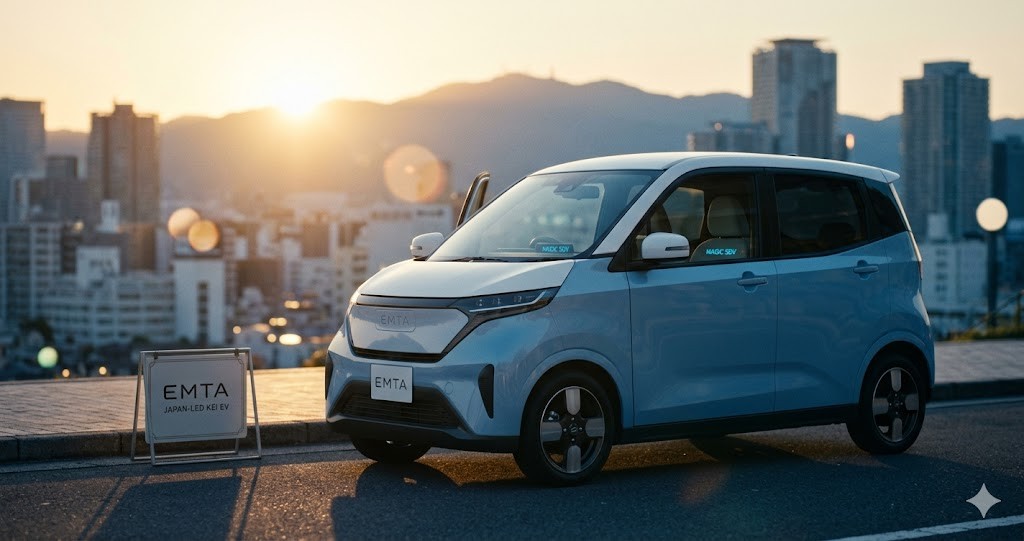
日本の自動車市場において最も大きな割合を占める「軽自動車」の領域に、日中のハイブリッド企業が新しい風を吹き込もうとしています。オートバックスセブンや中国の奇瑞汽車(Chery)など日中企業5社が出資するEMTは、新ブランド「EMTA(エムタ)」を立ち上げ、2027年に軽EVを日本市場へ投入すると発表しました。従来の「中国車をそのまま輸入して売る」というスタイルではなく、「設計・スペックの決定は日本主導、生産は中国」という新たなビジネスモデルで、日本のEV普及の壁に挑みます。
1. 新ブランド「EMTA」の体制と「日本主導」へのこだわり
- 出資企業: オートバックスセブン、奇瑞汽車、アネスト岩田、江蘇悦達汽車集団、国軒高科(Gotion)の5社による共同出資。
- 開発スタイル: 奇瑞汽車の既存モデルをそのまま持ち込むのではなく、日本の軽自動車規格(全幅1.48mなど)に合わせ、日本側が商品定義やスペックを決定してゼロからプラットフォームを完全新規開発します。
2. 2027年投入の軽EVと製品ロードマップ
- 計画: 2027年の軽EV投入を皮切りに、2029年までに計4車種を投入予定です。
- 技術特徴(4つのマジック):
- Magic SDV: スマホのように納車後もOTA(無線アップデート)で性能や航続距離が進化。
- Magic Sync: ドライバーを自動認識して設定切り替え。
- Magic EV: E-axleと床下大容量電池を採用し、V2H/V2L(住宅や機器への給電)に対応。
- Magic Drive: 運転支援技術。2027から2028年の日本投入を目指します。
3. 購入後の体験と型式指定への工夫
- 顧客体験: 顧客情報をEMTと直接つなぐ「マジックコネクト」を導入し、どの店舗でも一から説明し直す煩わしさを解消。オートバックス拠点の活用や移動型店舗など多様な形態を計画。
- 認証の工夫: 数万台規模の販売を見据え、正式な「型式指定」の取得を目指します。期間短縮のため、まず欧州認証を取得し、その試験データの約8割を日本の型式指定へ流用(キャリーオーバー)する戦略をとります。
- 【関連情報】理解を深めるための補足
- Funded by Chery, Autobacs, and Others, New Brand “EMTA” to Launch 4 Models Including Kei EVs Starting 2027
- 1. Structure of the New Brand “EMTA” and Commitment to being “Japan-Led”
- 2. Kei EV Launch in 2027 and Product Roadmap
- 3. Post-Purchase Experience and Strategy for Type Approval
- Supplementary Context: For Deeper Understanding
- The Current State of the Intensifying “Japanese Kei EV Market”
- Benefits of Japan-China Joint Development and “Quality” Concerns to Clear
【関連情報】理解を深めるための補足
EMTAの挑戦が日本の自動車市場においてどのような意味を持つのか、背景にある関連情報を解説します。
激化する「日本の軽EV市場」の現状
- 先行するライバルたち: 日本の軽EV市場は、日産「サクラ」と三菱「eKクロス EV」が先行して市場を開拓しました。さらに、中国大手のBYDが2026年夏に「RACCO(ラッコ)」の投入を表明しているほか、ホンダも2028年の投入を予告しており、2027年に参入するEMTAはまさに激戦区へ飛び込むことになります。
- 軽自動車とEVの親和性: 日本では自動車の3台に1台が軽自動車であり、その多くは近所への買い物や送迎など、月間平均走行距離が400km程度(1日あたり十数km)です。そのため、高価で大型のバッテリーを積む必要がなく、自宅での「夜間充電」だけで運用が完結するため、実は最もEVに適したカテゴリーと言われています。
日中共同開発のメリットと、クリアすべき「品質」への懸念
- スピードとコストの融合: 中国メーカー(奇瑞汽車や電池大手の国軒高科)が持つ圧倒的なEV開発スピード、サプライチェーン、コスト競争力を活用しつつ、日本のユーザーが求める緻密なパッケージング(軽規格)や使い勝手を日本側が主導する、非常に合理的な組み合わせです。
- 「日本品質」への信頼性担保: 日本のユーザーは初期不良や塗装・建付けの不具合に対して世界一厳しいと言われています。EMTAは、日本のスペシャリストによる現地での品質管理や、日本到着後の熟練検査員による納車前検査(PDI)を徹底することで、「中国生産・日本品質」をアピールし、ユーザーの心理的ハードルを下げる狙いがあります。将来的には日本国内での工場立ち上げ(国内生産)も視野に入れています。
Funded by Chery, Autobacs, and Others, New Brand “EMTA” to Launch 4 Models Including Kei EVs Starting 2027
A Japan-China hybrid enterprise is about to bring a fresh breeze into the “Kei car” (light vehicle) segment, which accounts for the largest share of the Japanese automotive market. EMT, funded by five Japanese and Chinese companies including Autobacs Seven and China’s Chery Automobile, has launched a new brand called “EMTA” and announced that it will introduce a Kei EV to the Japanese market in 2027. Rather than the conventional style of simply importing and selling Chinese vehicles as they are, the company will challenge the barriers to EV adoption in Japan with a new business model: “Japan-led design and specification decisions, with production in China.”
1. Structure of the New Brand “EMTA” and Commitment to being “Japan-Led”
- Involved Companies: A joint venture funded by five companies: Autobacs Seven, Chery Automobile, Anest Iwata, Jiangsu Yueda Automobile Group, and Gotion High-tech.
- Development Style: Instead of bringing in Chery’s existing models as they are, the company will completely develop a brand-new platform from scratch. The Japanese side will define the product and determine the specifications to match Japan’s Kei car standards, such as a maximum width of 1.48m.
2. Kei EV Launch in 2027 and Product Roadmap
- Plan: Starting with the launch of a Kei EV in 2027, the company plans to introduce a total of four models by 2029.
- Technical Features (The Four Magics):
- Magic SDV: Software-Defined Vehicle technology allows performance and driving range to evolve via OTA (Over-the-Air) wireless updates even after delivery, just like a smartphone.
- Magic Sync: Automatically recognizes the driver and switches settings accordingly.
- Magic EV: Adopts an integrated E-axle and an under-floor large-capacity battery, supporting V2H (Vehicle to Home) and V2L (Vehicle to Load) power supply.
- Magic Drive: Advanced driver assistance technology, aiming for a Japanese launch between 2027 and 2028.
3. Post-Purchase Experience and Strategy for Type Approval
- Customer Experience: Introduces “Magic Connect,” which links customer information directly to EMT rather than splitting it by individual stores, eliminating the hassle of explaining situations from scratch at different locations. Plans include utilizing Autobacs locations and introducing diverse formats like mobile stores.
- Authentication Strategy: Looking ahead to a sales scale of tens of thousands of units, the company aims to obtain official Japanese “Type Approval” (Katashiki Shitei). To shorten the timeline, they will first obtain European certification and carry over approximately 80 percent of that test data directly to the Japanese type approval process.
Supplementary Context: For Deeper Understanding
This section explains the background context regarding what EMTA’s challenge means for the Japanese automotive market.
The Current State of the Intensifying “Japanese Kei EV Market”
- Preceding Rivals: The Japanese Kei EV market was pioneered by the Nissan Sakura and Mitsubishi eK X EV. Furthermore, Chinese giant BYD has announced the launch of the “RACCO” for the summer of 2026, and Honda has teased an entry in 2028. Entering in 2027, EMTA will be diving straight into a highly competitive battleground.
- Affinity Between Kei Cars and EVs: In Japan, one out of every three cars is a Kei car, and many are used for local shopping or school pickups, with an average monthly driving distance of around 400km (roughly a dozen km per day). Therefore, they do not need to carry expensive, large batteries. Since daily operation can be fully supported by “overnight charging” at home, this category is considered the most suitable for EVs.
Benefits of Japan-China Joint Development and “Quality” Concerns to Clear
- Blending Speed and Cost: This is a highly rational combination that utilizes the overwhelming EV development speed, supply chain, and cost competitiveness of Chinese manufacturers (like Chery and battery giant Gotion), while the Japanese side leads the detailed packaging (Kei standards) and user-friendliness demanded by Japanese consumers.
- Ensuring Trust in “Japan Quality”: Japanese users are known to be among the strictest in the world regarding initial defects, paintwork, and fit-and-finish issues. EMTA aims to lower the psychological barrier for users by promoting “China production with Japan quality,” achieved through rigorous on-site quality control by Japanese specialists and pre-delivery inspections (PDI) by skilled Japanese inspectors upon arrival in Japan. In the future, the company also keeps a domestic plant setup (production in Japan) in view.
コメント