電気自動車(EV)や蓄電池市場の拡大に伴い、電池部材の国内供給網(サプライチェーン)強化が進む中、大手化学メーカーの日本触媒による設備投資計画の変更が発表されました。ニュースの要点と、同社が手掛ける材料の背景などの関連情報をまとめて解説します。
ニュースの要点
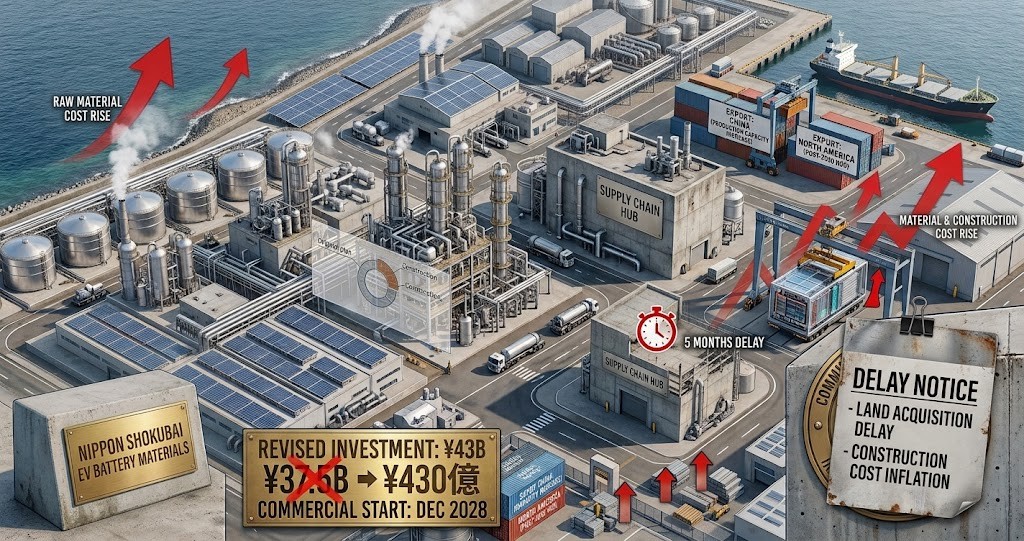
- 投資額の増額: 北九州市に建設予定のリチウムイオン電池材料新工場の投資額が、当初予定の約375億円から55億円増額され、約430億円となる見込みです。
- 稼働時期の延期: 工場用地の取得遅延により、稼働開始(商業運転)予定が2028年7月から2028年12月に5か月延期されます。
- コスト増加の背景: 石油・銅などの資源価格高騰や円安による資材費上昇に加え、西日本地域での建設需要増に伴う工事費膨張が影響しています。
- 公的支援と今後の展開: 経済産業省からの最大125億円の助成金額に変更はありません。同社は電池材料を成長事業と位置付けており、中国での生産能力増強や、2030年度以降の北米新工場稼働を計画しています。
関連情報・解説
1. 生産予定の材料「LiFSI(商品名: イオネル)」とは
北九州新工場で生産が予定されているのは、高機能リチウムイオン電池用電解質「LiFSI(リチウムビス フルオロスルホニル イミド)」です。
従来の汎用電解液に添加または置き換えることで、以下のような性能向上をもたらします。
- 急速充電性能の向上: 低温環境下でもイオンがスムーズに移動できるため、充電時間を大幅に短縮できます。
- 長寿命化・高耐久化: 充放電による劣化を抑え、EV用電池の寿命を延ばします。
- 安全性の向上: 高温時の安定性を高め、電池の発火リスクを低減します。
2. 北九州新工場の規模と国内供給網における意義
新工場(福岡県北九州市若松区響灘地区)は、年間3000トンのLiFSI生産能力を持つ計画です。これはEV約21万台分(電池容量換算で21.4 GWh相当)に合致する規模となります。
中国勢が優位に立つ電池部材市場において、経済産業省の「蓄電池産業戦略」に基づく重要物資として助成を受け、日本国内における定着と安定供給網の構築を目指しています。
3. 資材高騰と建設コストの上昇(インフレの影響)
今回の投資額55億円増加は、近年の世界的な原材料価格の高騰、為替の影響(円安)、さらに西日本を中心とした再開発や半導体工場建設などに伴う人件費・工事費の上昇が、メーカーの大規模インフラ投資に直接打撃を与えている実態を示しています。
出典:https://www.nikkei.com/article/DGXZQOUF2773A0X20C26A8000000/
The Shadow of Inflation in a 5.5 Billion Yen Cost Surge: The Reality of Nippon Shokubai’s Push to Domesticate Battery Materials
As the supply chain for domestic battery materials is strengthened alongside the expansion of the electric vehicle (EV) and storage battery markets, major chemical manufacturer Nippon Shokubai has announced changes to its capital investment plan. Below is a summary of the key news points and related contextual information, including the background of the material the company produces.
Key Highlights of the News
- Increased Investment Amount: The investment for the new lithium-ion battery material plant planned in Kitakyushu City is expected to rise by 5.5 billion yen from the initial estimate of approximately 37.5 billion yen, reaching around 43 billion yen.
- Postponement of Operation Date: Due to delays in acquiring land for the plant, the scheduled start of commercial operation has been pushed back by five months, moving from July 2028 to December 2028.
- Background of Cost Increases: Soaring prices for resources such as oil and copper, rising material costs due to a weaker yen, and expanding construction costs driven by increased demand in western Japan have all had an impact.
- Public Support and Future Outlook: The maximum subsidy of 12.5 billion yen from the Ministry of Economy, Trade and Industry (METI) remains unchanged. Positioned with battery materials as a key growth driver, Nippon Shokubai plans to expand its production capacity in China and operate another new plant in North America in fiscal year 2030 or later.
Related Information and Context
1. What is “LiFSI (Product Name: IONEL),” the Material Scheduled for Production? The new plant in Kitakyushu is scheduled to produce “LiFSI (Lithium bis(fluorosulfonyl)imide),” a high-performance electrolyte additive for lithium-ion batteries. By adding it to or replacing conventional general-purpose electrolyte solutions, it yields the following performance improvements:
- Faster Charging Performance: Ions move smoothly even in low-temperature environments, significantly shortening charging times.
- Longer Lifespan and Higher Durability: Suppresses degradation caused by charge-discharge cycles, extending EV battery life.
- Improved Safety: Enhances high-temperature stability, reducing the risk of battery ignition.
2. Scale of the Kitakyushu Plant and Its Significance in Domestic Supply Chains The new plant (located in the Hibikinada district of Wakamatsu Ward, Kitakyushu City, Fukuoka Prefecture) is planned to have an annual LiFSI production capacity of 3,000 metric tons. This corresponds to enough material for roughly 210,000 EVs (equivalent to 21.4 GWh of battery capacity). In a battery components market currently dominated by Chinese players, the initiative receives subsidies as a critical material under METI’s “Battery Industry Strategy,” aiming to establish domestic production and build a stable supply network within Japan.
3. Soaring Material Prices and Rising Construction Costs (Impact of Inflation) The 5.5 billion yen increase in investment highlights how recent global spikes in raw material costs, currency fluctuations (weak yen), and rising labor/construction costs—driven by urban redevelopment and semiconductor plant projects concentrated in western Japan—are directly affecting large-scale infrastructure investments by manufacturers.
コメント