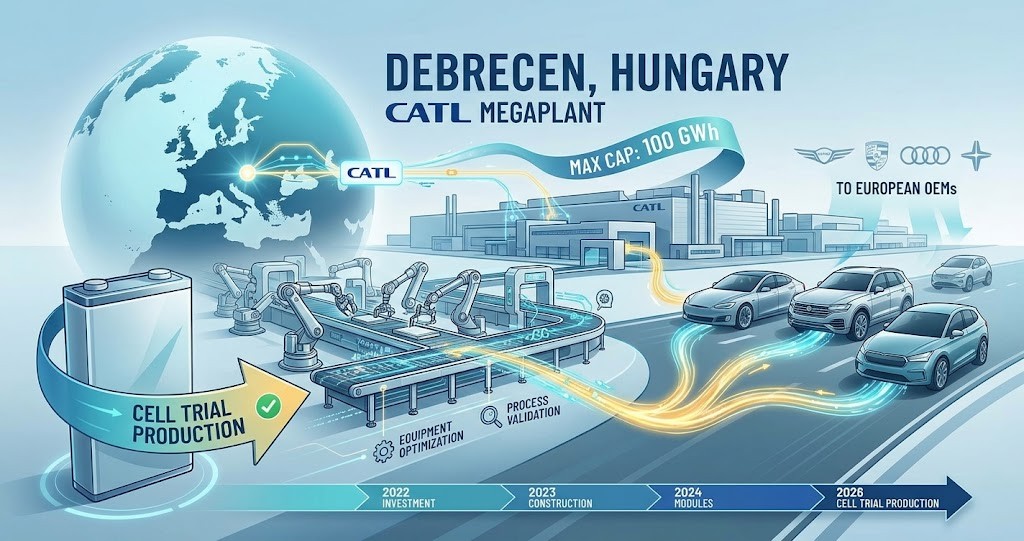
世界最大の車載電池メーカーである中国のCATL(Contemporary Amperex Technology Co., Limited)が、欧州における戦略的巨大拠点であるハンガリー・デブレツェン工場にて、電池セルの試験生産を開始しました。欧州市場での電気自動車(EV)シフトと域内調達(ローカライズ)の要求が高まる中、本工場の稼働は欧州自動車産業のサプライチェーンに大きなインパクトを与えるものとして注目されています。
以下に、今回の発表内容と背景となる関連情報をまとめてお届けします。
1. 発表概要:デブレツェン工場での試験生産開始
CATLは2026年9月22日、ハンガリーのデブレツェンに建設したセル工場の最初の2つの生産ラインにおいて試運転(試験生産)を開始したと発表しました。
- 試運転の目的: 量産開始に向けた生産設備および製造プロセスの設定、最適化、検証。
- 許認可と環境配慮: 2026年8月に使用許可を取得し、統合環境汚染防止・管理(IPPC)許可の全条件をクリア。地元住民の懸念を受けた当局の現地調査を経て、初期に指摘された不備をすべて解消した上で稼働に至りました。
- これまでの実績: 2022年8月に投資発表、2023年夏に建設開始。2024年秋からは先行してバッテリーモジュールの製造を開始しており、累計53万7000個のモジュールを生産しています。
2. 工場規模と今後の展開
- 中国国外で最大規模: すべての設備が完成・稼働した際には、生産能力が100 GWh(ギガワット時)に達し、CATLにとって中国国外で最大規模の製造拠点となります。
- 欧州大手メーカーへの供給拠点: 近年EV生産能力を拡大している欧州の主要自動車メーカーへ、最先端かつ柔軟なラインからバッテリーを直接供給します。
3. 【関連情報】背景と補足解説
① なぜハンガリー(デブレツェン)なのか?
ハンガリーは近年、欧州におけるEVおよびバッテリー製造の一大ハブ(中心地)として急速に台頭しています。
- 自動車産業の集積: BMWがデブレツェンにEV専用工場を建設しているほか、メルセデス・ベンツ(Mercedes-Benz)やアウディ(Audi)などの独大手メーカーが同国内に大型工場を構えています。
- 中国企業との親和性: ハンガリー政府は「東方開拓」政策を掲げて親中国的な外交・経済姿勢をとっており、中国EV・電池メーカーの積極的な誘致を進めています。
② 欧州市場における「域内生産(ローカライズ)」の重要性
欧州連合(EU)では、バッテリーのサステナビリティ規則やCO2排出規制の強化に伴い、電池の「域内調達」および「低炭素な製造プロセス」が厳しく求められています。CATLが欧州現地でセルから一貫生産することは、輸送料金の削減や関税リスクの回避、カーボンフットプリントの低減に直結します。
③ デブレツェン工場を巡る環境問題と住民の懸念
デブレツェン工場は、投資額が約73億ユーロという同国史上最大級の大型プロジェクトである一方、大量の地下水消費や有害物質の漏洩リスク、騒音問題などを懸念する地元住民や環境団体からの反発に直面してきました。今回の試運転開始にあたり、地元当局による厳格な調査と補正が行われ、透明性の確保と環境モニタリングの徹底が強調された背景には、こうした対立を収束させる狙いがあります。
4. まとめ
CATLのデブレツェン工場におけるセル試験生産の開始は、同社が欧州EVサプライチェーンの中心としての地位を一段と固めたことを意味します。環境規制や安全基準を遵守しつつ100 GWhのフル稼働へ向けて進めるかが、今後の欧州自動車産業全体の電動化のスピードを左右する重要な鍵となります。
CATL Begins Trial Production of Battery Cells in Hungary: Advances Toward Full Operations After Clearing Environmental Permits
Contemporary Amperex Technology Co., Limited (CATL), the world’s largest automotive battery manufacturer based in China, has initiated trial production of battery cells at its giant strategic manufacturing hub in Debrecen, Hungary. As the shift toward electric vehicles (EVs) accelerates and demands for regionalized sourcing intensify in the European market, the operation of this facility is drawing significant attention for its potential impact on the European automotive supply chain.
Below is a summary of the announcement along with relevant background information.
1. Announcement Overview: Start of Trial Production at the Debrecen Plant
On September 22, 2026, CATL announced that it has commenced trial operations (test production) on the first two production lines of its newly built cell manufacturing plant in Debrecen, Hungary.
- Purpose of Trial Operations: Setting, optimizing, and validating production equipment and manufacturing processes ahead of full-scale mass production.
- Permitting and Environmental Compliance: Obtained usage permits in August 2026 and cleared all prerequisite conditions under Integrated Pollution Prevention and Control (IPPC) permits. Following site inspections conducted by local authorities to address initial resident concerns, the facility resolved all previously identified deficiencies prior to starting operations.
- Track Record to Date: Following the initial investment announcement in August 2022 and the start of construction in summer 2023, battery module manufacturing began in autumn 2024, with cumulative production reaching 537,000 modules to date.
2. Plant Scale and Future Roadmap
- Largest Facility Outside China: Once all facilities are fully built and operational, the plant will boast a total production capacity of 100 GWh (gigawatt-hours), making it CATL’s largest manufacturing hub outside of China.
- Supply Hub for Major European Automakers: The plant will directly supply advanced, flexible battery solutions to major European carmakers that have been rapidly expanding their EV production capacity in recent years.
3. Background and Supplementary Information
(1) Why Debrecen, Hungary?
In recent years, Hungary has rapidly emerged as a major hub for EV and battery manufacturing in Europe.
- Automotive Cluster: In addition to BMW constructing an EV-dedicated factory in Debrecen, major German automakers such as Mercedes-Benz and Audi operate large-scale manufacturing facilities across the country.
- Alignment with Chinese Enterprises: Under its “Eastern Opening” policy, the Hungarian government has adopted a pro-China diplomatic and economic stance, actively courting investments from Chinese EV and battery manufacturers.
(2) Strategic Importance of Localized Production in the European Market
With the European Union enforcing stricter battery sustainability regulations and CO2 emission targets, “local-to-local sourcing” and low-carbon manufacturing processes have become essential requirements. By establishing integrated local production from cells to modules in Europe, CATL directly reduces transportation costs, mitigates tariff risks, and lowers its overall carbon footprint.
(3) Environmental Issues and Resident Concerns Surrounding the Debrecen Plant
With a total investment value of approximately 7.3 billion euros, the Debrecen plant represents the largest greenfield investment in Hungary’s history. However, the project faced opposition from local residents and environmental groups regarding heavy groundwater consumption, potential leakage of hazardous substances, and noise pollution. The stringent inspections and remediation enforced by local authorities prior to trial production—along with CATL’s emphasis on transparency and ongoing environmental monitoring—were designed to address these community concerns and resolve the dispute.
4. Conclusion
The start of trial cell production at CATL’s Debrecen plant signals that the battery giant has further solidified its position at the core of the European EV supply chain. How smoothly the company transitions toward its full 100 GWh capacity while maintaining strict adherence to environmental regulations and safety standards will be a critical factor influencing the overall speed of electrification across the European automotive industry.

コメント