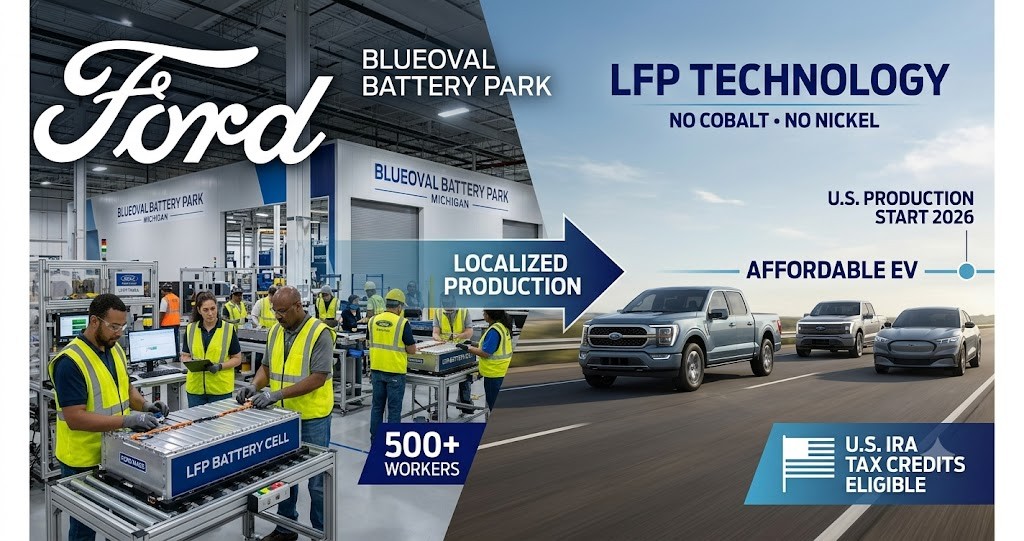
電気自動車(EV)市場における価格競争が激化するなか、米国の自動車大手フォード・モーターが大きな一歩を踏み出しました。同社は、ミシガン州の「ブルーオーバル・バッテリーパーク」において、コストパフォーマンスに優れたリン酸鉄リチウム(LFP)バッテリーセルの生産体制を本格化させています。本稿では、提供された最新ニュースをもとに、同社の狙いや背景にある関連情報を交えて分かりやすく解説します。
ニュースの概要と進捗状況
フォードは、ミシガン州マーシャルにある工場で初のLFPバッテリーセルの生産(テスト・検証用の「Dサンプル」)を開始しました。2026年末までの量産開始を目指し、着実に準備を進めています。
- 現状のステータス: 今春に設備トレーニング用の「Cサンプル」を生産し、現在は量産用材料を用いた「Dサンプル」の検証フェーズに移行。
- 雇用計画: 現在の従業員数は500人以上。2026年末までに800人、最終的には1,700人まで拡大予定。すでに11,500件以上の応募が殺到しています。
- ターゲット: 2027年に発売予定の「新しいユニバーサルEVプラットフォーム(中型電気ピックアップトラックなど)」に搭載されます。
関連情報:なぜ今「LFPバッテリー」なのか?
ニュースをより深く理解するために、フォードがLFPバッテリーの国内生産にこだわる理由と、業界の背景を補足します。
1. コスト削減と「脱・希少金属」
従来のEVの多くには、ニッケル、マンガン、コバルトを使用する「NMCバッテリー」が使われてきました。しかし、これらは材料費が高く、供給リスクも伴います。
一方、LFP(リン酸鉄リチウム)はニッケルやコバルトを使用しないため、生産コストを大幅に抑えられます。また、寿命が長く熱安定性(安全性)が高いというメリットもあります。
2. 中国勢への対抗と米国の「IRA(インフレ抑制法)」
現在、LFPバッテリーの製造は中国企業が圧倒的なシェアを握っています。フォードは、世界最大のEVバッテリーメーカーである中国の「CATL」から技術ライセンスを取得するという戦略をとりました。
合弁会社ではなくフォードが100パーセント所有・運営管理することで、米国国内のサプライチェーンを強靭化し、安価な中国製EVに対抗する狙いがあります。また、米国国内で製造することは、購入者が税制優遇措置(補助金)を受けられる要件を満たすためにも極めて重要です。
まとめ:フォードのEV戦略の展望
フォードのこの取り組みは、単にバッテリーを自社生産するだけでなく、「手頃な価格のEV」を米国市場に定着させるための基盤づくりです。
| 項目 | 詳細 |
| 生産拠点 | ブルーオーバル・バッテリーパーク(ミシガン州マーシャル) |
| 採用技術 | LFP(リン酸鉄リチウム)※CATLからのライセンス供与 |
| 主なメリット | コスト削減、コバルト/ニッケル不要、国内サプライチェーンの強化 |
| 今後のマイルストーン | 2026年末までに量産準備完了、2027年に新型EVプラットフォームへ搭載 |
高価なレアメタルに依存しないLFPバッテリーの国内生産化は、フォードがテスラや中国のBYDといった競合に対抗し、普及価格帯のEVシフトを加速させるためのゲームチェンジャーとなる可能性を秘めています。
出典:https://www.cbtnews.com/ford-begins-u-s-production-of-lfp-battery-cells/
Ford Begins US-First LFP Battery Cell Production for EVs: Aiming to Strengthen Domestic Supply Chain
As price competition intensifies in the electric vehicle (EV) market, American automotive giant Ford Motor Company has taken a major step forward. At its BlueOval Battery Park in Michigan, the company is ramping up production capabilities for cost-effective Lithium Iron Phosphate (LFP) battery cells. Based on the latest news, this report provides an easy-to-understand overview of Ford’s goals and the underlying context.
News Overview and Progress
Ford has started producing its first LFP battery cells (“D-samples” for testing and validation) at its plant in Marshall, Michigan. The company is making steady progress toward kicking off mass production by the end of 2026.
- Current Status: Following the production of “C-samples” this spring for equipment training, the plant has now moved into the validation phase with “D-samples” made from mass-production materials.
- Hiring Plans: The facility currently employs over 500 people. Ford plans to expand the workforce to 800 by the end of 2026, and eventually to 1,700. More than 11,500 applications have already flooded in.
- Target: These batteries will power Ford’s new universal EV platform, scheduled to debut in 2027 with a midsize electric pickup truck.
Context: Why “LFP Batteries” Now?
To better understand this news, here is some background on why Ford is focusing heavily on the domestic production of LFP batteries.
1. Cost Reduction and Moving Away from Critical Minerals
Many conventional EVs use NMC (Nickel Manganese Cobalt) batteries. However, these materials come with high costs and supply chain risks.
In contrast, LFP (Lithium Iron Phosphate) batteries eliminate the need for nickel and cobalt, significantly lowering production costs. They also offer the benefits of a longer lifespan and high thermal stability (safety).
2. Rivaling Chinese Competitors and the US IRA (Inflation Reduction Act)
Currently, Chinese companies hold an overwhelming share of the LFP battery manufacturing market. To accelerate development, Ford adopted a strategy to license battery technology from CATL, the world’s largest EV battery manufacturer.
Rather than forming a traditional joint venture, Ford retains 100 percent ownership and operational control of the Michigan facility. This approach aims to strengthen the domestic supply chain and counter affordable Chinese EVs. Furthermore, manufacturing within the United States is crucial for meeting the requirements that allow buyers to qualify for federal tax incentives (subsidies).
Conclusion: Outlook on Ford’s EV Strategy
Ford’s initiative is not just about making its own batteries; it is about building the foundation to establish affordable EVs in the US market.
| Item | Details |
| Production Facility | BlueOval Battery Park Michigan (Marshall, Michigan) |
| Technology Adopted | LFP (Lithium Iron Phosphate) *Licensed from CATL |
| Key Benefits | Cost reduction, elimination of cobalt/nickel, stronger domestic supply chain |
| Upcoming Milestones | Mass production readiness by the end of 2026, deployment in the new EV platform in 2027 |
By localizing LFP battery production and reducing dependence on expensive rare metals, Ford is positioning itself to compete with rivals like Tesla and China’s BYD. This move has the potential to be a true game-changer in accelerating the shift toward mass-market EVs.

コメント