1. 決算の主要数値
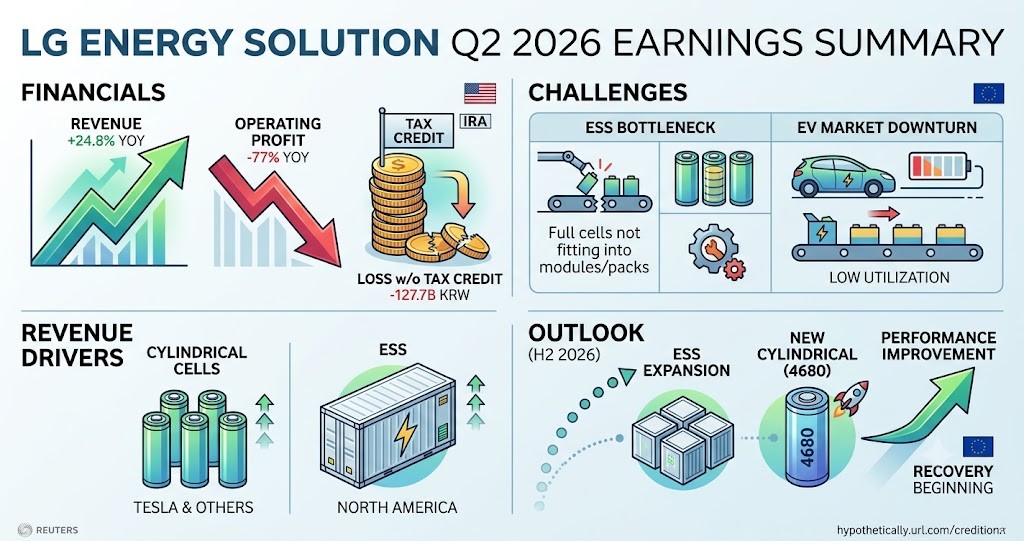
- 売上高: 前年同期比 24.8パーセント増加
- 営業利益: 1130億ウォン(約7850万ドル)で、前年同期比 77パーセント減少(会社見通し通りの水準)
- 税額控除を除いた営業損益: 1277億ウォンの赤字(米国インフレ抑制法:IRAに基づく税額控除を除いた場合)
2. 減益の主な要因(生産のボトルネックと稼働率低下)
- ESS(電力貯蔵システム)の課題: 需要自体は伸びているものの、北米でのESS用モジュールおよびパックの組み立て能力が不足し、セル生産が出荷に結びつかないボトルネックが発生。新ライン立ち上げに伴う立ち上げコストも増加。
- EV(電気自動車)用電池の低迷: 北米にあるEV用パウチセル工場の稼働率低下が利益率を直接圧迫。
3. 売上高を支えた要因
- テスラをはじめとする主要顧客向けの円筒形電池の販売増。
- 北米を中心とするESS(電力貯蔵システム)全体の出荷伸ばし。
関連情報・背景解説
- EV市場の世界的な減速(EVキャズム): 現在、世界的にEV需要の伸びが鈍化(キャズム期)しており、車載電池メーカー各社は一時的な稼働率調整を余儀なくされています。LGESもパウチ型電池の需要減少などの影響を大きく受けています。
- 米国IRA(インフレ抑制法)への依存度: LGESをはじめとする韓国電池メーカーの損益は、米国のIRAによる補助金・税額控除に大きく依存しています。今回も補助金を除くと実質赤字となっており、北米生産の早期正常化と自力稼働率の改善が大きな課題となっています。
- 下半期(第3・第4四半期)に向けた見通し: 専門家やアナリスト(多雲投資証券など)は、業績は「底を脱しつつある」と分析しています。下半期にかけては、北米でのESS需要の更なる拡大、テスラ向け「4680」などの新型円筒形セルの供給増加、欧州EV市場の緩やかな回復などが追風となり、業績の改善が進むと予想されています。
出典:https://jp.reuters.com/economy/ZXGG24YAVROO5OJBMMEAUT7ZDM-2026-07-30/
LG Energy Solution Q2 2026 Earnings Summary
1. Key Financial Figures
- Revenue: Up 24.8 percent year-on-year
- Operating Profit: 113 billion KRW (approx. 78.5 million USD), down 77 percent year-on-year (in line with company forecasts)
- Operating Loss Excluding Tax Credits: Loss of 127.7 billion KRW (when excluding tax credits under the U.S. Inflation Reduction Act: IRA)
2. Main Factors for Profit Decline (Production Bottlenecks and Lower Utilization Rates)
- ESS (Energy Storage System) Challenges: While demand itself is growing, insufficient assembly capacity for ESS modules and packs in North America created a bottleneck, preventing cell production from translating into actual shipments. Ramp-up costs for new lines also increased.
- EV (Electric Vehicle) Battery Slump: Lower operation rates at EV pouch cell plants in North America put direct pressure on profit margins.
3. Drivers Supporting Revenue Growth
- Increased sales of cylindrical batteries for major clients, including Tesla.
- Growth in overall ESS (Energy Storage System) shipments, primarily centered in North America.
Related Context and Background
- Global EV Market Slowdown (EV Chasm): Growth in global EV demand is currently slowing down (entering a “chasm” period), forcing automotive battery makers to adjust operational capacity temporarily. LGES has been heavily impacted by factors such as declining demand for pouch-type cells.
- Dependence on the U.S. IRA (Inflation Reduction Act): Earnings for South Korean battery makers, including LGES, rely heavily on subsidies and tax credits provided by the U.S. IRA. Excluding these tax credits, the company recorded an actual operating loss this quarter, making the early normalization of North American production and improving self-sustained utilization rates major priorities.
- Outlook for the Second Half (Q3 and Q4): Experts and analysts (such as those at Daol Investment & Securities) suggest that performance is “reaching a bottom.” Moving into the second half of the year, performance is expected to improve, driven by tailwinds such as further expansion of ESS demand in North America, increased supply of next-generation cylindrical cells (like the 4680) to Tesla, and a gradual recovery in the European EV market.
コメント