次世代バッテリーとして世界中から大きな注目を集める「全固体電池」の商用化に向けて、米国の先進開発企業と韓国の製造大手が手を組む重要な動きが見られました。本まとめでは、公表された提携の要点に加え、全固体電池を取り巻く業界背景や今後の展望などの関連情報を分かりやすく解説します。
1. 提携の概要と主要な目的
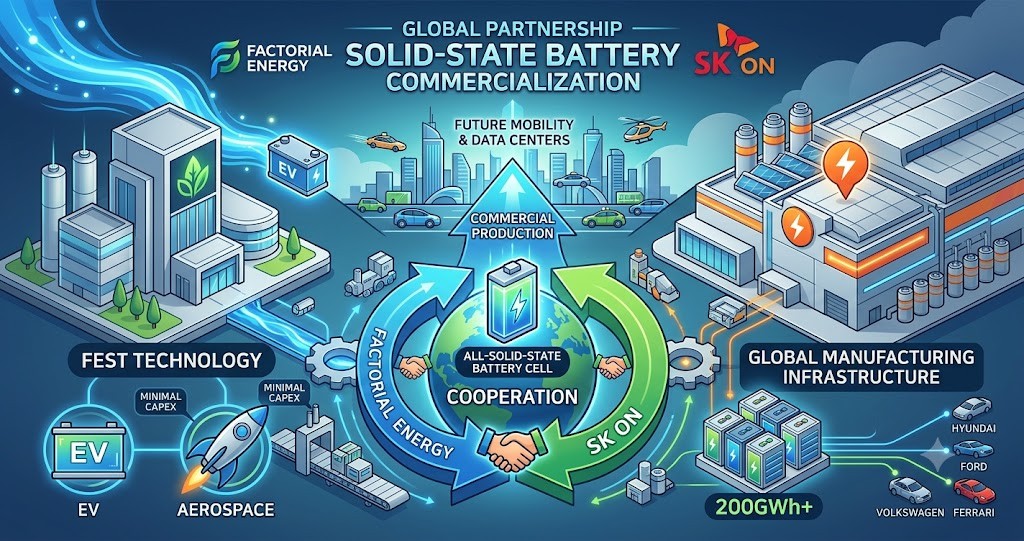
- 締結内容: 次世代固体電池技術の開発企業であるFactorial Energyと、大手電池メーカーであるSK Onが覚書(MOU)を締結。
- 目的: Factorialの先進的な全固体電池技術(FEST)と、SK Onが持つ世界規模の既存リチウムイオン電池製造インフラやパイロットプラントの能力を組み合わせ、全固体電池の商業生産に向けた技術的実現可能性および製造上の課題を評価すること。
2. 両社の役割と強み
- Factorial(開発側):
- 自社の「FEST」固体電池プラットフォームの技術およびスケールアップに関する専門知識を提供。
- 既存の製造ラインを流用できる設計を採用することで、莫大な新規投資を抑えた「資本効率の高い産業化」を目指す。
- モビリティ(自動車)だけでなく、航空宇宙システムやハイパースケールデータセンターなど幅広い用途を視野に入れる。
- SK On(製造側):
- 全世界で年間200GWh以上(うち米国で約100GWh)の巨大な生産能力と高度な製造ノウハウを提供。
- ヒョンデ、フォード、フォルクスワーゲン、フェラーリなど主要自動車メーカーへの供給網を持つ。
3. 本提携の位置づけ
- 画期的な技術であっても量産化(大規模生産)ができなければ意味がないという考えのもと、Factorialにとっては世界的な電池製造パートナーと直接組むことで事業規模の拡大を加速させる戦略的アプローチとなる。
関連情報・背景解説
- 全固体電池(Solid-State Battery)とは:従来の液体電解質に代わり、固体の電解質を使用する次世代バッテリーです。エネルギー密度の飛躍的な向上(バッテリーの小型・軽量化および航続距離の延長)、発火リスクの大幅な低減(高い安全性)、急速充電性能の向上が期待されています。
- 「量産化の壁」と既存設備の流用:全固体電池は開発段階での成功例が多い一方、大量生産における精度管理や製造コストの高さが最大の難所(キャズム)とされています。新工場をゼロから建設するのではなく、SK Onが持つ既存のリチウムイオン電池製造ラインをいかに転用できるかが、市場投入を大幅に早める鍵となります。
- 米中対立と北米サプライチェーン:SK Onは米国(ジョージア州、テネシー州など)に強力な製造基盤を持っています。米国におけるインフレ抑制法(IRA)や安全保障政策を念頭に、米国発の技術であるFactorialと韓国製電池の巨大生産能力を北米現地で結合させることは、北米の車載・産業用バッテリー市場で優位性を確保する狙いもあります。
Accelerating Commercialization of Solid-State Batteries: Factorial and SK On Sign Manufacturing Partnership (MOU)
Introduction
In a key move toward commercializing solid-state batteries—a next-generation technology attracting major global attention—an advanced U.S. developer and a leading South Korean manufacturer have joined forces. This summary covers the key points of the announced partnership, alongside relevant background information on the solid-state battery industry and its future outlook.
1. Partnership Overview and Key Objectives
- Agreement: Factorial Energy, a developer of next-generation solid-state battery technology, and SK On, a major battery manufacturer, have signed a Memorandum of Understanding (MOU).
- Objective: Combine Factorial’s advanced solid-state battery technology (FEST) with SK On’s global lithium-ion manufacturing infrastructure and pilot plant capabilities to evaluate technical feasibility and manufacturing considerations for commercial production.
2. Roles and Strengths of Both Companies
- Factorial (Developer):
- Provides technology and scale-up expertise for its proprietary FEST solid-state battery platform.
- Aims for capital-efficient industrialization by designing batteries that can leverage existing manufacturing lines, avoiding massive new infrastructure investments.
- Targets a wide range of applications, including electric mobility (automotive), aerospace systems, and hyperscale data centers.
- SK On (Manufacturer):
- Contributes massive global production capacity—over 200 GWh annually, including roughly 100 GWh in the U.S.—and advanced manufacturing expertise.
- Maintains established supply chains with major automakers such as Hyundai, Ford, Volkswagen, and Ferrari.
3. Strategic Significance
- Based on the principle that breakthrough technology is meaningless without mass production capabilities, this agreement represents a strategic approach for Factorial to accelerate its growth by partnering directly with a top-tier global battery manufacturer.
Related Context and Background
- What is a Solid-State Battery? A next-generation battery that uses a solid electrolyte instead of the conventional liquid electrolyte. It is expected to offer significantly higher energy density (resulting in smaller, lighter batteries and extended range), greatly reduced fire risks (higher safety), and faster charging capabilities.
- The “Mass Production Barrier” and Leveraging Existing Facilities: While solid-state batteries have shown success in laboratory and development stages, high manufacturing costs and precise quality control during mass production remain the primary hurdles (the chasm). Reusing SK On’s existing lithium-ion production lines—rather than building brand-new facilities from scratch—is critical to significantly speeding up market entry.
- U.S.-China Tension and the North American Supply Chain: SK On has a strong manufacturing footprint in the U.S. (including Georgia and Tennessee). Aligning U.S.-developed technology from Factorial with South Korea’s massive manufacturing capacity directly within the U.S. serves to secure a competitive edge in the North American automotive and industrial battery markets, especially in light of the U.S. Inflation Reduction Act (IRA) and national security policies.
コメント