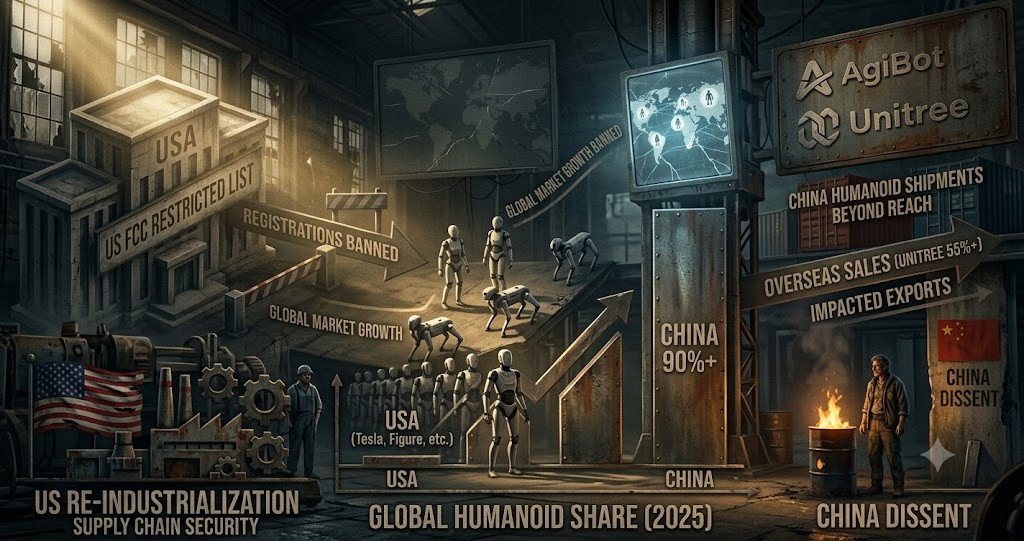
米トランプ政権(2026年7月28日発表)は、米連邦通信委員会(FCC)の「規制対象機器リスト」にヒューマノイドや四足歩行ロボットなどの新型機器を新たに追加しました。これにより、外国製の未発売ロボットはFCC認証が取得不可となり、米国市場からの事実上の締め出しが始まります。
名目上は外国製全般を対象としていますが、実質的には世界市場で急速に台頭する中国ロボットメーカーをターゲットにした「技術・産業安全保障上の措置」と見られています。
ニュースの要点まとめ
- 新規制の概要:FCCの「規制対象機器リスト」にロボット(ヒューマノイド、四足歩行含む)および電力インバーターを追加。新規制は即日施行され、対象は未発売の新モデル限定。
- 米国の狙い:サプライチェーンにおけるAI・ハイテク機器のリスク低減と、基幹産業の米国回帰(自国産業の保護・育成)。
- 中国市場の圧倒的存在感:調査会社オムディア(Omdia)によると、2025年の世界ヒューマノイド出荷台数(約1万3000台)のうち、中国勢が上位6社を独断しシェア約90パーセントを獲得。上位にはアジボット(AgiBot / 智元機器人)やユニツリー(Unitree Robotics / 宇樹科技)が位置し、米国勢(フィギュアAIやテスラ)を大きく引き離しています。
- 中国企業の受ける打撃:ユニツリーの海外売上高比率は55パーセントを超え米国が最大市場。アジボットも海外展開を加速させていた矢先の規制となり、海外戦略の大幅な見直しを迫られます。
- 中国側の反発:中国駐米大使館は「中傷や制裁による威圧」と強く反発し、必要な対抗措置を講じる姿勢を示しています。
関連情報(補足・解説)
今回の措置をより深く理解するための関連背景と今後の展望です。
1. 通信規制(FCCリスト)を活用した対中ハイテク封じ込めの歴史
米国はこれまで、通信インフラやデータ安全保障の観点から、DJI(ドローン)、ファーウェイ(通信機器)、ハイクビジョン(防犯カメラ)などの中国大手企業をFCCリストに追加してきました。今回の措置は、ネットワーク接続やカメラ・センサー、AI基盤を標準搭載する「自律型ロボット」を、単なる機械ではなく「情報収集・通信デバイス(安全保障上のリスク)」として位置づけた新たな段階と言えます。
2. 段階的に強まる対中ロボット規制の流れ
米政府および議会は、ここ数ヶ月で急速に規制の網を狭めていました。
- 2026年3月:政府機関での中国製ヒューマノイド調達を禁止する「米国安全ロボット法案(American Security Robot Act)」が提出。
- 2026年6月:ユニツリーがエヌビディア(NVIDIA)のヒューマノイド向けAI基盤モデル「アイザック グルート(Isaac GR00T)」のパートナーに選定された直後、米国防総省が同社を「中国軍事関連企業(1260Hリスト)」に追加。
今回のFCC規制は、これまでの「政府調達の禁止」から「民間・一般市場も含めた実質的な輸入禁止」へと一歩踏み込んだ形になります。
3. 米国メーカー(テスラ等)への影響と今後の市場予測
- 米国内産業への追い風:テスラの「オプティマス(Optimus)」やフィギュアAI(Figure AI)などの米国勢にとっては、低価格で量産化を進める強力な中国競合が米国内から排除されるため、短期〜中期的には追い風となります。
- サプライチェーンの分断:一方で、高性能なモーターや減速機、センサーなどの部品・ハードウェア量産において中国企業が圧倒的なコスト競争力を持っていたため、米国勢の製造コスト高騰や普及スピードの遅れにつながる懸念も指摘されています。
今後は、欧州(EU)や日本・韓国など、まだ参入余地のある市場へと中国メーカーの輸出が集中することが予想されます。
US Substantially Tightens Robot Regulations Against China: Ineligibility for FCC Certification Makes US Market Entry Difficult for Chinese Makers
On July 28, 2026, the Trump administration announced the addition of new devices, including humanoid and quadruped robots, as well as power inverters, to the Federal Communications Commission (FCC) Covered List. As a result, unreleased foreign-made robots will no longer be able to obtain FCC certification, effectively initiating their exclusion from the US market.
While nominally targeting foreign products in general, the policy is widely seen as a technological and industrial security measure specifically aimed at Chinese robot manufacturers, which have been rapidly expanding in the global market.
Summary of Key Points
- Overview of New Regulations: Robots (including humanoids and quadrupeds) and power inverters have been added to the FCC Covered List. The new regulations take effect immediately and apply strictly to unreleased new models.
- US Intent: Reducing risks associated with AI and high-tech devices within the supply chain, while supporting the reshoring of key industries to protect and nurture domestic business.
- Dominant Presence of Chinese Makers: According to research firm Omdia, among the approximately 13,000 global humanoid robot shipments in 2025, Chinese companies swept the top six positions, holding a combined market share of approximately 90 percent. Leading players such as AgiBot and Unitree Robotics significantly outpaced US competitors like Figure AI and Tesla.
- Impact on Chinese Firms: Unitree relies on overseas markets for over 55 percent of its revenue, with the US being its largest single market. For AgiBot, the regulation comes just as it was accelerating its international expansion, forcing a major revision of its overseas strategy.
- China’s Backlash: The Chinese Embassy in the US strongly pushed back, demanding that the US stop coercion through slander and sanctions, and stated it would take necessary countermeasures.
Related Background and Commentary
Key background context and future outlook to provide a deeper understanding of this measure.
1. History of Tech Containment Targeting China via FCC Telecommunications Regulations
From the perspective of telecommunications infrastructure and data security, the US has previously added major Chinese firms such as DJI (drones), Huawei (telecom equipment), and Hikvision (surveillance cameras) to the FCC Covered List. This latest move marks a new phase, positioning autonomous robots equipped with network connectivity, cameras, sensors, and AI foundation models not as mere machinery, but as information-gathering and communication devices that pose security risks.
2. Gradual Escalation of Chinese Robot Regulations
The US government and Congress have been rapidly tightening regulatory controls in recent months.
- March 2026: The American Security Robot Act was introduced, proposing a ban on federal agency procurement of Chinese-made humanoids.
- June 2026: Shortly after Unitree was selected as a partner for NVIDIA’s Isaac GR00T humanoid AI foundation model, the US Department of Defense added the company to its 1260H list of Chinese military-linked companies.
The latest FCC regulation steps beyond previous government procurement bans to impose what is effectively an import ban extending to commercial and consumer markets.
3. Impact on US Manufacturers (Tesla, etc.) and Future Market Outlook
- Tailwind for Domestic US Industry: For US players such as Tesla with Optimus and Figure AI, the exclusion of strong Chinese competitors offering low-cost mass production provides a favorable environment in the short to medium term.
- Supply Chain Fragmentation: Conversely, because Chinese companies possessed overwhelming cost competitiveness in mass-producing hardware components such as high-performance motors, reducers, and sensors, concerns remain that this action could lead to rising manufacturing costs and slower adoption rates for US firms.
Going forward, Chinese manufacturers are expected to redirect their export efforts toward regions with remaining market opportunities, such as the European Union (EU), Japan, and South Korea.
コメント