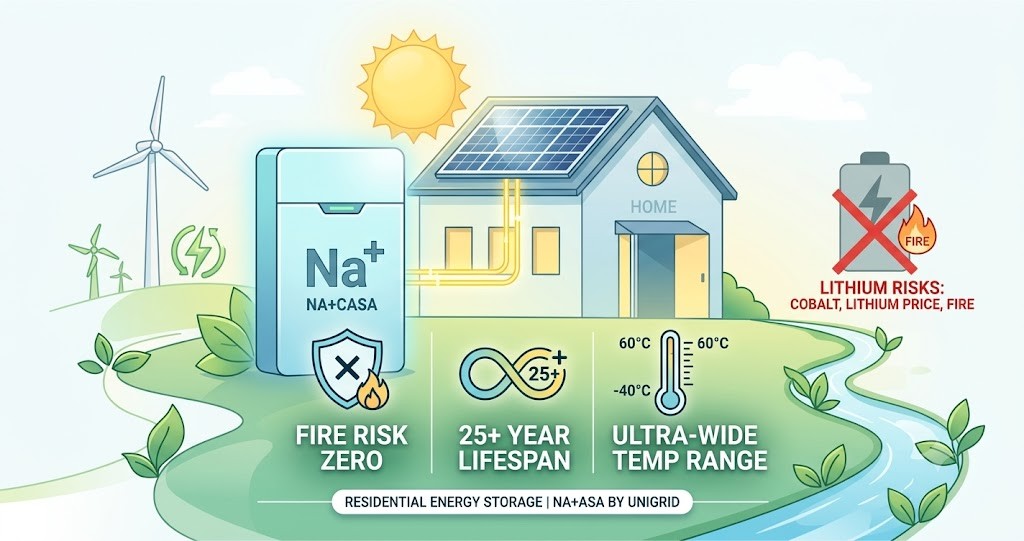
現在、クリーンエネルギーへの移行に伴い、太陽光発電と組み合わせる家庭用蓄電池の需要が世界中で急増しています。これまで市場の主流だったリチウムイオン電池は、高いエネルギー密度を持つ反面、レアメタルの価格高騰や地政学的リスク、そして過充電などによる「発火・火災リスク」という課題を抱えていました。
こうした中、地球上に豊富に存在するナトリウム(塩の主成分)を使用する「ナトリウムイオン電池」が、極めて安全で安価な次世代の選択肢として世界中から大きな注目を集めています。今回、米国のスタートアップ企業であるユニグリッド社が発表した住宅用蓄電システム「Na+Casa」は、まさにこの流れを加速させる画期的な製品です。
ユニグリッド社「Na+Casa」の発表内容まとめ
米国カリフォルニア州に拠点を置くユニグリッド(Unigrid)社は、同社初となる住宅用エネルギー貯蔵システム(RESS)「Na+Casa」を発売し、ヨーロッパでの最初の設置を完了しました。2026年末までには米国市場での発売も予定しています。
1. 独自技術「NCO」による圧倒的な長寿命と安全性
システムには、同社独自のナトリウムクロム酸化物(NaCrO2、またはNCO)正極技術を用いたバッテリーセルが搭載されています。
- 火災リスクゼロ: 従来のリチウムイオン電池とは異なり、結晶構造が非常に安定しているため、発火のリスクがありません。
- 25年以上の稼働寿命: 容量100%での充放電サイクルが1万回以上に達します。これは27年以上毎日充放電を繰り返しても劣化しない計算であり、環境によっては3万回以上のサイクル寿命を謳う製品もあります。
2. 過酷な環境に耐える温度特性
近年の地球温暖化による異常気象にも耐えられるよう、極めて広い動作温度範囲を誇ります。
- 充電時の対応温度: -20 ℃ ~ 60 ℃ (-4 F ~ 140 F)
- 放電時の対応温度: -40 ℃ ~ 60 ℃ (-40 F ~ 140 F) ※リチウムイオン電池が苦手とする極寒の環境でも問題なく動作します。
3. 主な仕様・スペック
- 利用可能エネルギー容量: 9.25 kWh
- 公称電圧: 46.4 V
- 充放電電流: 標準 50 A(放電時は最大 200 A のパルス電流まで対応)
- サイズ: 幅 477 mm(18.78 インチ)× 高さ 34.12 インチ × 奥行き 10.6 インチ
- 重量: 108.9 kg(240 ポンド)
- 設置柔軟性: 壁掛け設置、またはオプションの車輪付き設置が可能。
- 互換性: 既存のほとんどのハイブリッドインバーターと互換性があり、既存の太陽光システムの改修・後付けが容易です。
4. 初期費用ゼロの「リースモデル」の展開
ユニグリッド社は、25年という長寿命を活かし、頭金ゼロの「リースモデル(第三者所有モデル)」を計画しています。ユーザーに最初の高額な購入リスクを負わせず、毎月の電気代削減メリットから費用を回収する仕組みです。2026年後半には、カリフォルニア州で商業用エネルギー貯蔵システム(C&I)での試験運用が開始されます。
【関連情報の補足】ナトリウムイオン電池市場の現状と競合動向
ユニグリッド社の「Na+Casa」は、世界で台頭しつつある黎明期のナトリウムイオン電池製品の一つです。現在、この市場では量産化と規格認証をめぐる競争が激化しています。
競合企業の動向
- Lithium Valley(リチウムバレー)および Biwat(ビワット): 住宅用のモジュール式ナトリウムイオン電池を最近発表。この2社は、米国市場での本格的な販売に不可欠とされる安全規格「UL認証」をすでに取得しており、市場展開において一歩リードしています。
- Eleven Energy(イレブンエナジー): 同様に住宅用モジュール式バッテリーを発表し、参入を本格化させています。
ユニグリッド社の今後の展望
ユニグリッド社の製品は現在、国際的な輸送安全基準である「UN 38.3 認証」を取得済みで、欧州の「CEマーク」、米国の「UL 9540」「UL 1973」といった主要な安全認証も間もなく取得できる見込みです。
また、同社は2026年中にバッテリーセルの生産量を年間 1 GWh(ギガワット時)にするという大規模なマイルストーンを掲げています。量産体制が整えば、現在主流のリチウムイオン電池ソリューションに対して、価格面でもさらに強力な競争力を持つことになると期待されています。
Unigrid’s Innovative Residential Sodium-Ion Battery: Achieving Zero Fire Risk and a 10,000-Cycle Lifespan
Currently, with the transition to clean energy, the global demand for residential storage batteries paired with solar power systems is surging. Lithium-ion batteries, which have been the mainstream choice in the market, offer high energy density. However, they face challenges such as soaring prices of rare metals, geopolitical risks, and ignition or fire risks caused by overcharging.
Under these circumstances, sodium-ion batteries—which use sodium (the main component of salt) that is abundantly available on Earth—are attracting massive attention from around the world as an extremely safe and affordable next-generation alternative. “Na+Casa,” the residential energy storage system recently announced by the US startup Unigrid, is a groundbreaking product that accelerates this trend.
Summary of Unigrid’s “Na+Casa” Announcement
Unigrid, a company based in California, USA, has launched its first residential energy storage system (RESS), “Na+Casa,” and completed its first installations in homes across Europe. The company also plans to launch the product in the US market by the end of 2026.
1. Overwhelmingly Long Lifespan and Safety via Proprietary “NCO” Technology
The system is equipped with battery cells that utilize the company’s proprietary sodium chromium oxide (NaCrO2, or NCO) cathode technology.
- Zero Fire Risk: Unlike conventional lithium-ion batteries, the crystal structure is extremely stable, eliminating the risk of ignition.
- Operational Lifespan of 25+ Years: The charge-discharge cycle reaches over 10,000 cycles at 100% capacity. This calculates to no degradation even when repeatedly charged and discharged every day for more than 27 years. Depending on the environment, some products even claim a cycle life of over 30,000 cycles.
2. Temperature Tolerances and Capabilities to Withstand Harsh Environments
The system boasts an extremely wide operating temperature range to endure the extreme weather caused by recent global warming.
- Charging Temperature Range: -20 C to 60 C (-4 F to 140 F)
- Discharging Temperature Range: -40 C to 60 C (-40 F to 140 F) *It operates smoothly even in freezing environments where lithium-ion batteries struggle.
3. Main Specifications and Specs
- Usable Energy Capacity: 9.25 kWh
- Nominal Voltage: 46.4 V
- Charge/Discharge Current: Standard 50 A (Supports up to 200 A pulse current during discharge)
- Dimensions: 477 mm (18.78 inches) wide x 34.12 inches high x 10.6 inches deep
- Weight: 108.9 kg (240 pounds)
- Installation Flexibility: Can be wall-mounted or installed with optional wheels.
- Compatibility: Compatible with most existing hybrid inverters, making retrofitting or adding to existing solar systems easy.
4. Rollout of a “Zero Upfront Cost” Lease Model
Leveraging the long lifespan of 25 years, Unigrid plans to offer a zero-down-payment “lease model” (third-party ownership model). This setup removes the high initial purchase risk for users and recovers the cost through monthly electricity bill savings. In the second half of 2026, a pilot program for commercial and industrial (C&I) energy storage systems will begin in California.
[Supplementary Information] Current Status and Competitor Trends in the Sodium-Ion Battery Market
Unigrid’s “Na+Casa” is one of the early-stage sodium-ion battery products emerging globally. Currently, competition over mass production and standard certifications is intensifying in this market.
Competitor Trends
- Lithium Valley and Biwat: Both companies have recently announced residential modular sodium-ion batteries. These two companies are a step ahead in market expansion, as they have already obtained the “UL certification,” a safety standard essential for full-scale sales in the US market.
- Eleven Energy: This company has similarly announced a residential modular battery and is ramping up its entry into the market.
Unigrid’s Future Outlook
Unigrid’s products have already obtained the “UN 38.3 certification,” an international transport safety standard. The company expects to secure major safety certifications soon, including the European “CE mark” and the US “UL 9540” and “UL 1973.”
Furthermore, Unigrid has set a major milestone to increase its battery cell production capacity to 1 GWh (gigawatt-hour) per year during 2026. Once the mass-production system is established, the company is expected to hold an even stronger price competitiveness against the currently mainstream lithium-ion battery solutions.
コメント