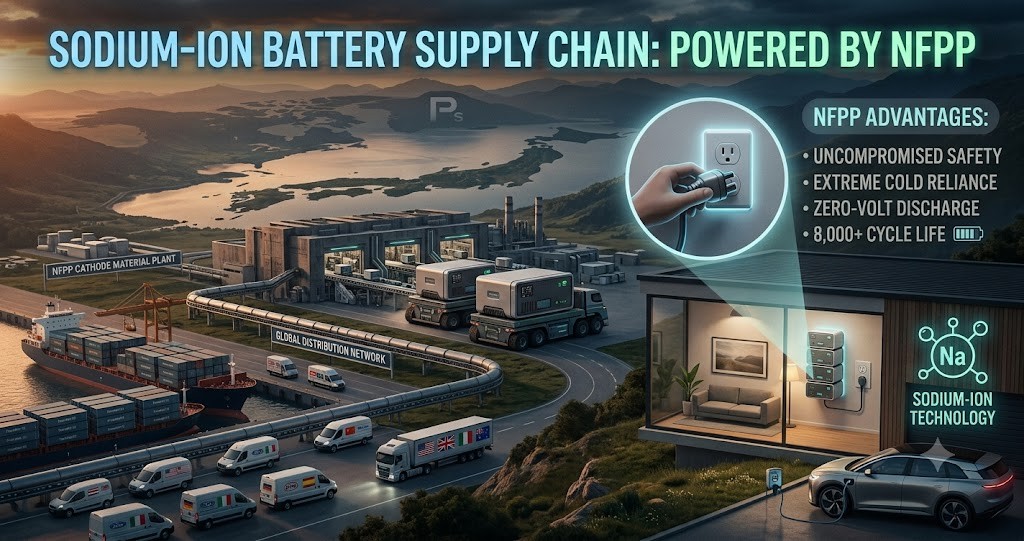
中国のエネルギー貯蔵システムメーカーであるBiwatt社は、住宅向けに58Vのモジュール式ナトリウムイオン蓄電システム「PowerNest R5シリーズ」を発表しました。リチウム代替として急速に市場が拡大しているナトリウムイオン電池を採用し、施工性と安全性を極限まで高めた設計が特徴です。
本製品は、欧州最大級の太陽光関連展示会「Intersolar Europe 2026」にて披露され、すでに世界20カ国以上で展開されている同社のポートフォリオをさらに強固にする次世代機として位置づけられています。
- 1. ナトリウムイオン電池(NFPP)採用の背景とメリット
- 2. 2つのシステム構成(選べる柔軟性)
- 3. 製品の主な仕様と特長
- 4. 高度な制御技術と安全認証
- 5. 運用とスマートメンテナンス
1. ナトリウムイオン電池(NFPP)採用の背景とメリット
現在、蓄電池市場の主流であるリチウムイオン電池は、リチウムやコバルトといったレアメタルの価格高騰やサプライチェーンの地政学的リスクを抱えています。これに対し、本製品に採用されているピロリン酸鉄ナトリウム(NFPP)化学には以下の画期的な優位性があります。
- 圧倒的な耐寒性能冬場の低温環境下でも出力が落ちにくく、放電時は -30℃、充電時でも -20℃ という極寒の環境下でシームレスに動作します。
- 優れた熱安定性と安全性リチウムイオン電池に比べて構造的に熱暴走(発火・爆発)のリスクが極めて低く、住宅用として高い安全性を誇ります。
- 完全放電(0V)への耐性リチウム電池は完全に放電すると再起不能なダメージを受けますが、ナトリウムイオン電池は0Vまで放電しても劣化せず、長期保管や輸送時の安全性が非常に高い特徴を持っています。
2. 2つのシステム構成(選べる柔軟性)
設置環境や既存の設備に合わせて、以下の2つのバリエーションが用意されています。
- PowerNest R5i(オールインワン型)バッテリーモジュールと「単相ハイブリッドインバーター」を最初から統合したモデル。これ1台で太陽光発電との連携から充放電まで完結します。
- PowerNest R5(スタンドアロン型)バッテリー単体のモデル。他社製のハイブリッドインバーターのエコシステムと柔軟に組み合わせることが可能です。
3. 製品の主な仕様と特長
積み重ねるだけの「ワイヤレス・スタック構造」
モジュール間を接続する外部配線が一切不要な、プラグイン式の積み重ねアーキテクチャを採用。現場での誤配線リスクをゼロにし、施工にかかる時間を大幅に短縮します。
基本スペックと拡張性
| 項目 | 仕様・パフォーマンス |
| モジュール単体容量 | 4.5 kWh(170Ah NFPPセル使用) |
| 定格電圧 / 連続出力 | 58 V / 3 kW(モジュールあたり最大55A) |
| サイクル寿命 | 最大 8,000サイクル(25℃、0.5C充放電、放電深度80%) |
| 推奨放電深度(DoD) | 90% |
| 保護等級 / 重量 | IP65(防塵防水・屋外設置可) / 65kg |
| 本体サイズ | 670mm × 420mm × 250mm |
【高い拡張性】 1スタックあたり最大4モジュール(18kWh)まで積載可能。さらに最大4スタックを並列接続することで、最大 72 kWh までシステムを拡張できます。
4. 高度な制御技術と安全認証
モジュールレベルでのアクティブバランス調整
各バッテリーモジュールには、専用のDC-DCオプティマイザとカスタムBMS(バッテリー管理システム)が統合されています。これにより、モジュール間での電圧・容量のばらつきをリアルタイムで能動的に補正(アクティブバランス)し、電圧の安定化と利用可能エネルギーの最大化を実現しています。
国際的な安全基準への適合
すでに欧州やオーストラリア市場向けの CE認証 および RCM認証 を取得済みです。さらに、北米市場などへの本格展開を見据え、現在は世界で最も厳格とされる蓄電池の安全規格 「UL1973」 および火災安全試験 「UL9540A」 の認証取得を進めています。
5. 運用とスマートメンテナンス
システムの運用・保守(O&M)性にもデジタル技術が組み込まれており、用途に合わせて2つのアプローチを提供します。
- クラウド経由のリモート管理(遠隔対応)Biwatt製のインバーターと組み合わせることで、専用アプリからリアルタイムの稼働監視、システム診断、無線(OTA)でのファームウェアアップデートが可能です。
- USB-Cによるローカル診断(現場対応)通信環境のない現場やトラブルシューティング時には、各ユニットに搭載された USB-Cポート に直接PCや診断ツールを接続し、内部データへ即座にローカルアクセスが可能です。
Sodium is the New Lithium! Biwatt Unveils “PowerNest R5” Long-Lifespan Residential Battery Featuring NFPP Chemistry and 8,000 Cycles
Biwatt, a Chinese manufacturer of energy storage systems, has announced the PowerNest R5 series, a 58V modular sodium-ion energy storage system designed for residential use. Utilizing sodium-ion battery technology—a market expanding rapidly as an alternative to lithium—the system features a design engineered to maximize both ease of installation and safety.
The product was showcased at Intersolar Europe 2026, the largest solar exhibition in Europe. It is positioned as a next-generation unit designed to further strengthen the company’s portfolio, which is already deployed across more than 20 countries worldwide.
1. Background and Advantages of Adopting Sodium-Ion Batteries (NFPP)
Lithium-ion batteries, the current mainstream option in the energy storage market, face challenges such as soaring prices for rare metals like lithium and cobalt, as well as geopolitical risks within the supply chain. In contrast, the Sodium Iron Pyrophosphate (NFPP) chemistry adopted in this product offers the following breakthrough advantages:
- Exceptional Cold-Weather PerformanceThe system maintains its power output even in low-temperature winter conditions, operating seamlessly in extreme cold down to -30°C during discharging and -20°C during charging.
- Superior Thermal Stability and SafetyStructurally, the risk of thermal runaway (fire or explosion) is significantly lower compared to lithium-ion batteries, boasting an elevated level of safety for residential installations.
- Resistance to Deep Discharge (0V)While lithium batteries suffer irreversible damage when fully discharged, sodium-ion batteries do not degrade even if discharged to 0V. This characteristic ensures an exceptionally high level of safety during long-term storage and transportation.
2. Two System Configurations (Flexibility of Choice)
Two distinct variations are available to match diverse installation environments and existing setups:
- PowerNest R5i (All-in-One Model)A model that integrates the battery modules with a single-phase hybrid inverter from the start. This single unit handles everything from solar power integration to charging and discharging.
- PowerNest R5 (Standalone Model)A battery-only configuration. It is designed to combine flexibly with third-party hybrid inverter ecosystems.
3. Key Specifications and Features of the Product
“Wireless Stackable Architecture”—Just Stack and Go
The system utilizes a plug-in stackable architecture that entirely eliminates the need for external wiring between modules. This removes the risk of wiring errors on-site and significantly cuts down on installation time.
Core Specifications and Scalability
| Parameter | Specifications & Performance |
| Single Module Capacity | 4.5 kWh (Utilizing 170Ah NFPP cells) |
| Rated Voltage / Continuous Output | 58 V / 3 kW (Up to 55A per module) |
| Cycle Life | Up to 8,000 cycles (At 25°C, 0.5C/0.5C, 80% Depth of Discharge) |
| Recommended Depth of Discharge (DoD) | 90% |
| Ingress Protection / Weight | IP65 (Dustproof & waterproof, suitable for outdoor installation) / 65 kg |
| Dimensions | 670 mm × 420 mm × 250 mm |
[High Scalability] Up to 4 modules can be stacked per single tower (18 kWh). Furthermore, by connecting up to 4 stacks in parallel, the system can be expanded to a maximum capacity of 72 kWh.
4. Advanced Control Technology and Safety Certifications
Module-Level Active Balancing
Each battery module integrates a dedicated DC-DC optimizer and a custom Battery Management System (BMS). This setup actively corrects voltage and capacity variances among modules in real time (active balancing), stabilizing voltage output and maximizing usable energy.
Compliance with International Safety Standards
The system has already secured CE and RCM certifications for European and Australian markets. Looking toward full-scale expansion into markets like North America, Biwatt is currently pursuing UL1973 (one of the world’s most stringent safety standards for energy storage) and UL9540A fire safety testing certifications.
5. Operation and Smart Maintenance
Digital technology is deeply embedded into the system’s Operations and Maintenance (O&M), providing two distinct service approaches based on user needs:
- Cloud-Based Remote Management (Off-site)When paired with a Biwatt inverter, users gain access to real-time operation monitoring, system diagnostics, and over-the-air (OTA) firmware updates via a dedicated mobile app.
- Local Diagnostics via USB-C (On-site)For sites lacking internet connectivity or during troubleshooting, technicians can connect a PC or diagnostic tool directly to the built-in USB-C port on each unit for immediate, local access to diagnostic data.
コメント