電気自動車(EV)の未来を大きく左右する鍵として、いま世界中で熱い視線が注がれている次世代バッテリー。しかし、その華々しい期待の裏で、コスト、製造技術、そしてモビリティの社会構造の変化という高いハードルが立ちはだかっています。本記事では、全固体電池やナトリウムイオン電池などの現状を整理し、実用化への課題と未来の自動車社会のあり方について深く読み解いていきます。
次世代バッテリーの種類とそれぞれの課題
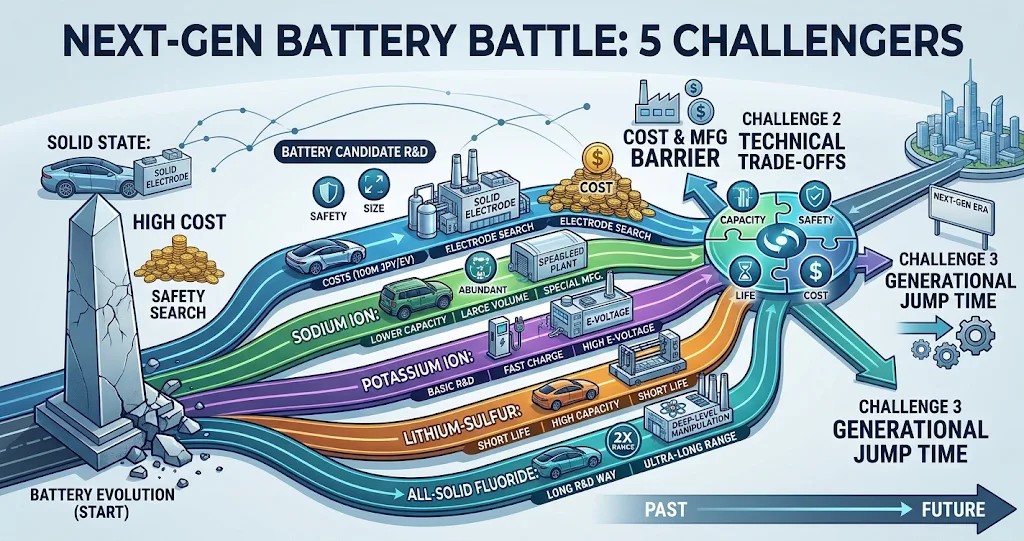
現在、リチウムイオンバッテリーの次を担う技術として、多岐にわたるバッテリーが研究されています。それぞれの特徴と実用化に向けた課題を以下に整理します。
| バッテリーの種類 | 主な特徴・メリット | 実用化に向けた主な課題 |
| 全固体電池 | 電解質が固体で、小型軽量化や高い安全性、姿勢変化への強みがある。 | 最適な電極材料の模索中。EV1台あたり1億円規模の原価などコストの壁が大きい。 |
| ナトリウムイオン電池 | 豊富な電極素材を活用でき、安全性が高い。 | 電圧や容量で劣り多めの積載が必要。露点マイナス80度の密閉環境など特殊な製造プロセスが必要。 |
| カリウムイオン電池 | 資源が豊富で、高速充電が可能。ナトリウムより電極電圧が高く大容量化が期待できる。 | まだ基礎研究の段階であり、実用化に向けた検証がこれから。 |
| リチウム硫黄電池 | 硫黄やリチウムを使用し、軽量かつ大容量化が可能。 | 充放電の繰り返し寿命が短く容量低下しやすいため、安全回路の設定が不可欠。 |
| 全固体フッ化物イオン電池 | 窒化銅などを使い、既存EVの2倍の走行距離を実現できるポテンシャルがある。 | こちらもまだ研究段階にあり、実用化への道のりは長い。 |
なぜ実用化は「当分先」なのか
既存のリチウムイオンバッテリーは、1976年の研究開発からわずか15年ほどの期間で商品化へと漕ぎ着けました。しかし、次世代バッテリーにおいては、以下のような要因から世代交代に時間がかかっています。
- 高騰する原価と製造の難易度: 全固体電池の量産準備段階におけるコストや、ナトリウムイオン電池の特殊な製造環境など、経済性・製造性のハードルが高い。
- 技術的なトレードオフ: 容量、安全性、寿命のバランスを同時に満たす最適解がいまだ見つかっていない。
自動車社会の未来とバッテリー投資の視点
現在、世界の自動車保有台数は16億台を超えていますが、自動運転化やロボタクシー、カーシェアリングの浸透により、自家用車の稼働率(約10パーセント、駐車時間が約90パーセント)を踏まえると、将来的には総数が減少する可能性があります。
このような未来の新しい交通のあり方を踏まえると、単に「既存のリチウムイオンバッテリーの代替」という視点だけでなく、巨額の投資をして新たなバッテリー工場を建設することが本当に採算に合うのかという長期的な視点での検討が求められています。
出典:https://news.yahoo.co.jp/articles/9730f77d0233ba293d2100eacf6863654b94ff70
The Current State of Post-Lithium-Ion: Challenges and the Future of the Top 5 Next-Generation Batteries—From Solid-State to Sodium and Sulfur
Next-generation batteries are drawing intense global attention as the key to shaping the future of electric vehicles (EVs). Yet behind these bright expectations stand formidable hurdles: high costs, complex manufacturing technologies, and structural shifts in how society approaches mobility. This article outlines the current status of technologies such as solid-state and sodium-ion batteries, taking an in-depth look at the challenges to commercialization and the future of automotive society.
Types of Next-Generation Batteries and Their Challenges
A wide variety of battery technologies are currently being researched to succeed lithium-ion batteries. Below is an overview of their key features and the primary challenges they face on the road to commercialization.
| Battery Type | Key Features & Benefits | Main Challenges for Commercialization |
|---|---|---|
| Solid-State Battery | Uses a solid electrolyte, offering compact size, lighter weight, high safety, and resilience to changes in vehicle orientation. | Optimal electrode materials are still being sought. High cost barriers remain, including manufacturing costs around 100 million yen per EV. |
| Sodium-Ion Battery | Utilizes abundant electrode materials and offers high safety. | Lower voltage and capacity require installing larger volumes. Requires specialized manufacturing processes, such as sealed environments with a dew point of -80 degrees Celsius. |
| Potassium-Ion Battery | Abundant resources and capable of fast charging. Offers higher electrode voltage and greater potential capacity than sodium-ion batteries. | Still in the basic research stage, with verification for practical application yet to come. |
| Lithium-Sulfur Battery | Uses sulfur and lithium, enabling lightweight designs and high capacity. | Short charge-discharge cycle life and prone to capacity degradation, making safety circuits essential. |
| All-Solid-State Fluoride-Ion Battery | Uses materials such as copper nitride and has the potential to double the driving range of existing EVs. | Also still in the research stage, with a long road ahead to commercialization. |
Why Commercialization Remains a Long Way Off
Existing lithium-ion batteries moved from research and development in 1976 to commercialization in just about 15 years. In contrast, next-generation batteries are taking far longer to achieve a generational shift due to the following factors:
- Soaring Costs and Manufacturing Complexity: Economic and production hurdles remain high, including the cost of solid-state batteries at the pre-mass-production stage and the specialized manufacturing environments required for sodium-ion batteries.
- Technical Trade-offs: An optimal solution that simultaneously balances capacity, safety, and lifespan has yet to be found.
The Future of Automotive Society and Perspectives on Battery Investment
While the global vehicle fleet currently exceeds 1.6 billion cars, the total number of vehicles could decline in the future as autonomous driving, robotaxis, and car-sharing become widespread—especially considering that privately owned cars have an utilization rate of only about 10 percent (and remain parked roughly 90 percent of the time).
Given this emerging landscape of future transportation, the industry must evaluate the future of EV batteries from a long-term perspective—not merely as a direct replacement for existing lithium-ion batteries, but by asking whether investing massive capital into building new battery factories will truly be profitable.
コメント