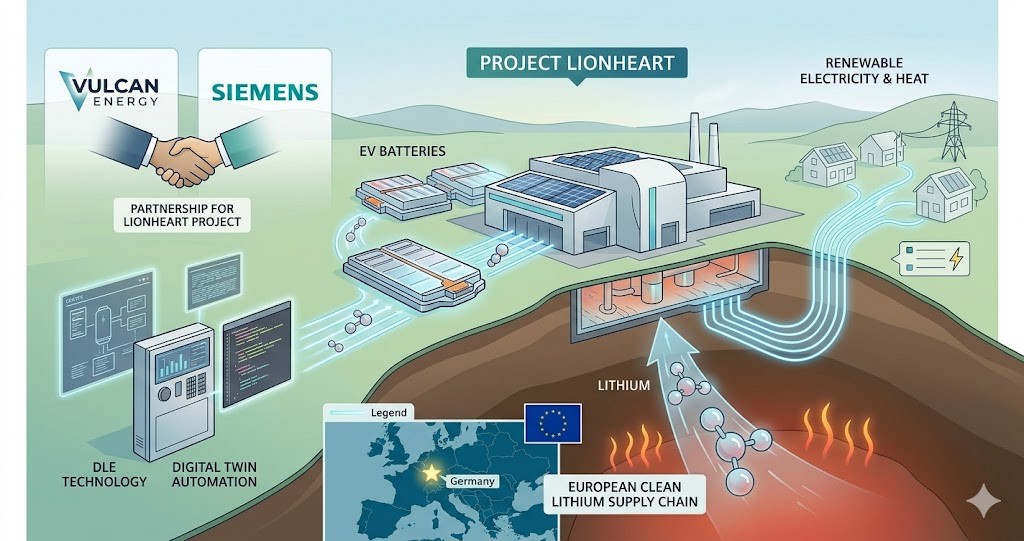
バルカン・エナジーは、同社の旗艦プロジェクトである「ライオンハート」向けに、シーメンスと約4000万ユーロ(約67億円)規模の主要プロジェクト枠組み合意を締結しました。
1. 合意の主な内容
- 契約規模: 約4000万ユーロ(最低累積発注額)。
- シーメンスの役割: メイン・オートメーション・コントラクター(MAC)として、エンジニアリング、自動化、電気通信、ビル管理システムの提供を担当。
- 対象施設: ランダウのリチウム抽出プラント(LEP)、フランクフルトのセントラル・リチウム・プラント(CLP)、および複数の生産井。
- 投資: シーメンス・フィナンシャル・サービスは、本プロジェクトに対し6700万ユーロの出資に合意しています。
2. ライオンハート・プロジェクトの概要
- 生産目標: 年間24,000トンの水酸化リチウム一水和物(LHM)を生産。これは電気自動車(EV)約50万台分のバッテリーに相当します。
- 副産物: 年間275 GWhの再生可能電力と、560 GWhの熱エネルギーを地域に供給。
- 持続可能性: 地熱を活用したカーボンニュートラルなリチウム抽出を目指す、欧州初の完全国内サプライチェーンです。
関連情報と技術的背景
このプロジェクトをより深く理解するために、関連する3つのポイントを解説します。
A. DLE(直接リチウム抽出)技術とVULSORB
バルカン・エナジーは、独自のVULSORBと呼ばれる吸着剤技術を用いた直接リチウム抽出(DLE: Direct Lithium Extraction)を採用しています。
- 環境負荷の低減: 従来の蒸発池方式に比べ、水の使用量や土地占有面積を劇的に抑えられます。
- 地熱の有効活用: 地下深部の熱い塩水から熱を取り出し、エネルギー源として利用した後にリチウムを抽出する、非常に効率的なプロセスです。
B. シーメンスの「デジタルツイン」とサイバーセキュリティ
今回の契約でシーメンスが提供するシステムには、高度なデジタル技術が含まれています。
- 分散制御システム(DCS): 大規模なプラント全体を統合的に制御し、効率化を図ります。
- サイバーセキュリティ: 重要インフラとしての安全性を確保するため、堅牢なネットワーク基盤が構築されます。
- ライフサイクル・サービス: 建設時だけでなく、30年にわたると推定されるプロジェクト寿命全体を通じてシステムの維持・管理が行われます。
C. 欧州の「重要原材料法(CRMA)」への貢献
欧州連合(EU)は、中国などへの依存を減らすため、域内でのリチウム自給率を高める「重要原材料法」を推進しています。
- 地政学的意義: ライオンハート・プロジェクトは、欧州産の「クリーンなリチウム」を確保するための重要プロジェクト(Lighthouse Project)として位置付けられています。
- 資金調達の成功: 2025年末に完了した22億ユーロ(約3700億円)規模の資金調達パッケージには、多くの大手金融機関やシーメンスのような戦略的パートナーが参加しており、プロジェクトの信頼性の高さを示しています。
まとめ
今回のシーメンスとの契約締結は、ライオンハート・プロジェクトにおける「主要な供給契約の完了」を意味する重要なマイルストーンです。2026年末に稼働を予定しているインドネシアのトヨタ・CATL連携など、世界中で電池材料の現地サプライチェーン構築が加速する中、バルカンの「地熱×リチウム」モデルは、欧州における脱炭素と資源安全保障の象徴的な事例になると期待されています。
出典:https://api.investi.com.au/api/announcements/vul/66938359-f91.pdf
Siemens Provides Financial and Technical Support: Inside the “Lionheart Project” Aiming for European Lithium Self-Sufficiency
Vulcan Energy has entered into a major project framework agreement with Siemens AG for its flagship “Lionheart Project,” with a contract value of approximately 40 million EUR.
1. Key Terms of the Agreement
- Contract Scale: A minimum aggregate purchase value of approximately 40 million EUR.
- Siemens’ Role: Acting as the Main Automation Contractor (MAC), Siemens will be responsible for engineering, automation, telecommunications, and building technology systems.
- Target Facilities: The Lithium Extraction Plant (LEP) in Landau, the Central Lithium Plant (CLP) in Frankfurt, and multiple production well sites.
- Investment: Siemens Financial Services has agreed to invest 67 million EUR into the project as part of the broader financing package.
2. Lionheart Project Overview
- Production Target: 24,000 tonnes of lithium hydroxide monohydrate (LHM) per annum—enough for approximately 500,000 electric vehicle batteries.
- Co-products: Provision of 275 GWh of renewable power and 560 GWh of heat per annum to local consumers.
- Sustainability: Europe’s first fully domestic and carbon-neutral lithium supply chain, extracting lithium from geothermal brine.
Technical Context and Background
To better understand the significance of this project, here are three key technical and strategic pillars:
A. DLE (Direct Lithium Extraction) and VULSORB
Vulcan Energy utilizes Direct Lithium Extraction (DLE) powered by its proprietary VULSORB adsorbent technology.
- Environmental Efficiency: Compared to traditional evaporation ponds, this method dramatically reduces water consumption and land use.
- Geothermal Synergy: The process is highly efficient, extracting heat from deep-seated hot brine for renewable energy before the lithium is removed.
B. Digital Systems and Cybersecurity
The systems provided by Siemens incorporate advanced digital technologies:
- Distributed Control System (DCS): Enables integrated control and optimization across large-scale plant operations.
- Cybersecurity: Construction of a robust network infrastructure to ensure the safety of this critical energy and material infrastructure.
- Lifecycle Services: Support and maintenance extending through the estimated 30-year life of the project.
C. Contribution to the EU Critical Raw Materials Act (CRMA)
The European Union is promoting the CRMA to increase domestic lithium self-sufficiency and reduce dependence on external regions like China.
- Geopolitical Significance: Lionheart is positioned as a “Lighthouse Project” for securing clean, European-sourced lithium.
- Financing Success: The 2.2 billion EUR financing package completed in late 2025, involving major financial institutions and strategic partners like Siemens, underscores the high level of industry confidence in this venture.
Conclusion
The signing of this agreement with Siemens marks a vital milestone: the completion of all major supply contracts for the Lionheart Project. As localized battery supply chains accelerate globally—as seen with the Toyota-CATL collaboration in Indonesia—Vulcan’s “Geothermal-plus-Lithium” model stands as a symbolic case for decarbonization and resource security in Europe.
コメント