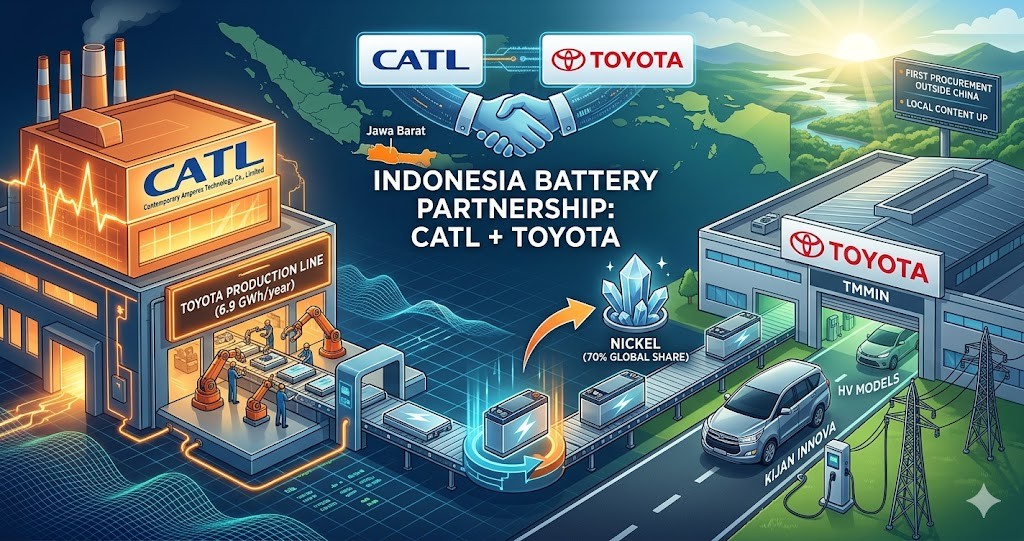
トヨタ自動車のインドネシア法人(TMMIN)は、CATLと電気自動車(EV)関連事業で提携し、約120億円(1.3兆ルピア)を投じてCATLの工場内にトヨタ専用の生産ラインを構築します。
1. 提携のポイント
- 初の中国外調達: トヨタが中国以外の地域でCATLから電池を直接調達するのは、今回が初めてのケースです。
- 稼働時期と規模: 西ジャワ州の工場は2026年末に稼働予定。年間生産能力は6.9GWh(ギガワット時)に達します。
- 対象車種: 主に現地生産のハイブリッド車(HV)向けに供給されます。
2. 現地調達率の向上
これまでトヨタは「キジャン・イノーバ」などの人気HVモデル向け電池部品を海外から輸入し、現地で組み立てていました。今回の提携により、主要部品をインドネシア国内で生産できるようになり、現地調達率(ローカル・コンテント)の大幅な向上が期待されています。
関連情報と背景解説
この動きを理解するために重要な、3つの背景情報を付け加えます。
A. インドネシアの「ニッケル戦略」
インドネシアは、リチウムイオン電池(NMC:ニッケル・マンガン・コバルト)の主原料であるニッケルの世界生産シェア約7割を占める資源大国です。
- 禁輸措置: インドネシア政府はニッケル原鉱の輸出を禁止し、国内での製錬・加工を義務付けることで、産業の高度化(川下化)を図っています。
- サプライチェーンの構築: トヨタが採用する「三元系リチウムイオン電池」はニッケルを多用するため、資源のそばで生産することはコスト面でも戦略面でも極めて合理的です。
B. トヨタとCATLの関係
両社は2019年に電池供給に関する包括的提携を発表していますが、これまでは中国市場向けの協力が中心でした。今回のインドネシアでの動きは、トヨタが「特定の地域に依存しない強靭なサプライチェーン」を構築しようとしている現れです。
C. 激化するインドネシア市場の競争
インドネシアは東南アジア最大の自動車市場です。
- トヨタの地位: 市場シェア約3割を誇る王者ですが、近年は中国のBYD(比亜迪)や五菱汽車(ウーリン)、韓国の現代自動車(ヒョンデ)がEVを武器に急速に追い上げています。
- HVによる防衛: トヨタは得意のハイブリッド技術を軸に、現地のインフラ状況に合わせた電動化を進めることで、首位の座を維持する狙いがあります。
まとめ
今回の投資は、単なる電池の購入にとどまらず、「資源大国インドネシアにおける製造基盤の確立」を意味します。CATLという強力なパートナーの技術力と、インドネシアの豊富な資源、そしてトヨタの量産技術が組み合わさることで、東南アジアにおける電動車の普及に拍車がかかることが予想されます。
Toyota to Source CATL Batteries Outside China for the First Time, Accelerating Local Production in Indonesia
Toyota Motor’s Indonesian subsidiary, PT Toyota Motor Manufacturing Indonesia (TMMIN), has announced a partnership with CATL for electric vehicle (EV) related businesses. Toyota will invest approximately 12 billion yen (1.3 trillion IDR) to establish a dedicated production line within CATL’s factory.
1. Key Points of the Partnership
- First Procurement Outside China: This marks the first instance of Toyota sourcing batteries directly from CATL in a region outside of China.
- Timeline and Scale: The facility in West Java is scheduled to begin operations in late 2026, with an annual production capacity reaching 6.9 GWh (gigawatt-hours).
- Target Vehicles: The batteries will primarily be supplied for locally manufactured hybrid electric vehicles (HEVs).
2. Improving Local Content Requirement (LCR)
Previously, Toyota imported key battery components for popular hybrid models like the “Kijang Innova” and assembled them locally. This partnership enables the production of major components within Indonesia, which is expected to significantly increase the local procurement rate.
Related Context and Background
Three critical factors help explain the strategic importance of this move:
A. Indonesia’s “Nickel Strategy”
Indonesia is a resource superpower, accounting for approximately 70% of the world’s nickel production—a primary raw material for lithium-ion batteries (NMC: Nickel-Manganese-Cobalt).
- Export Ban: The Indonesian government has banned the export of raw nickel ore, mandating domestic smelting and processing to upgrade its industrial value chain.
- Supply Chain Integration: Since the ternary lithium-ion batteries used by Toyota rely heavily on nickel, producing them near the resource source is highly logical from both a cost and strategic standpoint.
B. The Relationship Between Toyota and CATL
While the two companies announced a comprehensive partnership for battery supply in 2019, their collaboration has focused mainly on the Chinese market. This development in Indonesia signals Toyota’s intent to build a resilient supply chain that is not dependent on any single specific region.
C. Intensifying Competition in the Indonesian Market
Indonesia is the largest automotive market in Southeast Asia.
- Toyota’s Position: Toyota remains the market leader with about a 30% share. However, companies like BYD and Wuling from China, as well as Hyundai from South Korea, are catching up rapidly using EVs as their main weapon.
- Defense via Hybrids: Toyota aims to maintain its top position by centering its strategy on its strength—hybrid technology—which aligns well with the current local infrastructure.
Conclusion
This investment represents more than just a battery purchase agreement; it signifies the establishment of a manufacturing foundation within a resource-rich nation. By combining CATL’s technical expertise, Indonesia’s abundant resources, and Toyota’s mass-production technology, the adoption of electrified vehicles in Southeast Asia is expected to accelerate significantly.

コメント