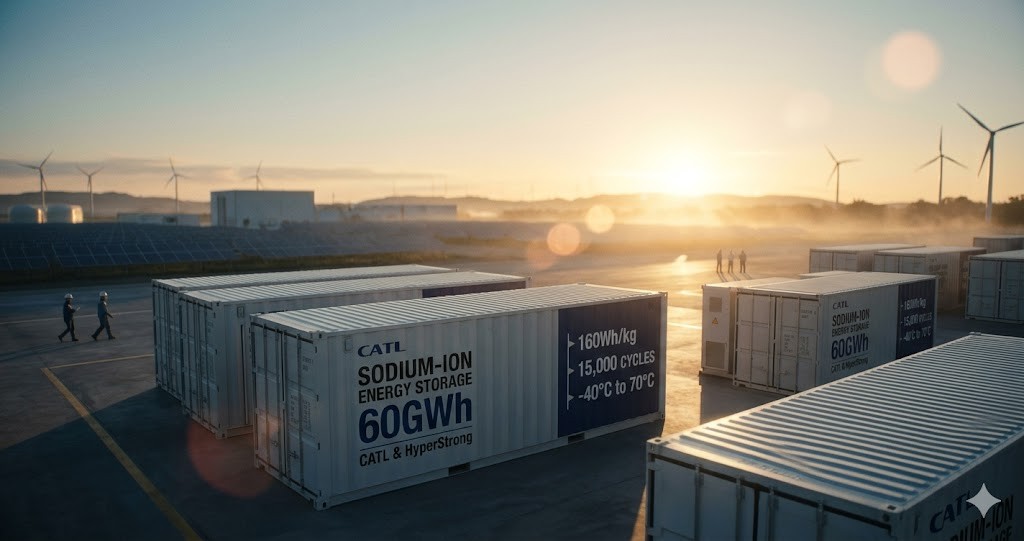
電池製造大手のCATL(寧徳時代)は、中国のシステムインテグレーターであるHyperStrong(北京海博思創)から、合計60GWhという世界最大規模のナトリウムイオン電池の受注を獲得しました。
この契約は、2026年から3年間にわたる長期供給提携であり、同技術が研究段階から大規模な商業化フェーズへ移行したことを明確に示しています。
技術仕様と製品の特長
CATLが発表した新型ナトリウムイオン電池は、既存のリチウムイオン電池(LFP)インフラとの互換性を重視して設計されています。
- エネルギー密度: 約160Wh/kg
- サイクル寿命: 15,000サイクル以上(容量維持率80%時)
- エネルギー効率: システム全体で97%
- 動作温度範囲: -40度から70度(極寒地や酷暑地でも動作可能)
- 安全性: 釘刺し、圧壊、過充電の各試験で熱暴走を起こさない高い安全性を実証
- プラットフォーム互換性: CATLの主力製品である587Ahリチウムイオン蓄電池と同じ筐体寸法を採用。製造ラインやサプライチェーンを共有できるため、導入コストを大幅に抑制可能です。
関連情報:なぜ今「ナトリウムイオン電池」なのか?
今回のニュースの背景には、リチウムイオン電池(特にLFP:リン酸鉄リチウム電池)の市場変化と、ナトリウムという資源の優位性があります。
1. ポスト・リチウムの筆頭候補
リチウムイオン電池は、リチウム、コバルト、ニッケルといった希少金属(レアメタル)に依存しています。これに対し、ナトリウムイオン電池は以下のメリットがあります。
- 資源の豊富さ: 食塩の主成分であるナトリウムを使用するため、地球上にほぼ無限に存在し、地政学的なリスクが極めて低いです。
- コスト優位性: 材料費が安く、さらに負極集電体に高価な銅箔ではなく安価なアルミ箔を使用できるため、量産時にはLFP電池より30から40%のコスト削減が可能と見込まれています。
2. 市場環境の変化
直近の半年間で、主流の314Ah LFP蓄電池の価格は約20%上昇しました。リチウム供給の逼迫が懸念される中、低価格で安定供給が可能なナトリウムイオン電池は、大規模な電力貯蔵(ESS)分野において非常に強力な選択肢となっています。
3. 主な用途
今回の60GWhという供給量は、主に以下のようなインフラ分野をターゲットとしています。
- 再生可能エネルギーハブ: 太陽光や風力発電の変動を吸収する蓄電所。
- データセンター: 非常用電源やエネルギー効率化のためのバックアップ。
- 共有ストレージ: 2時間から8時間程度の長時間の電力供給。
まとめ
今回のCATLとHyperStrongの提携は、ナトリウムイオン電池が「リチウムイオン電池の補完」という立場を超え、エネルギー貯蔵市場における主役の一角に躍り出たことを象徴しています。
CATLは約15億ドルの投資を通じて、ハードカーボン(硬質炭素)負極の量産課題を克服し、バッチ間の一貫性を確保しました。これにより、今後数年間でエネルギー貯蔵システム(ESS)のコスト構造が劇的に変化する可能性があります。
注記: 今回の60GWhの契約は、昨年11月に両社が合意した「2026年から2028年における200GWhの供給枠」の一部である可能性が高いと見られており、戦略的なパートナーシップが着実に履行されています。
CATL Secures World’s Largest Order for Sodium-Ion Batteries, Supplying 60GWh to HyperStrong
Battery manufacturing giant CATL (Contemporary Amperex Technology Co., Limited) has secured a massive order for sodium-ion batteries totaling 60GWh from HyperStrong, a major Chinese system integrator. This contract, a three-year long-term supply partnership starting in 2026, clearly signals that sodium-ion technology has moved from the research phase into a large-scale commercialization phase.
Technical Specifications and Product Features
CATL’s newly announced sodium-ion battery is designed with a strong focus on compatibility with existing Lithium Iron Phosphate (LFP) infrastructure.
- Energy Density: Approximately 160Wh/kg
- Cycle Life: Over 15,000 cycles (at 80% capacity retention)
- Energy Efficiency: 97% for the entire system
- Operating Temperature Range: -40 degrees C to 70 degrees C (capable of operating in extreme cold or heat)
- Safety: Proven high safety standards with no thermal runaway during nail penetration, crush, and overcharge tests.
- Platform Compatibility: Adopts the same physical dimensions as CATL’s flagship 587Ah lithium-ion storage battery. This allows for shared production lines and supply chains, significantly reducing implementation costs.
Background: Why Sodium-Ion Batteries Now?
This development is driven by shifts in the lithium-ion battery market (specifically LFP) and the inherent advantages of sodium as a resource.
1. The Leading Candidate for Post-Lithium
While lithium-ion batteries rely on rare metals such as lithium, cobalt, and nickel, sodium-ion batteries offer the following advantages:
- Abundant Resources: Using sodium, the main component of common salt, ensures a nearly infinite supply and extremely low geopolitical risk.
- Cost Advantage: Lower material costs and the ability to use inexpensive aluminum foil instead of costly copper foil for the anode current collector are expected to result in 30% to 40% cost savings compared to LFP batteries during mass production.
2. Changes in the Market Environment
In the last six months, the price of mainstream 314Ah LFP storage batteries has risen by approximately 20%. Amid concerns over tight lithium supplies, sodium-ion batteries—which offer stable supply at low prices—have become a powerful alternative in the large-scale Energy Storage System (ESS) sector.
3. Primary Applications
The 60GWh supply volume targets key infrastructure sectors:
- Renewable Energy Hubs: Storage stations to balance fluctuations in solar and wind power.
- Data Centers: Backup for emergency power and energy efficiency.
- Shared Storage: Long-duration power supply ranging from 2 to 8 hours.
Summary
The partnership between CATL and HyperStrong symbolizes sodium-ion batteries moving beyond a “supplementary” role to become a major player in the energy storage market. Through an investment of approximately 1.5 billion USD, CATL has overcome mass-production challenges for hard carbon anodes and ensured consistency across batches. This could drastically change the cost structure of Energy Storage Systems (ESS) over the coming years.
Note: This 60GWh contract is likely part of the 200GWh supply framework for 2026-2028 agreed upon by both companies last November, indicating that their strategic partnership is being steadily implemented.

コメント