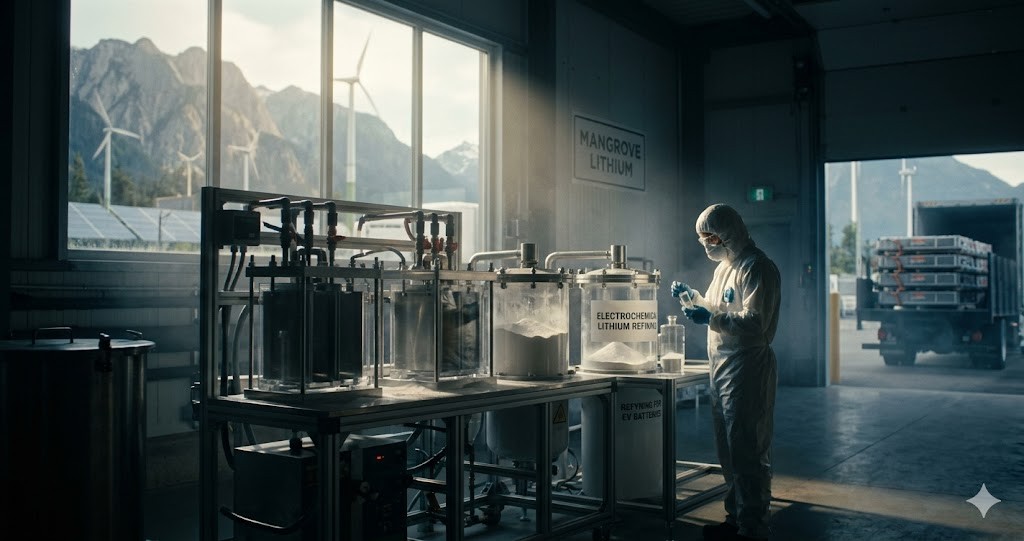
カナダのブリティッシュコロンビア州において、北米のリチウム自給率を大きく変える可能性を秘めた施設が稼働しました。マングローブ・リチウム社が発表した「電気化学リチウム精製施設」は、従来の化学的処理とは一線を画す革新的な技術を導入しており、中国などの海外依存からの脱却を目指す北米のエネルギー安全保障戦略において極めて重要な役割を担います。
ニュース概要:北米初、商業用電気化学リチウム精製施設が開設
カナダのマングローブ・リチウム(Mangrove Lithium)は、ブリティッシュコロンビア州デルタに、北米で初めてとなる商業規模の電気化学リチウム精製施設を開設しました。
1. 施設の規模と能力
- 生産能力: 年間 1,000トン(1 ktpa)。これは電気自動車(EV)約 25,000台分 のバッテリー材料に相当。
- 技術的特徴: 独自の電気化学技術により、従来の処理法よりも低コストかつ持続可能な方法で、リチウム原料をバッテリーグレードの水酸化リチウムや炭酸リチウムに変換。
- 柔軟性: 多様なリチウム原料に対応可能で、上流から下流までのサプライチェーンに統合しやすい設計。
2. 将来の拡張計画
- カナダ東部への展開: 年間 50万台分 のEVに供給可能な大規模施設をカナダ東部に建設する計画。
- 一気通貫の体制: ケベック州の鉱山から原料を確保し、カナダ国内で「鉱山から正極材まで」の一貫したサプライチェーンを構築することを目指す。
- 政府支援: カナダ天然資源省(NRCan)から、条件付きで最大 2,188万カナダドル の拠出金承認を受けている。
関連情報:リチウム精製における「電気化学」の革新性
今回のニュースをより深く理解するために、技術的・経済的な背景を補足します。
従来の精製法との違い
通常、リチウムの精製には多量の化学試薬(硫酸やソーダ灰など)が必要で、多くの副産物(硫酸ナトリウムなど)が発生します。マングローブ社の電気化学的アプローチは、電気を直接使って不純物を取り除き、リチウムを精製します。
- メリット: 化学薬品の使用を最小限に抑えられ、廃棄物が少なく、環境負荷が低い。
- 立地: 安価でクリーンな水力発電が豊富なブリティッシュコロンビア州やケベック州は、この電気化学プロセスに最適な環境です。
北米の「脱中国」戦略
現在、世界のリチウム精製能力の約 6割から7割 は中国に集中しています。
- 地政学的リスク: EV普及に不可欠なリチウムを海外に依存することは、北米の自動車産業にとって大きなリスクです。
- 政策的背景: 米国のインフレ抑制法(IRA)などにより、北米内で加工・精製された重要鉱物の価値が相対的に高まっており、マングローブ社の施設はそのニーズに合致しています。
強力な投資家陣
マングローブ社には、技術の将来性を評価する世界的企業が名を連ねています。
- ビル・ゲイツ氏 率いる「ブレークスルー・エナジー・ベンチャーズ」
- 日本の 三菱商事 や 旭化成
- ドイツの BMW iベンチャーズ これらの企業は、自社の電池サプライチェーンの安定化や、次世代の精製技術の確保を目的として出資しています。
まとめ
デルタ工場の稼働は、カナダが単なる「資源供給国」から「高度な加工拠点」へと変貌する象徴的な一歩です。特に、日本の旭化成や三菱商事が支援している点は、日本の電池材料戦略とも密接に関係しています。今後、カナダ東部で50万台規模の精製が実現すれば、北米のEVシフトを支える「リチウムのハブ」としての地位を確立することになるでしょう。
Moving Away from China Dependency: North America’s First Electrochemical Lithium Refining Starts in Canada
A facility with the potential to significantly change North America’s lithium self-sufficiency has begun operations in British Columbia, Canada. The “Electrochemical Lithium Refining Facility” announced by Mangrove Lithium introduces innovative technology that stands apart from conventional chemical processing. It will play a critical role in North America’s energy security strategy, which aims to break away from overseas dependency on countries like China.
News Summary: North America’s First Commercial Electrochemical Lithium Refinery Opens
Canada-based Mangrove Lithium has opened North America’s first commercial-scale electrochemical lithium refining facility in Delta, British Columbia.
1. Facility Scale and Capacity
- Production Capacity: 1,000 tons per year (1 ktpa). This is equivalent to battery materials for approximately 25,000 electric vehicles (EVs).
- Technical Features: Utilizing proprietary electrochemical technology, the facility converts lithium feedstocks into battery-grade lithium hydroxide and lithium carbonate in a more cost-effective and sustainable manner than traditional processing methods.
- Flexibility: The design can handle diverse lithium feedstocks and is easily integrated into both upstream and downstream supply chains.
2. Future Expansion Plans
- Expansion to Eastern Canada: Plans are underway to build a large-scale facility in Eastern Canada capable of supplying lithium for 500,000 EVs per year.
- End-to-End System: By securing raw materials from mines in Quebec, the company aims to build an integrated “mine-to-cathode” supply chain within Canada.
- Government Support: The project has received conditional approval for a contribution of up to 21.88 million CAD from Natural Resources Canada (NRCan).
Related Information: The Innovation of “Electrochemistry” in Lithium Refining
To better understand this news, here is some technical and economic background.
Differences from Conventional Refining
Typically, lithium refining requires large amounts of chemical reagents (such as sulfuric acid and soda ash) and generates significant by-products (such as sodium sulfate). Mangrove Lithium’s electrochemical approach uses electricity directly to remove impurities and refine lithium.
- Benefits: Minimizes the use of chemicals, reduces waste, and has a lower environmental impact.
- Location: British Columbia and Quebec, with their abundant, cheap, and clean hydroelectric power, provide the ideal environment for this electrochemical process.
North America’s “De-China” Strategy
Currently, approximately 60% to 70% of the world’s lithium refining capacity is concentrated in China.
- Geopolitical Risk: Depending on overseas sources for lithium, which is essential for EV adoption, poses a major risk to the North American automotive industry.
- Policy Background: Due to measures like the US Inflation Reduction Act (IRA), the value of critical minerals processed and refined within North America has increased relatively, and Mangrove Lithium’s facility directly meets this need.
Powerful Investor Group
World-class companies that recognize the future potential of this technology are among Mangrove Lithium’s backers:
- Breakthrough Energy Ventures, led by Bill Gates.
- Mitsubishi Corporation and Asahi Kasei from Japan.
- BMW i Ventures from Germany. These companies have invested to stabilize their own battery supply chains and secure next-generation refining technologies.
Summary
The start of operations at the Delta plant is a symbolic step in Canada’s transformation from a simple “resource supplier” to an “advanced processing hub.” The support from Japanese companies like Asahi Kasei and Mitsubishi Corporation is particularly noteworthy, as it is closely linked to Japan’s own battery material strategies. If the 500,000-unit scale refining in Eastern Canada is realized in the future, Canada will establish itself as a “lithium hub” supporting the EV shift across North America.

コメント