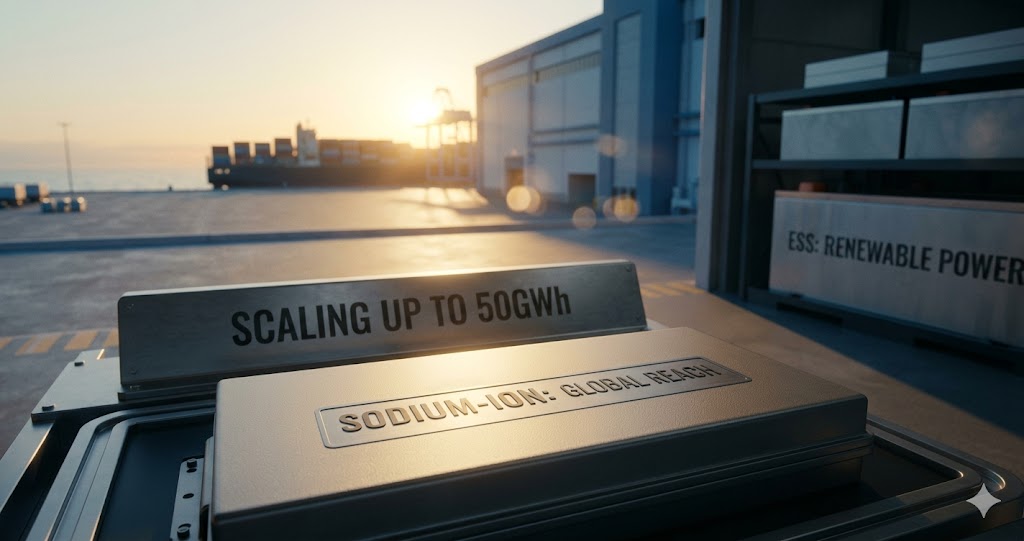
中国の主要電池メーカーは、リチウム資源の制約を克服し、サプライチェーンの主導権を維持するために、ナトリウムイオン電池の量産化を加速させています。
1. 主要メーカーの量産計画と進捗
世界シェアを二分するCATLとBYDが、この分野でも市場を牽引しています。
- CATL: 独自のナトリウムイオン電池「Naxtra」の量産を2026年中に開始予定。Li Autoや長安汽車と提携し、乗用車への搭載を進めています。また、電池交換ネットワーク「Choco-Swap」への導入も計画されています。
- BYD: 2025年に多額の投資を行い、年間50GWhの生産能力を確保する見込みです。
- HiNa Battery: 中国科学院発のスタートアップで、世界に先駆けて大型トラック(トラクターユニット)用電池や大規模蓄電所への技術提供を行っています。
2. ナトリウムイオン電池の技術的優位性
リチウムイオン電池と比較して、以下の点が大きなメリットとされています。
- 資源の豊富さ: 地殻中のナトリウムはリチウムの約1000倍、海水中に至っては約60000倍存在します。輸入依存度を下げ、価格変動リスクを抑えられます。
- 低温特性: マイナス40度という極低温環境でも性能を発揮します。冬季のエネルギー保持が課題だった寒冷地でのEV利用に適しています。
- 急速充電: HiNa社のトラック用バッテリーでは、約20分でのフル充電が可能です。
3. 用途の拡大と市場戦略
エネルギー密度の低さを補うため、用途に応じた使い分けが進んでいます。
- 大型輸送・商用車: 重量が許容される大型トラック市場では、低温性能と充電速度が武器になります。
- 大規模エネルギー貯蔵(ESS): 設置スペースに余裕がある遠隔地の蓄電施設では、コスト効率と安全性が優先されます。広西チワン族自治区では10MWhから50MWhへの拡張プロジェクトが稼働しています。
- ハイブリッド構成: CATLの「Freevoy」のように、リチウムとナトリウムを組み合わせ、航続距離と低温性能を両立させるハイブリッド電池パックも登場しています。
4. 経済性と今後の課題
現状ではサプライチェーンが未発達なため、リチウム系よりも高価ですが、量産効果によるコストダウンが急務となっています。
- 現在の価格(1Whあたり): リチウムイオン約0.4元に対し、ナトリウムイオンは約0.6元。
- 目標: HiNa社は2026年中に0.5元まで引き下げることを目標としています。
比較まとめ:リチウム vs ナトリウム
| 項目 | リチウムイオン電池 | ナトリウムイオン電池 |
| 主原料 | リチウム(希少、輸入依存) | ナトリウム(豊富、海水から抽出) |
| 耐寒性能 | 氷点下で性能低下しやすい | マイナス40度でも安定動作 |
| エネルギー密度 | 高い(軽量・コンパクト) | 低い(重く、かさばる) |
| 主な用途 | スマートフォン、長距離EV | 低価格EV、大型トラック、定置型蓄電 |
Strategic Shift from Lithium: Chinese Battery Giants Accelerate Mass Production of Sodium-ion Batteries
Major Chinese battery manufacturers are accelerating the mass production of sodium-ion (Na-ion) batteries to overcome the constraints of lithium resources and maintain leadership in the global supply chain.
1. Mass Production Plans and Progress of Leading Manufacturers
CATL and BYD, which together hold more than half of the global market share, are leading the way in this sector.
- CATL: Scheduled to begin mass production of its proprietary “Naxtra” sodium-ion batteries within 2026. Through partnerships with Li Auto and Changan Automobile, the company is integrating these batteries into upcoming passenger EV models. Integration into their “Choco-Swap” battery-swapping network is also planned.
- BYD: Following significant investments in 2025, the company is expected to secure an annual production capacity of 50 GWh shortly.
- HiNa Battery: A startup originating from the Chinese Academy of Sciences, HiNa is a global pioneer providing technology for heavy-duty truck (tractor unit) batteries and utility-scale energy storage stations.
2. Technical Advantages of Sodium-ion Batteries
Compared to lithium-ion batteries, Na-ion technology offers several key benefits:
- Resource Abundance: Sodium is approximately 1,000 times more abundant in the Earth’s crust than lithium, and 60,000 times more abundant in the oceans. This reduces dependency on imports and mitigates price volatility risks.
- Low-Temperature Performance: These batteries maintain performance even in extreme cold down to -40°C, addressing the energy retention issues EVs face in cold climates during winter.
- Rapid Charging: HiNa’s truck batteries can reach a full charge in approximately 20 minutes.
3. Application Expansion and Market Strategy
To compensate for lower energy density, manufacturers are diversifying applications based on specific needs:
- Heavy Transport and Commercial Vehicles: In the heavy-duty truck market where weight is more permissible, superior low-temperature performance and fast charging become competitive edges.
- Utility-Scale Energy Storage Systems (ESS): In remote storage facilities where space is plentiful, cost-efficiency and safety are prioritized. A project in Guangxi has already expanded from 10 MWh to 50 MWh.
- Hybrid Configurations: CATL’s “Freevoy” battery pack combines lithium and sodium cells to balance extended range with stable low-temperature performance.
4. Economics and Future Challenges
While currently more expensive than lithium-ion due to an underdeveloped supply chain, cost reduction through economies of scale is an urgent priority.
- Current Price (per 1 Wh): Approximately 0.4 yuan for lithium-ion vs. 0.6 yuan for sodium-ion.
- Target: HiNa Battery aims to reduce the price to 0.5 yuan within 2026.
Comparison Summary: Lithium vs. Sodium
| Item | Lithium-ion Battery | Sodium-ion Battery |
| Primary Raw Material | Lithium (Rare, import-dependent) | Sodium (Abundant, extracted from seawater) |
| Cold Resistance | Performance tends to drop below freezing | Stable operation even at -40°C |
| Energy Density | High (Lightweight/Compact) | Lower (Heavier/Bulky) |
| Primary Applications | Smartphones, Long-range EVs | Budget EVs, Heavy trucks, Stationary storage |
コメント