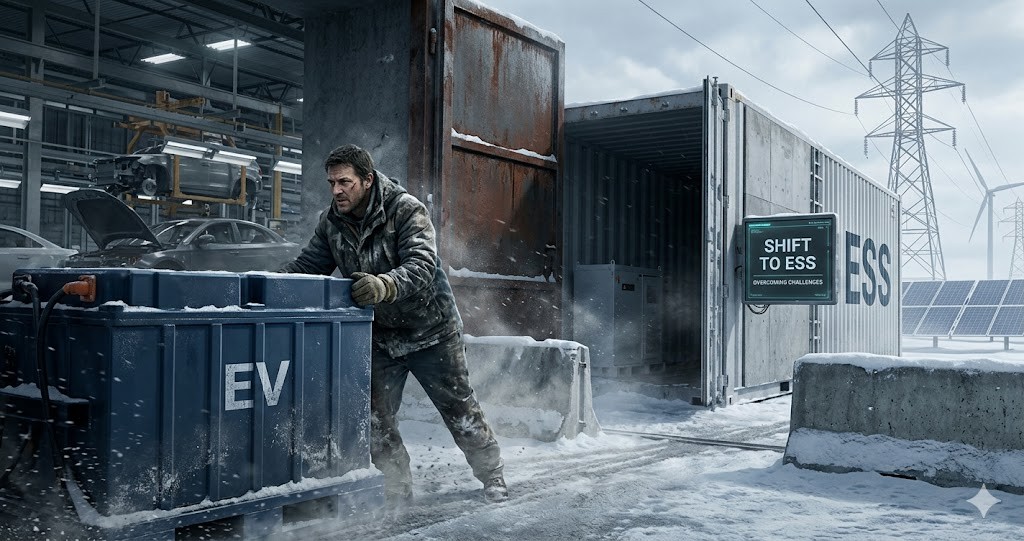
EV市場の急速な冷え込みと政策転換により、北米の電池メーカーは死活問題に直面しています。膨大な投資を行ったEV用電池工場の稼働率を維持するため、各社はデータセンターなどの需要が見込まれる電力貯蔵システム(ESS)への転換を急いでいますが、そこには技術的・経済的な「高い壁」が立ちはだかっています。
ニュース概要:EV失速で電池メーカーがESS事業へ転換模索
米国の電池メーカー各社は、EV需要の減退による工場の余剰能力を解消するため、エネルギー貯蔵システム(ESS)向け電池の生産への転換を図っています。
1. ESSシフトの背景
- EV市場の崩壊: 2025年9月末の税額控除(7500ドル)打ち切りやトランプ政権の化石燃料優遇政策により、米国のEV販売は直近6カ月で25%以上減少。
- AI・データセンター需要: AIの普及に伴う膨大な電力消費を支えるため、再生可能エネルギーを蓄える定置型ESSの需要が急増。
- 各社の動向:
- LGES: 北米3工場をESS向けに転換中。
- フォード: 20億ドルを投じ蓄電部門を設立。
- アルティウム・セルズ(GM/LG合弁): テネシー州の工場を蓄電用セル工場に転換。
2. 直面する「高い壁」
- 需給のミスマッチ: 北米の定置型電池需要(約76 GWh)に対し、EV用電池工場の余剰能力(約275 GWh)が圧倒的に大きく、ESS需要だけでは吸収しきれない。
- 技術転換のコスト: ESSで主流のリン酸鉄リチウム(LFP)は、EVで主流のニッケル系と製造工程が異なる。転換には最大18カ月の期間と数億ドルの費用が必要。
- 中国依存と関税: LFPの技術とサプライチェーンは中国が支配。米国メーカーは税額控除を受けるために中国製資材を排除する必要があるが、代替調達は困難。
3. 先行するテスラ
テスラは10年以上前からESS事業を展開。昨年の粗利益率は、EV部門が約15%(規制クレジット除く)に対し、ESS部門は30%に達し、同社の成長エンジンとなっている。
関連情報:電池業界を取り巻く「LFP」と「政策」の関わり
ESSにおいてLFPが選ばれる最大の理由は「安全性」と「サイクル寿命」です。ニッケル系(NMCなど)に比べて熱暴走のリスクが低く、充放電を繰り返しても劣化しにくいため、定置型に適しています。しかし、エネルギー密度が低いため、長距離走行を重視してきた北米のEVメーカーはこれまでニッケル系を優先してきました。この「電池化学物質の差」が、工場の転換を難しくしている主因です。
米国における政策のねじれ
現在、米国の電池メーカーは二重苦にあります。
- IRA(インフレ抑制法)の継続: 電池の国内生産に対する補助金は継続されていますが、受給には「中国製資材の排除(FEOC規制)」という厳しい条件があります。
- EV優遇の廃止: 一方で購入者向けの補助金が廃止されたため、出口(販売先)を失った状態です。
蓄電システムの構造
ESSは単なる電池の塊ではなく、交流(AC)と直流(DC)を変換するインバーター(PCS)や、温度を管理する熱マネジメントシステムと統合される必要があります。自動車メーカーがESSに参入する場合、単なる「セルの供給」から「システム全体のインテグレーション」へと事業モデルを広げる必要があり、これがフォードなどが「蓄電部門」を新設している理由でもあります。
まとめ
電池メーカーにとって、ESSへの転換は「余ったスペースの有効活用」というレベルではなく、数億ドル規模の再投資を伴うギャンブルに近い状況です。先行するテスラがAI企業(xAI)向けに巨額の蓄電池を販売しているように、メーカーが自ら「電力の買い手」を見つけ、かつLFPのサプライチェーンを中国抜きで構築できるかどうかが、生き残りの鍵となります。
出典:https://www.newsweekjapan.jp/articles/-/320038#google_vignette
US Battery Makers Pivot to ESS: The LFP Barrier Determining Success or Failure
North American battery manufacturers are facing an existential crisis due to a rapid cooling of the EV market and significant policy shifts. To maintain the utilization rates of EV battery plants that required massive investments, companies are rushing to pivot toward Energy Storage Systems (ESS) to meet demand from data centers and other sources. However, they face significant technical and economic barriers.
News Summary: Battery Makers Seek Pivot to ESS Amid EV Slowdown
US battery manufacturers are attempting to repurpose surplus factory capacity—caused by declining EV demand—for the production of batteries used in Energy Storage Systems (ESS).
1. Background of the ESS Shift
- Collapse of the EV Market: Following the termination of the 7,500 USD tax credit in late September 2025 and the Trump administration’s policies favoring fossil fuels, US EV sales have dropped by over 25% in the last six months.
- AI and Data Center Demand: Demand for stationary ESS, which stores renewable energy, is surging to support the massive power consumption required by the proliferation of AI.
- Corporate Movements:
- LGES: Currently converting three North American plants for ESS production.
- Ford: Investing 2 billion USD to establish a dedicated energy storage division.
- Ultium Cells (GM/LG JV): Converting its Tennessee plant into a storage-use cell factory.
2. The Significant Barriers
- Supply-Demand Mismatch: North American stationary battery demand is approximately 76 GWh, while the surplus capacity of EV battery plants is roughly 275 GWh—a gap too large for ESS demand alone to absorb.
- Technical Conversion Costs: Lithium Iron Phosphate (LFP), the mainstream chemistry for ESS, uses a different manufacturing process than the nickel-based batteries common in EVs. Conversion requires up to 18 months and hundreds of millions of dollars.
- China Dependency and Tariffs: China dominates the LFP technology and supply chain. US makers must eliminate Chinese materials to qualify for tax credits, but finding alternative sources is difficult.
3. Tesla’s Head Start
Tesla has operated an ESS business for over a decade. Last year, its ESS gross margin reached 30%, compared to roughly 15% for its EV division (excluding regulatory credits), making it a primary growth engine for the company.
Related Information: The Intersection of LFP and Policy
LFP is chosen for ESS primarily for its safety and cycle life. Compared to nickel-based chemistries (such as NMC), LFP has a lower risk of thermal runaway and degrades less over repeated charge/discharge cycles, making it ideal for stationary use. However, because of its lower energy density, North American EV makers—who prioritized long driving ranges—previously favored nickel-based cells. This “difference in battery chemistry” is the main reason factory conversion is so difficult.
Policy Contradictions in the US
US battery makers are currently caught in a double bind:
- Continuation of the IRA (Inflation Reduction Act): While subsidies for domestic battery production continue, they come with strict requirements to exclude Chinese materials (FEOC regulations).
- Elimination of EV Incentives: Meanwhile, since consumer subsidies have been abolished, manufacturers have lost their primary sales outlet.
Structure of Energy Storage Systems
An ESS is not just a collection of batteries; it must be integrated with inverters (Power Conversion Systems or PCS) that convert between AC and DC, as well as thermal management systems to control temperature. For automakers entering the ESS market, the business model must expand from “cell supply” to “full system integration.” This is why companies like Ford are establishing dedicated energy storage divisions.
Summary
For battery manufacturers, pivoting to ESS is not a simple matter of utilizing spare space; it is a high-stakes gamble involving reinvestments of hundreds of millions of dollars. As demonstrated by Tesla’s massive sales of storage units to AI firms like xAI, the key to survival will be whether manufacturers can secure their own power buyers and build an LFP supply chain independent of China.

コメント