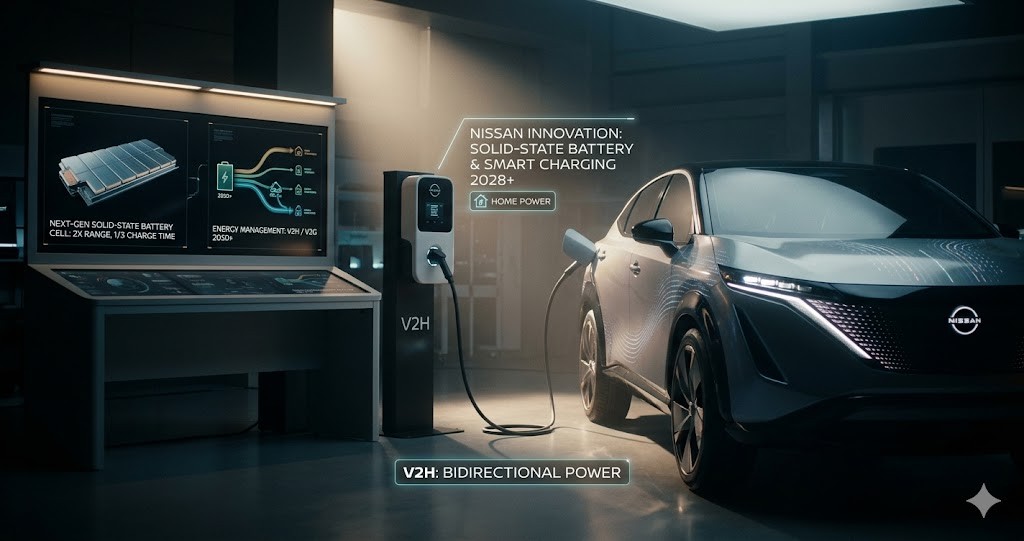
日産自動車は、2028年度の量産開始を目指す全固体電池の開発状況に加え、家庭用充電インフラやソフトウェア戦略についても最新の進捗を公表しました。
1. 全固体電池の開発進捗
- 実車サイズでの性能達成: 電池の最小単位である「セル」を23層まで重ねた実車搭載規模の試作品において、目標とする充放電性能を確認しました。
- 性能の飛躍:
- 航続距離: 単位体積当たりの容量が従来のリチウムイオン電池の2倍となり、航続距離が大幅に向上します。
- 充電時間: 高出力充電への耐性が高く、充電時間を従来の3分の1に短縮可能です。
- 今後の予定: 2024年度内に横浜工場内にパイロットラインを設置し、量産化に向けた製造技術の確立を急ぎます。
2. エネルギーマネジメントの革新
- 安価な双方向充電器: EVから家庭へ電力を供給する「V2H(Vehicle to Home)」用の新型充電器を2028年から販売。
- コスト低減: 現在約150万円する機器代を大幅に引き下げ、普及を促進します。
- 電力取引(V2G): 2030年以降、EVの余剰電力を電力会社に販売する仕組み(Vehicle to Grid)の構築も計画されています。
3. 知能化戦略(SDVとAI)
- SDVプラットフォーム: 2026年度に独自のソフト開発基盤を導入。車両データからソフトを自動開発する体制を整えます。
- AIの全面採用:
- AI自動運転: 2027年度に導入予定。
- AIパートナー: 会話や予定からドライバーをサポートするエージェント機能を搭載。
- 普及目標: 将来的に全モデルの90%にAI自動運転機能を搭載する方針です。
関連情報:全固体電池とは?
全固体電池がなぜ「ゲームチェンジャー」と呼ばれるのか、その背景情報を補足します。
全固体電池のメリット
- 安全性: 従来の電池は可燃性の液体電解質を使用していますが、これを固体に置き換えることで液漏れや発火のリスクが劇的に低下します。
- 作動温度域: 高温・低温環境に強く、冷却システムの簡素化が期待できるため、車両全体の軽量化に寄与します。
業界の動向
- 他社との競争: トヨタ自動車も2027年から2028年の実用化を目指しており、ホンダも独自開発を進めています。世界的な開発競争が激化しています。
- コストの課題: 材料費や製造工程の複雑さから、初期段階では高級車やスポーツモデルからの搭載になると予測されています。
出典:https://www.nikkei.com/article/DGXZQOUC174A10X10C26A4000000/
Nissan Advances Toward Mass Production of All-Solid-State Batteries: Target Performance Achieved at Vehicle Scale
Nissan Motor Co., Ltd. has announced its latest progress regarding the development of all-solid-state batteries (ASSBs) aimed for mass production by fiscal year 2028. The announcement also covered updates on home charging infrastructure and software strategies.
1. Progress in All-Solid-State Battery Development
- Performance Achievement at Vehicle Scale: Nissan confirmed that a 23-layer prototype cell—the size required for actual vehicle integration—has successfully met target charging and discharging performance.
- Breakthrough in Performance:
- Driving Range: With double the energy density per unit volume compared to conventional lithium-ion batteries, the driving range will be significantly extended.
- Charging Time: Due to high resistance to high-output charging, charging times can be reduced to one-third of current levels.
- Future Plans: Nissan will establish a pilot production line at its Yokohama Plant within fiscal year 2024 to accelerate the establishment of mass-production manufacturing technologies.
2. Innovation in Energy Management
- Affordable Bi-directional Chargers: Nissan will begin selling a new type of charger for “Vehicle to Home” (V2H) systems in 2028, allowing EVs to power homes.
- Cost Reduction: The company aims to significantly lower the price of these units from the current level of approximately 1.5 million yen to promote widespread adoption.
- Energy Trading (V2G): Plans are also underway to build a “Vehicle to Grid” (V2G) framework after 2030, enabling users to sell surplus EV power back to utility companies.
3. Intelligence Strategy (SDV and AI)
- SDV Platform: In fiscal year 2026, Nissan will introduce an original software development platform. This system will enable the automated development of software using data collected from vehicles.
- Full-scale AI Adoption:
- AI Autonomous Driving: Scheduled for introduction in fiscal year 2027.
- AI Partner: An agent feature will be integrated to support drivers based on conversations and schedules.
- Adoption Goal: Nissan aims to equip 90% of all future models with AI autonomous driving functions.
Related Information: What are All-Solid-State Batteries?
Here is additional context on why all-solid-state batteries (ASSBs) are considered a “game changer.”
Benefits of All-Solid-State Batteries
- Safety: While conventional batteries use flammable liquid electrolytes, ASSBs replace them with solid materials, drastically reducing the risk of leakage or fire.
- Operating Temperature Range: They are highly resistant to extreme heat and cold. This allows for simplified cooling systems, contributing to the overall weight reduction of the vehicle.
Industry Trends
- Competition: Toyota is also aiming for practical application between 2027 and 2028, while Honda is pursuing its own independent development. Global competition is intensifying.
- Cost Challenges: Due to high material costs and complex manufacturing processes, it is predicted that ASSBs will initially be installed in luxury cars or high-performance sports models.


コメント