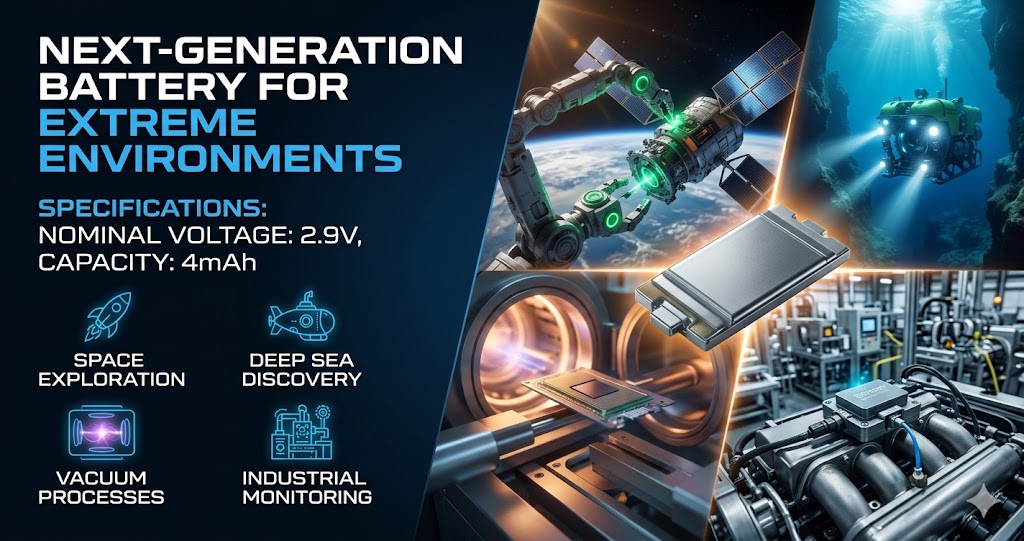
日本電気硝子は、2026年3月に開催された「BATTERY JAPAN」にて、200℃の高温環境下でも安定して動作する全固体ナトリウムイオン電池のデモを披露しました。この電池は、従来の電池が抱えていた熱や安全性への課題を、ガラス技術と酸化物材料によって克服しています。
1. 圧倒的な耐熱性と堅牢なパッケージ
最大の特徴は、一般的な電池では不可能な温度域での動作です。
- 使用温度範囲: -40℃ から +200℃ まで対応。
- はんだリフロー対応: 300℃のはんだリフロー処理が可能です。これにより、基板実装時の熱工程に耐えられるため、電子機器の製造プロセスを簡略化できます。
- 封止技術: パッケージに樹脂ではなくガラス封止を採用。さらに耐熱性の高い金属パッケージを用いることで、高温や真空状態でも性能を維持します。
2. 「オール酸化物」による高い安全性
全固体電池には「硫化物系」と「酸化物系」がありますが、本製品はすべてを酸化物で構成しています。
- 発火・液漏れなし: 液体電解質を使用しないため、物理的な損傷(くぎ刺しなど)を受けても発火のリスクが極めて低いです。
- 有毒ガスの抑制: 硫化物系電池とは異なり、空気中の水分と反応して有毒な硫化水素(H2S)を発生させることがありません。
3. スペックと主な用途
現在、有償サンプル出荷が開始されており、特殊な産業用途での活用が期待されています。
| 項目 | 内容 |
| 公称電圧 | 2.9V |
| 公称容量 | 4mAh |
| 想定用途 | 高温装置内のモニタリング、宇宙開発、海洋探査、真空環境設備 |
💡 関連情報:なぜ「ナトリウム」なのか?
現在主流の「リチウムイオン電池」に対して、ナトリウムイオン電池には以下のメリットがあります。
- 資源の豊富さ: リチウムは希少金属(レアメタル)で価格変動が激しいですが、ナトリウムは塩の主成分であり、地球上にほぼ無限に存在するため、低コスト化が期待できます。
- サプライチェーンの安定: 特定の国に資源を依存せず、安定した供給が可能です。
- 全固体化との相性: 日本電気硝子は、結晶化ガラス技術を応用することで、ナトリウムイオンが移動しやすい独自の固体電解質を開発し、実用化に繋げました。
出典:https://eetimes.itmedia.co.jp/ee/articles/2603/18/news081.html
The True Value of Oxide-Based All-Solid-State Na-ion Batteries: 200°C Operation Enabled by Glass Sealing Technology
Nippon Electric Glass (NEG) showcased a demonstration of an all-solid-state sodium-ion battery that operates stably even in high-temperature environments of 200°C at “BATTERY JAPAN,” held in March 2026. This battery overcomes the thermal and safety challenges faced by conventional batteries through the use of glass technology and oxide materials.
1. Overwhelming Heat Resistance and Robust Packaging
The most significant feature is its operation in temperature ranges impossible for general batteries.
- Operating Temperature Range: Supports from -40°C to +200°C.
- Solder Reflow Compatibility: Capable of withstanding 300°C solder reflow processes. This allows the battery to endure the heat during PCB mounting, simplifying the manufacturing process for electronic devices.
- Sealing Technology: Uses glass sealing instead of resin for the package. By combining this with a highly heat-resistant metal package, performance is maintained even in high-temperature or vacuum conditions.
2. High Safety via “All-Oxide” Composition
While all-solid-state batteries are generally categorized into “sulfide-based” and “oxide-based,” this product is composed entirely of oxide materials.
- No Fire or Leakage: Since no liquid electrolyte is used, the risk of fire is extremely low even if the battery suffers physical damage (such as nail penetration).
- Suppression of Toxic Gas: Unlike sulfide-based batteries, it does not react with moisture in the air to generate toxic hydrogen sulfide (H2S).
3. Specifications and Primary Applications
Paid sample shipping has already commenced, with high expectations for use in specialized industrial sectors.
| Item | Details |
| Nominal Voltage | 2.9V |
| Nominal Capacity | 4mAh |
| Potential Applications | Monitoring inside high-temperature equipment, space exploration, maritime research, and vacuum environment facilities. |
💡 Related Information: Why “Sodium”?
Compared to the currently mainstream lithium-ion batteries, sodium-ion batteries offer the following advantages:
- Resource Abundance: While lithium is a rare metal with volatile pricing, sodium is a primary component of salt and exists almost infinitely on Earth, raising expectations for lower costs.
- Supply Chain Stability: It allows for a stable supply without depending on specific countries for resources.
- Compatibility with Solid-State Technology: By applying crystallized glass technology, Nippon Electric Glass developed a unique solid electrolyte that facilitates the movement of sodium ions, leading to successful commercialization.


コメント