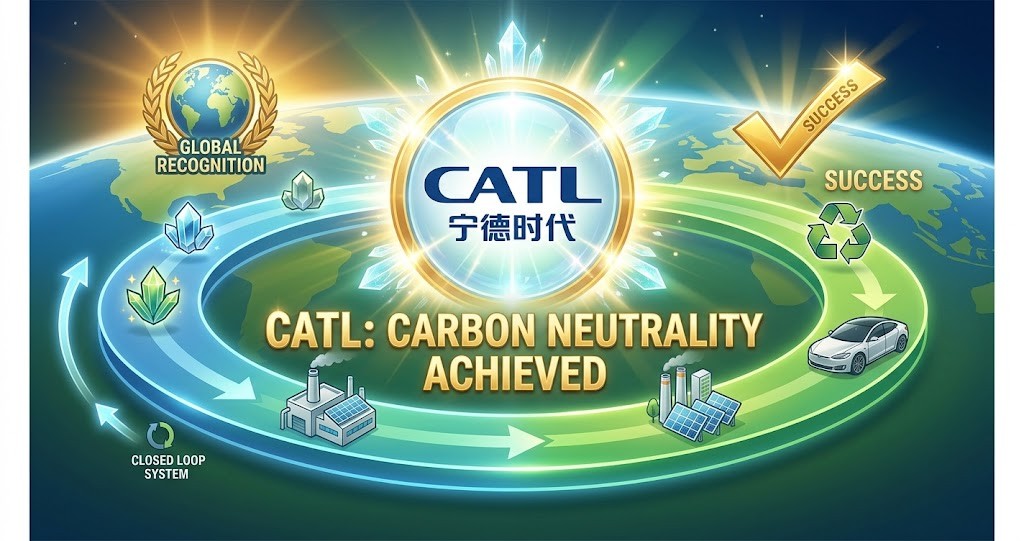
気候変動への対策や環境規制の強化に伴い、電気自動車(EV)業界では車本体だけでなく、車載バッテリーの製造プロセス全体における脱炭素化(カーボンニュートラル)が急務となっています。特に欧州連合(EU)のバッテリー規制をはじめ、国際市場への参入にあたってはバッテリーの二酸化炭素排出量の申告や制限への対応が必須条件となりつつあります。こうした市場環境の変化背景を受け、世界最大のパワーバッテリーメーカーである中国のCATL(寧徳時代新能源科技)は、自社の生産拠点のみならずサプライチェーン全体を視野に入れた包括的な脱炭素戦略を推進しています。
CATLのカーボンニュートラル戦略と進捗のまとめ
1. 中核事業(自社操業)における目標達成
- 達成状況: CATLは2025年末までに、主要なコア事業全体で二酸化炭素排出量を実質ゼロにするカーボンニュートラルを達成しました。
- 主要実績:
- バッテリー工場20カ所が「ISO 14068-1」認証を取得し、ゼロカーボン工場となりました。
- 主要事業で使用する電力の100%がゼロカーボン電力で賄われています(2023年以降で180億kWh以上を使用)。
- 2025年の生産量は748GWh(2022年の2.3倍)へ拡大しつつも、単位生産量当たりのエネルギー消費量を2022年比で28%削減、炭素排出強度を約77%削減し、累積で1000万トン以上のCO2換算排出量を削減しました。
- テラワット時(TWh)規模の出荷量を維持しながら中核事業でカーボンニュートラルを達成したのは、バッテリー企業として世界唯一です。
2. 次なる挑戦:サプライチェーン(バリューチェーン全体)の脱炭素化
- 現状と課題: 同社製品のライフサイクル全体におけるCO2排出量の80%以上がサプライチェーン(鉱物採掘、原材料精製、材料合成、部品製造など)に由来しており、サプライチェーンからの排出量はコア事業の5倍以上に上ります。
- 2035年目標に向けた具体的な取り組み:
- カーボンチェーンマネジメントシステム(CCMS): サプライチェーン全体の炭素データ追跡プラットフォームを構築。100社以上の主要サプライヤー(ティア1)のデータをもとに、1,000種類以上の製品・原材料モデルを構築済みです。
- グリーン調達ガイドライン: サプライヤーの選定や審査プロセスに、二酸化炭素排出量、再生可能エネルギー利用率、生産単位当たりのエネルギー消費量を評価項目として組み込みます。
- 業界連携・イニシアチブ: 主要サプライヤー30社と「ゼロカーボンサプライチェーン強化イニシアチブ」を立ち上げたほか、国家気候変動戦略国際協力センターや上海環境エネルギー取引所と戦略的協力協定を締結しました。
3. 経営陣のメッセージと市場での立ち位置
- ロビン・ゼン会長兼CEOの発言: 「ゼロカーボンではないバッテリーは、将来的に時代とともに段階的に廃止される」と指摘。技術進歩によりグリーンエネルギーのコストが下がっており、ゼロカーボンの経済的合理性が明確になっていると述べています。
- 市場での圧倒的シェア: 調査会社SNEリサーチによると、CATLのEV用バッテリーにおける世界市場シェアは2026年上半期時点で39.9%(前年同期は38.2%)に達しており、世界トップの地位を強固に保ちながら業界全体の標準化・ゼロカーボン化を牽引しています。
出典:https://cnevpost.com/2026/08/17/catl-core-operations-carbon-neutral-supply-chain-next/
CATL Achieves Carbon Neutrality in Core Operations in 2025, Targeting Full Value Chain Decarbonization by 2035
Introduction With the strengthening of climate change countermeasures and environmental regulations, decarbonization (carbon neutrality) across the entire manufacturing process of EV batteries, not just the vehicles themselves, has become an urgent task in the electric vehicle (EV) industry. In particular, compliance with carbon footprint declarations and limits, such as those under the European Union (EU) Battery Regulation, is becoming a mandatory requirement for entering international markets. Against the backdrop of these changing market conditions, China-based CATL (Contemporary Amperex Technology Co., Limited), the world’s largest power battery manufacturer, is promoting a comprehensive decarbonization strategy that covers not only its own production facilities but also its entire supply chain.
Summary of CATL’s Carbon Neutrality Strategy and Progress
- Goal Achievement in Core Operations (In-House Operations) Achievement Status: By the end of 2025, CATL achieved carbon neutrality, reducing net carbon emissions to zero across its major core operations. Key Achievements:
- 20 battery manufacturing plants obtained ISO 14068-1 certification, establishing their status as zero-carbon factories.
- 100% of the electricity used in major operations is supplied by zero-carbon power (over 18 billion kWh used since 2023).
- While expanding production volume in 2025 to 748 GWh (2.3 times that of 2022), energy consumption per unit of production decreased by 28% compared to 2022, carbon emission intensity dropped by approximately 77%, and cumulative emissions reduction reached over 10 million metric tons of CO2 equivalent.
- CATL is the only battery company in the world to achieve carbon neutrality in its core operations while maintaining shipments on a terawatt-hour (TWh) scale.
- The Next Challenge: Decarbonizing the Supply Chain (Entire Value Chain) Current Status and Challenges: Over 80% of the CO2 emissions across the entire life cycle of the company’s products originate from the supply chain (mineral mining, raw material refining, material synthesis, component manufacturing, etc.), with emissions from the supply chain exceeding five times those of its core operations. Specific Initiatives Toward the 2035 Goal:
- Carbon Chain Management System (CCMS): Built a carbon data tracking platform for the entire supply chain. Based on data from more than 100 major Tier-1 suppliers, it has constructed over 1,000 product and raw material models.
- Green Procurement Guidelines: Incorporates carbon emissions, renewable energy usage rates, and energy consumption per unit of production into supplier qualification and audit evaluation criteria.
- Industry Collaboration and Initiatives: Launched the Zero-Carbon Supply Chain Enhancement Initiative with 30 key suppliers, and signed strategic cooperation agreements with the National Center for Climate Change Strategy and International Cooperation and the Shanghai Environment and Energy Exchange.
- Executive Messages and Market Position Remarks by Chairman and CEO Robin Zeng: He pointed out that “batteries that are not zero-carbon will eventually be phased out over time in the future.” He stated that technological advancements continue to lower the cost of green energy, making the economic rationale for zero-carbon development increasingly clear. Overwhelming Market Share: According to research firm SNE Research, CATL’s global market share in EV batteries reached 39.9% in the first half of 2026 (up from 38.2% in the same period of the previous year), solidifying its position as the global leader while driving industry-wide standardization and decarbonization.
コメント