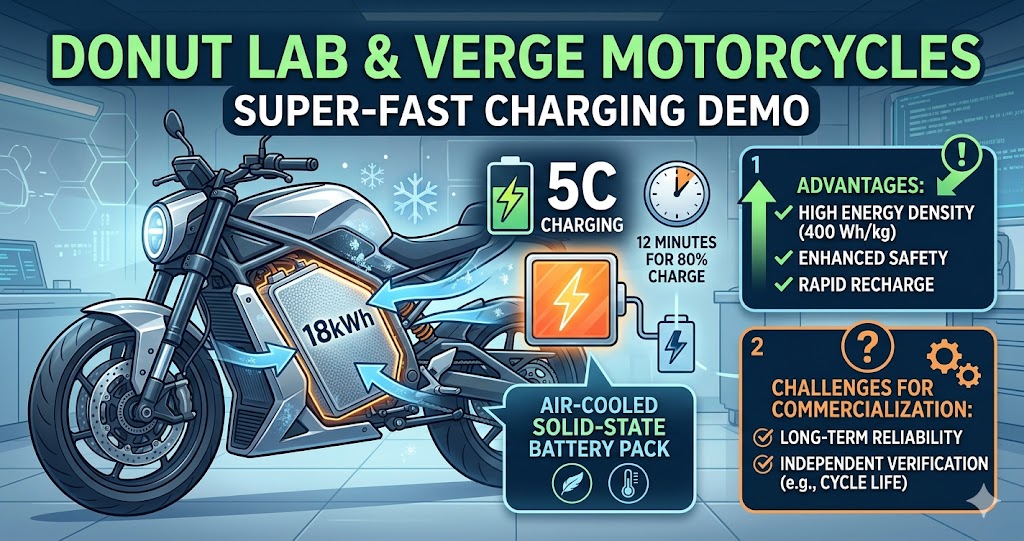
フィンランドのDonut Labは、Verge Motorcyclesと共同で、実車のバイクシャーシに搭載した18kWhの全固体電池パックを用いて、5C(12分で80%充電)の超急速充電デモを実施しました。
主なポイント
- 実証結果: 空冷システムながら、5分間にわたり100kW以上の高出力を維持。10%から80%までの充電をわずか12分で完了。
- 技術的特徴: 従来のリチウムイオン電池より3倍速く充電が可能。熱管理が難しい高出力充電を、液冷ではなく「空冷」で実現。
- 進捗: 個々のセル単位ではなく、実際の車両に組み込まれた「パックレベル」での実証に初めて成功。
- 今後の焦点: 2026年第1四半期(残り約2週間)の生産開始予定を守れるかどうかに注目が集まっています。
関連情報の解説
このニュースの背景にある技術的な意義と、未解決の課題について詳しく解説します。
1. 充電速度「5C」と熱管理の凄さ
「Cレート」はバッテリーの容量に対する充電・放電電流の比率です。
- 5Cとは: 理論上、12分(60分割る5)で満充電にできる速度を指します。
- 空冷のメリット: 通常、これほどの急速充電を行うと激しい発熱が生じるため、多くの電気自動車(EV)は重くて複雑な「液冷システム」を必要とします。Donut Labがこれを「空冷」で実現したことは、車両の軽量化とコスト削減に直結する画期的な成果です。
2. 全固体電池(Solid-State Battery)の期待
Donut Labが採用しているのは次世代の全固体電池です。
- エネルギー密度: 同社は400 Wh/kgという、現行のEV用電池の約1.5倍から2倍の密度を主張しています。
- 安全性: 電解質が固体であるため、液漏れや発火のリスクが極めて低く、高温環境下での安定性が高いのが特徴です。
3. 残された「信頼性」の課題
今回のデモは大きな進歩ですが、専門家は以下の点について、第三者機関による独立した検証が必要だと指摘しています。
- サイクル寿命: 同社が主張する「10万回の充放電サイクル」は、従来の常識を遥かに超える数値であり、長期的なデータが求められています。
- 標準化されたテスト: 企業独自のデータではなく、共通の枠組みに基づいた生データの共有が、投資判断や市場の信頼獲得には不可欠です。
今回の発表は、研究室の中だけの技術だった全固体電池が、いよいよ「実際の製品(バイク)」として公道を走る直前まで来ていることを示唆しています。
Finland’s Donut Lab Demonstrates 5C Charging on Real Motorcycle; Sustains Over 100kW with Air Cooling
Finland-based Donut Lab, in collaboration with Verge Motorcycles, has conducted a high-speed charging demonstration using an 18kWh solid-state battery pack integrated into a real motorcycle chassis. The test demonstrated 5C charging, reaching an 80% charge in just 12 minutes.
Key Points
- Demonstration Results: Despite using an air-cooling system, the pack maintained a high output of over 100kW for 5 minutes. It completed a charge from 10% to 80% in only 12 minutes.
- Technical Features: Charging is three times faster than conventional lithium-ion batteries. It achieves high-output charging—which usually presents difficult thermal management challenges—using “air cooling” instead of liquid cooling.
- Progress: This marks the first successful demonstration at the “pack level” (integrated into an actual vehicle) rather than just testing individual cells.
- Future Focus: All eyes are on whether the company can meet its scheduled production start by the end of the first quarter of 2026 (approximately two weeks away).
Explanatory Notes and Related Information
Technical significance and unresolved challenges behind this news.
1. The Significance of “5C” Charging and Thermal Management
The “C-rate” is the ratio of the charge or discharge current relative to the battery’s capacity.
- What is 5C?: Theoretically, it refers to a speed that can fully charge a battery in 12 minutes (60 minutes divided by 5).
- Advantages of Air Cooling: Typically, such rapid charging generates intense heat, requiring many electric vehicles (EVs) to use heavy and complex “liquid-cooling systems.” Donut Lab’s achievement of this via “air cooling” is a breakthrough that leads directly to vehicle weight reduction and cost savings.
2. Expectations for Solid-State Batteries
Donut Lab utilizes next-generation solid-state battery technology.
- Energy Density: The company claims a density of 400 Wh/kg, which is approximately 1.5 to 2 times higher than current EV batteries.
- Safety: Because the electrolyte is solid, the risk of leakage or fire is extremely low, and the battery remains highly stable even in high-temperature environments.
3. Remaining “Reliability” Challenges
While this demonstration is a major step forward, experts point out that independent verification by third-party organizations is still needed for the following:
- Cycle Life: The company’s claim of a “100,000 charge-discharge cycle” life far exceeds conventional industry standards, and long-term data is required to back this up.
- Standardized Testing: Sharing raw data based on a common framework, rather than relying on proprietary company data, is essential for gaining market trust and informing investment decisions.
This announcement suggests that solid-state batteries—once a technology confined to the laboratory—are finally on the verge of hitting the open road as a “real product” (the motorcycle).


コメント