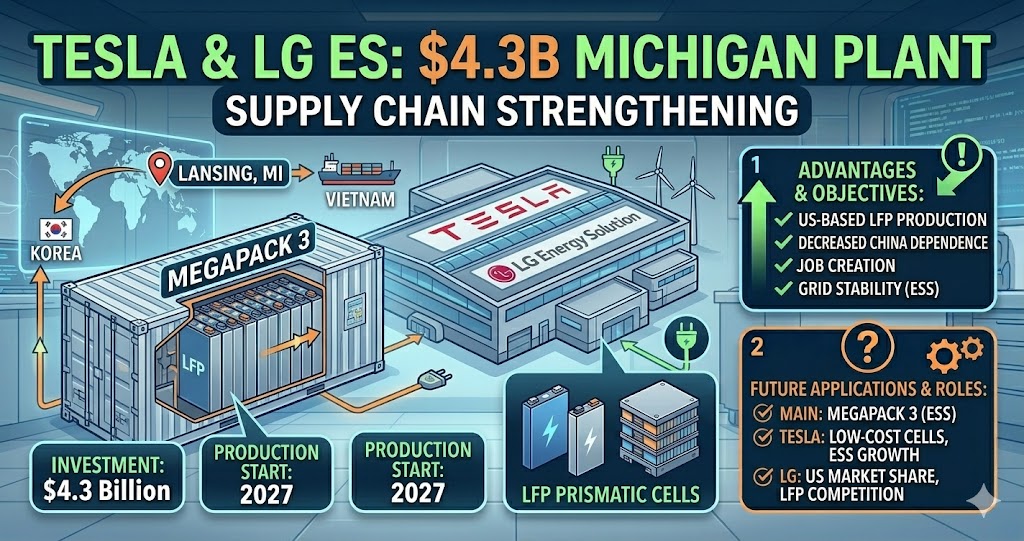
米政府は2026年3月16日、EV大手のテスラと韓国のLGエナジーソリューションが、ミシガン州ランシングに43億ドル(約6400億円)を投じて、新型の電池工場を建設する契約を締結したと発表しました。
主なポイント
- 生産品目: リン酸鉄リチウム(LFP)角形電池セル
- 投資額: 43億ドル
- 生産開始: 2027年を予定
- 主な用途: テスラの大型蓄電システム「Megapack 3(メガパック3)」
- 背景: 中国依存からの脱却と、米国内でのサプライチェーン強化
関連情報の解説
今回の提携をより深く理解するための補足情報です。
1. LFP(リン酸鉄リチウム)電池とは
LFP電池は、正極材に鉄とリンを使用したリチウムイオン電池の一種です。
- メリット: 高価なコバルトやニッケルを使用しないため安価で、熱安定性が高く寿命が長いのが特徴です。
- 市場背景: これまでは中国企業が圧倒的なシェアを持っていましたが、米国内での生産により、関税対策や地政学的リスクの軽減が図られます。
2. テスラの蓄電システム「メガパック」
今回生産される電池は、電気自動車(EV)用ではなく、主に**固定型蓄電システム(ESS)**に使用されます。
- Megapack 3: 太陽光発電や風力発電で得た電力を貯蔵し、電力網(グリッド)を安定させるための巨大なバッテリーユニットです。
- 生産拠点: テキサス州ヒューストンなどで組み立てが行われ、今回のミシガン工場で作られたセルがそこに供給されます。
3. 米国政府の戦略的意義
今回の合意は、トランプ政権が推進するエネルギー安全保障政策の一環です。
- 脱・中国依存: 電池材料の調達において中国への依存を減らし、米国内での雇用創出と技術自給を目指しています。
- LGエナジーの役割: LGは米国内ですでに複数の拠点を持ち、北米の電池生産能力において重要なパートナーとなっています。
まとめ:今回の提携の影響
| 項目 | 内容 |
| テスラの狙い | 蓄電ビジネス(ESS)の拡大と、安定した低コスト電池の確保 |
| LGエナジーの狙い | 北米市場でのシェア拡大と、LFP電池分野での中国勢への対抗 |
| 米政府の狙い | 国内製造業の復活とエネルギーインフラの自国供給網の確立 |
出典:https://jp.reuters.com/markets/global-markets/6HTGSO2ZLBLJ7HXTR7IYKU63SQ-2026-03-17/
Tesla and LG Energy to Jointly Produce LFP Batteries in U.S., Aiming to End Reliance on China
On March 16, 2026, the U.S. government announced that EV giant Tesla and South Korea’s LG Energy Solution have signed an agreement to invest 4.3 billion dollars (approximately 640 billion yen) to build a new battery factory in Lansing, Michigan.
Key Points
- Production Item: Lithium Iron Phosphate (LFP) prismatic battery cells
- Investment Amount: 4.3 billion dollars
- Production Start: Scheduled for 2027
- Primary Use: Tesla’s large-scale energy storage system, “Megapack 3”
- Background: Reducing dependence on China and strengthening the domestic supply chain within the U.S.
Explanatory Notes and Related Information
Additional context to help you better understand this partnership.
1. What is an LFP (Lithium Iron Phosphate) Battery?
An LFP battery is a type of lithium-ion battery that uses iron and phosphate as the cathode material.
- Advantages: They are inexpensive because they do not use costly cobalt or nickel. They are also characterized by high thermal stability and a long service life.
- Market Context: While Chinese companies have historically held a dominant market share, production within the U.S. aims to mitigate tariff issues and geopolitical risks.
2. Tesla’s Energy Storage System “Megapack”
The batteries produced at this facility will primarily be used for Stationary Energy Storage Systems (ESS) rather than electric vehicles (EVs).
- Megapack 3: A massive battery unit designed to store electricity from solar or wind power and stabilize the electrical grid.
- Production Hubs: Assembly takes place in locations such as Houston, Texas. The cells manufactured at the new Michigan plant will be supplied to these assembly sites.
3. Strategic Significance for the U.S. Government
This agreement is part of the energy security policies promoted by the administration.
- Decoupling from China: The goal is to reduce reliance on China for battery material procurement while aiming for job creation and technical self-sufficiency within the U.S.
- The Role of LG Energy: LG already operates multiple sites in the U.S. and has become a vital partner in North American battery production capacity.
Summary: Impact of the Partnership
| Item | Details |
| Tesla’s Objective | Expansion of the energy storage business (ESS) and securing stable, low-cost batteries. |
| LG Energy’s Objective | Expanding market share in North America and competing with Chinese firms in the LFP battery sector. |
| U.S. Government’s Objective | Resurgence of domestic manufacturing and establishing a self-reliant supply chain for energy infrastructure. |
コメント