世界最大の電池メーカーである中国のCATL(寧徳時代)が、全固体電池の実用化に向けて着実な進展を見せています。新たな特許取得と大規模な材料確保により、次世代電池市場での主導権維持を狙います。
1. 技術的進展:硫化物系固体電池の特許取得
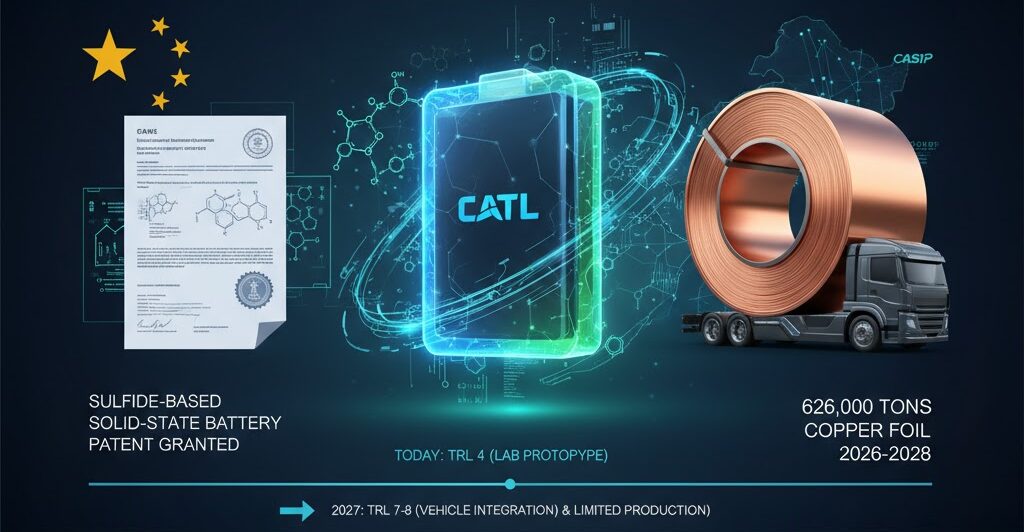
CATLは、硫化物電解質の課題である「不安定性」を克服するための新たな特許(2026年3月5日公開)を取得しました。
- 負極保護技術: フッ素含有リチウム塩を使用し、負極表面にフッ化リチウムの保護層を形成。これにより硫化物電解質との副反応を抑制し、熱安定性を高めます。
- エネルギー密度: 開発中の試作品は500Wh/kgという驚異的なエネルギー密度の達成を見込んでいます。これは現行の一般的なリチウムイオン電池の約2倍に相当します。
- 試作規模: 現在は20Ahのサンプル段階ですが、今後は車載グレードの60Ahプロトタイプへとスケールアップする計画です。
2. ロードマップ:2027年の車載統合を目指す
CATLは技術成熟度(TRL)に基づき、明確な目標を設定しています。
- 現状: 技術成熟度レベル4(実験室段階のプロトタイプ)。
- 目標: 2027年までにレベル7または8(試作規模の車両統合が可能な車載グレード)への到達を目指します。
- 小規模生産: 2027年までに限定的な量産を開始する予定です。
3. サプライチェーンの確保:膨大な銅箔の備蓄
将来の規模拡大を見据え、CATLは材料供給網を固めています。
- 大規模契約: 広東嘉源科技から2026年から2028年の期間で、計62万6000トンの銅箔供給能力を確保しました。
- 契約価値: 約84億ユーロに相当。これは全固体および半固体電池の量産に向けた重要な戦略的備蓄と見られています。
【関連情報】知っておきたい背景知識
「硫化物系」が注目される理由
全固体電池には「硫化物系」「酸化物系」「ポリマー系」などがありますが、硫化物系はリチウムイオン伝導性が極めて高く、電気自動車(EV)に求められる急速充電と高出力に適しています。トヨタ自動車などの競合他社もこの方式に注力しています。
課題は「コスト」
CATLは、硫化物系固体電池の製造コストが、現在主流のリチウムイオン電池よりも3倍から5倍高価であると指摘しています。科学的な課題は解決しつつあるものの、商業化には製造プロセスの革新によるコスト低減が不可欠です。
中国国家プロジェクト「CASIP」
中国政府主導で2024年に結成されたコンソーシアム「中国全固体電池協同イノベーションプラットフォーム(CASIP)」には、CATL、BYD(FinDreams Battery)、NIOなどの競合企業が集結しています。これは、全固体電池への転換期において、日本や欧米勢に主導権を渡さないという中国の強い国家意志の表れです。
まとめ:CATLの狙い
CATLは、既存のリチウムイオン電池での圧倒的なシェアを維持しつつ、次世代の全固体電池においても「特許・材料・国家連携」の三段構えで盤石な体制を築いています。2027年の小規模生産開始は、同社が「研究段階」から「実用化段階」へと完全に移行したことを世界に知らしめる重要な節目となるでしょう。
出典:https://batteryindustry.net/catl-reports-advances-in-solid-state-battery-development/
- Aiming for 500 Wh/kg: CATL Reveals Latest Patents and Progress in All-Solid-State Batteries
Aiming for 500 Wh/kg: CATL Reveals Latest Patents and Progress in All-Solid-State Batteries
CATL (Contemporary Amperex Technology Co. Limited), the world’s largest battery manufacturer based in China, is making steady progress toward the commercialization of all-solid-state batteries. By securing new patents and massive material supplies, the company aims to maintain its leadership in the next-generation battery market.
1. Technical Progress: Sulfide-Based Solid-State Battery Patents
CATL has obtained a new patent (published on March 5, 2026) to overcome the “instability” issues associated with sulfide electrolytes.
- Anode Protection Technology: Uses a fluorine-containing lithium salt to form a lithium fluoride protective layer on the anode surface. This suppresses side reactions with the sulfide electrolyte and enhances thermal stability.
- Energy Density: Prototypes under development are expected to achieve an impressive energy density of 500 Wh/kg, which is approximately double that of conventional lithium-ion batteries.
- Scale of Prototypes: While currently at the 20 Ah sample stage, the company plans to scale up to automotive-grade 60 Ah prototypes.
2. Roadmap: Aiming for Automotive Integration by 2027
CATL has set clear goals based on Technology Readiness Levels (TRL).
- Current Status: TRL 4 (Laboratory-scale prototype).
- Goal: To reach TRL 7 or 8 (automotive-grade cell ready for trial-scale vehicle integration) by 2027.
- Small-Scale Production: Plans to begin limited mass production by 2027.
3. Securing the Supply Chain: Massive Stockpiling of Copper Foil
With an eye toward future scale expansion, CATL is strengthening its material supply network.
- Large-Scale Contract: Secured a supply capacity of 626,000 tons of copper foil from Jiayuan Technology for the period between 2026 and 2028.
- Contract Value: Worth approximately 8.4 billion EUR. This is seen as a key strategic stockpile for the mass production of semi-solid and all-solid-state batteries.
[Related Info] Background Knowledge
Why “Sulfide-Based” is Gaining Attention
Among various types of solid-state batteries (including sulfide, oxide, and polymer), the sulfide-based type offers extremely high lithium-ion conductivity, making it ideal for the rapid charging and high power output required for electric vehicles (EVs). Competitors such as Toyota are also focusing heavily on this approach.
The Challenge: Cost
CATL points out that the manufacturing cost of sulfide-based solid-state batteries is currently 3 to 5 times higher than that of mainstream lithium-ion batteries. While scientific challenges are being resolved, manufacturing process innovation is essential for commercialization to reduce costs.
China’s National Project “CASIP”
The China All-Solid-State Battery Collaborative Innovation Platform (CASIP), a consortium formed under Chinese government leadership in 2024, brings together competitors such as CATL, BYD (FinDreams Battery), and NIO. This reflects China’s strong national will to avoid ceding leadership to Japanese or Western players during the transition to solid-state batteries.
Summary: CATL’s Strategic Goal
While maintaining its overwhelming market share in existing lithium-ion batteries, CATL is building a robust foundation for next-generation batteries through a three-pronged approach: patents, material security, and national collaboration. The launch of small-scale production in 2027 will mark a vital turning point, signaling to the world that the company has fully transitioned from the “research stage” to the “commercialization stage.”
コメント