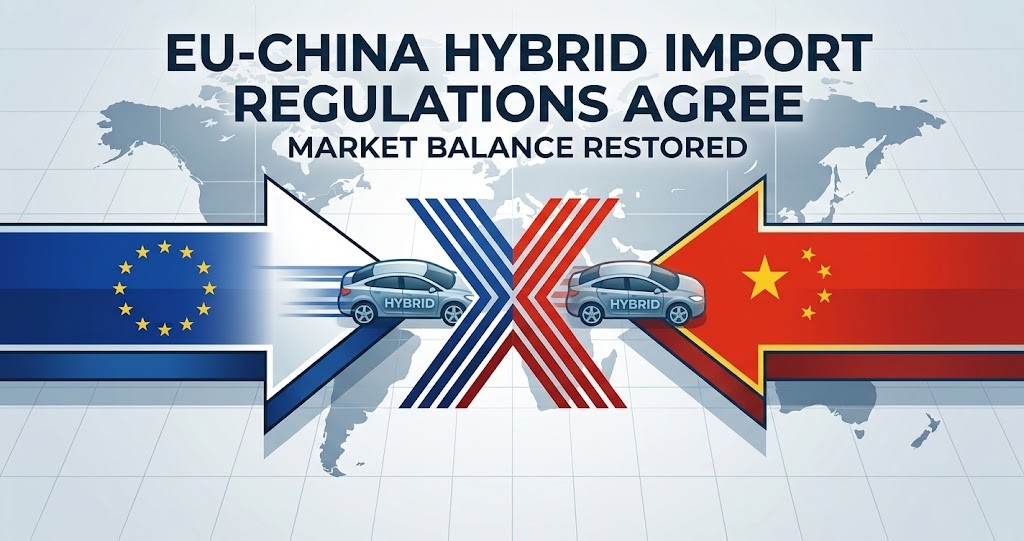
欧州(EU)の自動車市場において、近年急速に存在感を高めているのが「中国製自動車」です。特に、純粋な電気自動車(EV)だけでなく、価格面と利便性に優れるハイブリッド車(HV)やプラグインハイブリッド車(PHEV)の流入が急増しており、欧州の大手自動車メーカーの経営を圧迫する事態となっていました。
こうした背景の中、EUと中国の間で貿易摩擦の激化を防ぎ、市場の均衡を取り戻すための協議が行われ、中国からのハイブリッド車輸出を規制することで両者が合意しました。記事の要点と補足情報を以下にまとめています。
ニュースの要約とポイント
1. ハイブリッド車(HV/PHEV)輸出規制での合意
- 概要: EUの貿易担当委員マロシュ・シェフチョビッチ氏と中国政府との会談により、中国からEUへのHVおよびPHEVの輸出を抑制することで合意。
- 想定される効果: 合意がない場合と比較して、今後4年間で中国からの自動車輸出の伸びを半分以下に抑え、数百万台規模の流入を阻止できる見通し。
- ルールへの準拠: 詳細なメカニズム(輸入割当や関税などのセーフガード措置の有無)は後日発表予定だが、世界貿易機関(WTO)のルールに準拠する形で進められる。
2. その他の合意事項と貿易緩和
- 欧州製品の関税引き下げ: 中国側はオリーブオイルや履物など総額40億ユーロ規模の欧州製品に対する関税引き下げに合意(欧州の輸出業者に年間約2億2500万ユーロのコスト削減効果)。
- レアアース(希土類)の供給円滑化: 自動車生産に不可欠なレアアースや永久磁石の対EU輸出許可手続きについて、中国側が迅速化を推し進めることで一致。
- 農産物・医療機器の市場アクセス改善: 食肉・畜産物の輸入制限緩和や、欧州製医療機器の中国市場参入の検討を約束。
補足・関連情報
合意の背景と欧州自動車業界の危機感
- 「8台に1台」が中国製: 2026年8月時点で、EU内で販売された自動車の約8台に1台(約12.5%)が中国製となっており、急激なシェア拡大が続いていました。
- 欧州メーカーの苦境: フォルクスワーゲン(VW)やメルセデス・ベンツをはじめとする欧州の既存自動車メーカーは、低価格な中国車との価格競争や需要低迷に苦しみ、工場閉鎖や人員削減などの厳しい構造改革を余儀なくされています。
- 仏独の圧力と政治的背景: フランスとドイツはEU執行部に対し「中国が過剰輸出を規制しない場合は厳しい貿易措置を取るべき」と強く働きかけており、今回の合意はEU側の政治的勝利と捉えられています。
根深い巨額の貿易赤字
- 巨大な対中貿易赤字: EUの対中貿易赤字は1日あたり10億ユーロ(年間約3600億ユーロ規模)に達しており、2026年に入っても前年比12%増と拡大傾向にありました。
- 今後のプロセス: 今回の自動車合意は関税戦争を回避するための「第一歩」と位置づけられており、他の苦境セクター(化学や機械など)への横展開や、2027年3月に予定される次回会合に向けて継続的な交渉が行われます。
EU and China Agree on Hybrid Car Export Restrictions — Aiming to Block Inflow of Millions of Vehicles Over the Next 4 Years
In the European (EU) automotive market, “Chinese-made vehicles” have rapidly increased their presence in recent years. In particular, the inflow of hybrid vehicles (HVs) and plug-in hybrid vehicles (PHEVs)—which offer excellent pricing and convenience in addition to pure electric vehicles (EVs)—has surged, putting severe pressure on major European automakers.
Against this backdrop, talks were held between the EU and China to prevent the escalation of trade friction and restore market balance, resulting in an agreement between both sides to curb hybrid car exports from China. The main points of the news and supplementary information are summarized below.
Summary and Key Points of the News
- Agreement on Hybrid Car (HV/PHEV) Export Restrictions
- Overview: Following talks between EU Trade Commissioner Maros Sefcovic and the Chinese government, an agreement was reached to curb exports of HVs and PHEVs from China to the EU.
- Expected Impact: Compared to a scenario without an agreement, growth in Chinese car exports over the next four years is expected to be cut by more than half, blocking an influx on the scale of millions of vehicles.
- Compliance with Rules: The detailed mechanism (including the potential use of safeguard measures such as import quotas or tariffs) will be announced at a later date, but it will proceed in compliance with World Trade Organization (WTO) rules.
- Other Agreements and Trade Easing
- Tariff Reductions on European Products: China agreed to lower tariffs on European goods totaling 4 billion euros, including olive oil and footwear (saving European exporters approximately 225 million euros annually).
- Facilitating Rare Earth Supply: Both sides agreed that China will expedite export licensing procedures for rare earths and permanent magnets essential for automotive production.
- Improved Market Access for Agricultural Products and Medical Devices: China promised to ease import restrictions on meat and livestock products and consider access for European medical devices to the Chinese market.
Supplementary and Related Information
Background of the Agreement and Sense of Crisis in the European Auto Industry
- “1 in 8 Vehicles” Made in China: As of August 2026, about 1 in 8 cars (approx. 12.5%) sold in the EU was made in China, marking a rapid and ongoing expansion in market share.
- Struggle of European Automakers: Existing European automakers such as Volkswagen (VW) and Mercedes-Benz are struggling with price competition from low-priced Chinese vehicles and sluggish demand, forcing them into severe structural reforms including plant closures and layoffs.
- Franco-German Pressure and Political Background: France and Germany strongly urged the EU executive branch to take tough trade measures if China failed to curb over-exporting, making this agreement viewed as a political victory for the EU side.
Deep-Seated Massive Trade Deficit
- Huge Trade Deficit with China: The EU’s trade deficit with China reaches 1 billion euros per day (approx. 360 billion euros annually), and was up 12% year-on-year entering 2026.
- Future Process: This automotive agreement is positioned as a “first step” toward avoiding a tariff war. Ongoing negotiations will target expansion into other struggling sectors (such as chemicals and machinery) ahead of the next scheduled meeting in March 2027.


コメント