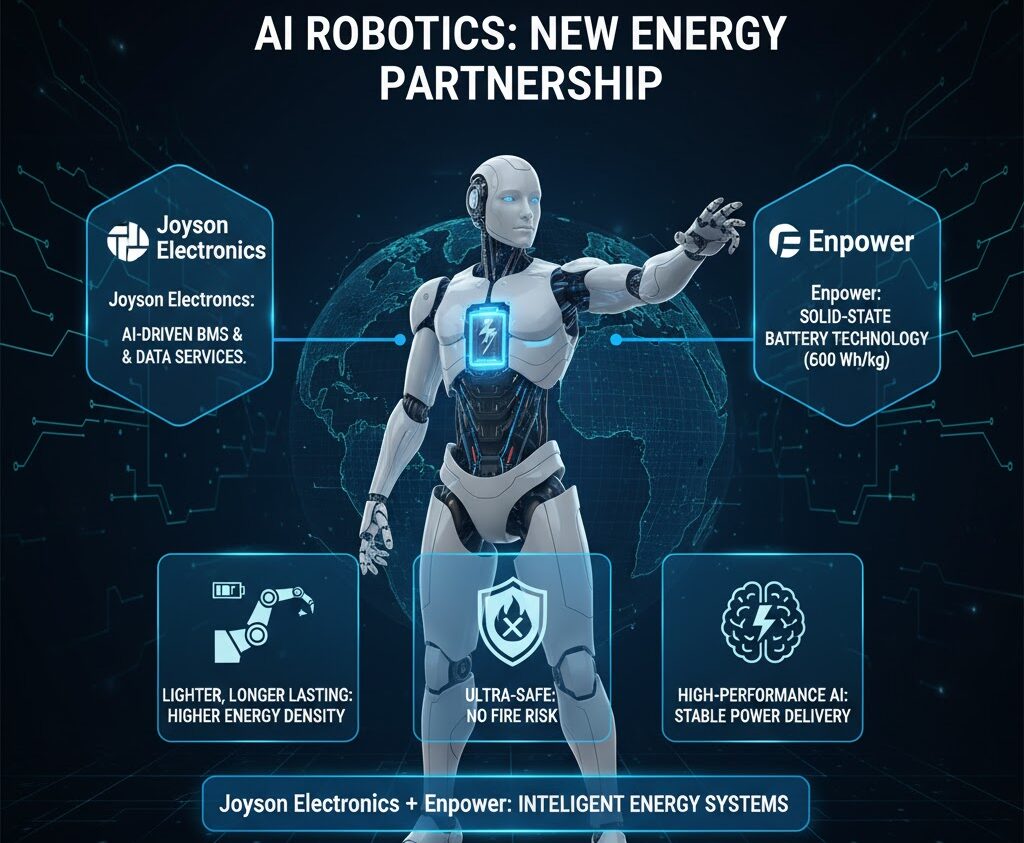
自動車部品大手のジョイソン・エレクトロニクス(Joyson Electronics / 均勝電子)と、次世代電池メーカーのエンパワー(Enpower)が戦略的提携を結びました。両社はAIロボットに特化した「セル・BMS(バッテリー管理システム)・データサービス」を統合した次世代エネルギーシステムの開発に注力します。
1. 提携の背景と両社の役割
ロボットの高性能化に伴い、従来のバッテリーでは不十分だった「高エネルギー密度」「安全性」「軽量化」を同時に実現することが求められています。
- ジョイソン・エレクトロニクス(均勝電子)
- 役割: 車載グレードのBMS技術とデータサービスを提供。
- 実績: フォルクスワーゲン、BMW、メルセデス・ベンツ等へBMSを供給する世界トップクラスのサプライヤー。自動車分野で培ったエネルギー管理技術をロボット分野へ転用します。
- エンパワー(Enpower)
- 役割: 全固体電池の研究開発および産業化。
- 実績: エネルギー密度が最大600Wh/kgに達する半固体・準固体電池技術を保有。すでにドローンやロボットへの搭載実績があります。
2. 固体電池がロボット産業にもたらす革新
固体電池は、液体電解質を使用するリチウムイオン電池に比べ、以下の点でロボットへの適用に優れています。
- 小型・軽量化: 高いエネルギー密度により、同じバッテリー容量でも劇的に軽量化・小型化が可能です。これにより、ロボットの可動時間(稼働効率)が向上します。
- 安全性の向上: 固体電解質は発火リスクが極めて低いため、人間と共存する協働ロボットや家庭用AIロボットにおいて不可欠な要素となります。
- 高速演算への対応: AIロボットの高度な処理能力が消費する膨大な電力を、安定かつ効率的に供給します。
関連情報:市場のコンテキストと技術展望
AIロボット市場の急拡大(ヒューマノイドの台頭)
現在、テスラの「Optimus(オプティマス)」やフィギュア(Figure)社のロボットなど、人型ロボット(ヒューマノイド)の開発競争が激化しています。これらのロボットは複雑な関節駆動とAI処理を行うため、従来の電池では「重すぎる」または「持続時間が短い」という課題がありました。今回の固体電池化は、このボトルネックを解消する鍵となります。
自動車技術の「ロボット転用」トレンド
ジョイソン・エレクトロニクスのように、自動車の高度な制御技術(BMSや自動運転アルゴリズム)をロボットへ横展開する動きが加速しています。
- 車載グレードの信頼性: 過酷な環境で耐えうる自動車規格のBMSをロボットに採用することで、産業用ロボットの故障率低下や長寿命化が期待されます。
固体電池の商用化ロードマップ
全固体電池は、2020年代後半(2027年〜2030年頃)に電気自動車(EV)への本格搭載が予測されていますが、ロボットやドローンといった小型・高付加価値な分野は、EVよりも先行して固体電池が普及する「早期導入市場」として注目されています。
まとめ:提携の意義
この提携は、単なる部品供給の関係を超え、「エネルギー管理の知能化」を目指すものです。ジョイソンのグローバルな顧客ネットワークと、エンパワーの最先端電池技術が融合することで、AIロボットの社会実装が一段と加速すると予想されます。
Solid-State Batteries: The Next Power Source for Robotics—Joyson and Enpower Announce Joint Development
Major automotive parts supplier Joyson Electronics and next-generation battery manufacturer Enpower have entered into a strategic partnership. The two companies will focus on developing a next-generation energy system for AI robotics that integrates battery cells, Battery Management Systems (BMS), and data services.
1. Background of the Partnership and Roles of Each Company
As robots become more sophisticated, there is an urgent need to simultaneously achieve high energy density, safety, and lightweight design—areas where conventional batteries have fallen short.
- Joyson Electronics
- Role: Providing automotive-grade BMS technology and data services.
- Track Record: As a world-class supplier providing BMS products to manufacturers like Volkswagen, BMW, and Mercedes-Benz, the company is repurposing energy management expertise cultivated in the automotive sector for robotics.
- Enpower
- Role: Research, development, and industrialization of all-solid-state batteries.
- Track Record: Possesses semi-solid and quasi-solid state battery technology with an energy density of up to 600 Wh/kg, which is already being utilized in robots and drones.
2. Innovations Brought to the Robotics Industry by Solid-State Batteries
Compared to conventional lithium-ion batteries that use liquid electrolytes, solid-state batteries offer several advantages for robotic applications:
- Miniaturization and Weight Reduction: Higher energy density allows for a significant reduction in weight and size while maintaining the same battery capacity, thereby improving a robot’s operational efficiency.
- Enhanced Safety: Because solid electrolytes have an extremely low risk of ignition, they are essential for collaborative robots and home AI robots that coexist with humans.
- Support for High-Speed Computing: Solid-state batteries can provide stable and efficient power to handle the massive energy consumption required by the advanced processing capabilities of AI robots.
Market Context and Technological Outlook
Rapid Expansion of the AI Robot Market (Rise of Humanoids)
Development competition is intensifying for humanoid robots, such as Tesla’s Optimus and those from Figure. Because these robots perform complex joint movements and AI processing, they face challenges where traditional batteries are either too heavy or have insufficient runtime. The transition to solid-state batteries is the key to overcoming this bottleneck.
The “Robotics Pivot” in Automotive Technology
There is an accelerating trend where automotive control technologies (like BMS and autonomous driving algorithms) are being expanded into the robotics sector.
- Automotive-Grade Reliability: Adopting BMS that meets automotive standards—designed to withstand harsh environments—is expected to lower failure rates and extend the lifespan of industrial robots.
Commercialization Roadmap for Solid-State Batteries
While full-scale adoption of all-solid-state batteries in electric vehicles (EVs) is projected for the late 2020s (around 2027 to 2030), niche, high-value fields like robotics and drones are attracting attention as “early adopter markets” where these batteries will see usage ahead of the automotive sector.
Conclusion: The Significance of the Partnership
This partnership goes beyond a simple supplier-client relationship; it aims to “intellectualize energy management.” By combining Joyson’s global customer network with Enpower’s cutting-edge battery technology, the social implementation of AI robotics is expected to accelerate significantly.


コメント