イスラエルの電池スタートアップ Addionics 社が発表した、低温環境下におけるバッテリー性能を劇的に改善する新アーキテクチャについて、技術的メカニズムおよび業界背景の関連情報を加えて整理しました。
低温環境(極寒地)での性能低下は、リチウムイオン電池(LIB)の課題の一つです。集電体(カレントコレクター)の構造そのものをイノベーションすることで、活物質や電解液の組成を変えずに課題を解決しようとする画期的なアプローチとして注目を集めています。
プレスリリースの主要ポイント
- 発表内容: 低温下での動作時間および急速充電性能を維持・向上させる「低温性能向け新スマートバッテリーアーキテクチャ」を発表。
- 解決する課題: 低温環境における利用可能エネルギーの減少(冬場におけるEV航続距離の最大約40%低下)、プレヒート加熱消費の増加、防衛ドローンや宇宙機のミッション時間・ペイロード制限。
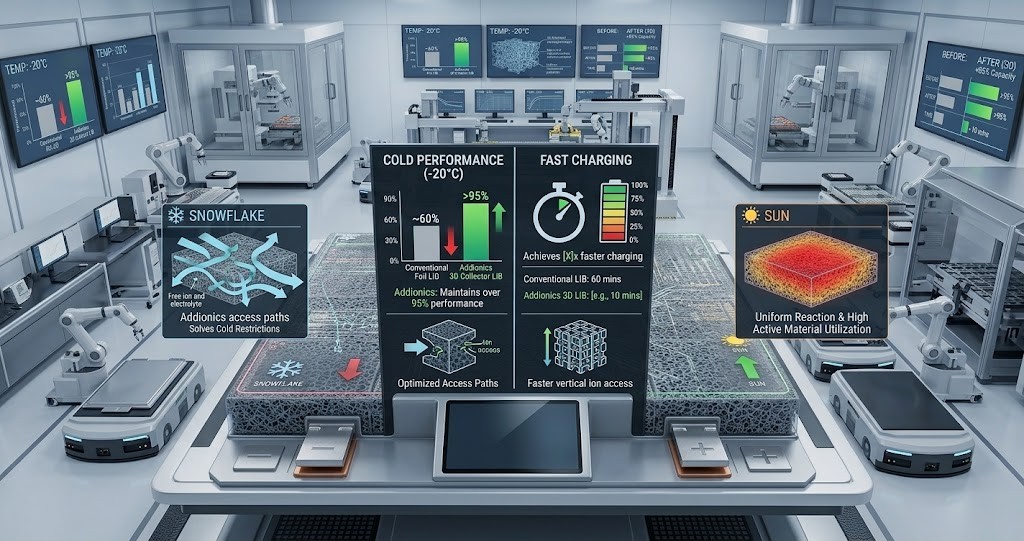
- コア技術(3D多孔質集電体): 従来の平滑な金属箔(箔状の銅・アルミ)に代わり、3次元の多孔質構造を採用。集電体の面直方向(垂直方向)にリチウムイオンと電解液が自由移動できる新アクセス経路を創出。
- 期待される効果:
- 実効輸送距離の短縮と内部抵抗の低減
- 均一な電気化学反応による発熱量の低下および活物質利用率の向上
- 低温下での航続距離・動作時間および充電速度の向上
- 適用分野: 電気自動車(EV)、電動トラック、防衛用ドローン、宇宙機・電動航空機、AI・ロボティクス分野など。
技術・業界背景(関連情報)
1. 従来の平滑箔から「3D多孔質集電体」へのパラダイムシフト
- イオン輸送の最短化: 従来の正極(アルミ箔)・負極(銅箔)集電体は平滑な金属箔であるため、イオンの移動経路が限定的になりやすく、特に低温下では電解液の粘度上昇に伴い過電圧(抵抗)が著しく増加します。3D多孔質化により、電極全体の厚み方向にイオン拡散経路が確保され、粘度上昇時でもスムーズな移動が可能となります。
- 不均一反応とリチウムデンドライトの抑制: 低温時の急速充電では、負極表面でのリチウム析出(デンドライト形成)による短絡リスクが高まります。電流密度を3D構造で分散(ローカルな電流集中の緩和)させることで、低温充電時の安全性と耐久性(サイクル寿命)が飛躍的に向上します。
2. 既存の塗工・電池製造ラインへの「Drop-in」適合性
- Chemistry-Agnostic(材料非依存): 3D集電体技術は物理的な構造改革であるため、LFP(リン酸鉄リチウム)、NMC(ニッケル・マンガン・コバルト)、シリコン系負極、さらには全固体電池やリチウム金属電池など、既存・次世代のあらゆる電池化学組成に適用可能です。
- 製造プロセスの親和性: 既存のRoll-to-Roll(ロール・ツー・ロール)塗工・乾燥・プレス工程に直接組み込める(Drop-in)設計となっており、セルメーカーは巨額の新規設備投資を行わずに導入可能です。
3. 車両・システムレベルでの熱管理コスト削減
- 従来、EVや防衛・宇宙機器では、寒冷地対策としてバッテリー自体の加温ヒーターや複雑な熱管理システム(TMS)を搭載し、エネルギーを消費していました。内部抵抗の低減によりバッテリー自体の低温耐性が高まることで、TMSの簡素化、軽量化、およびシステム全体のエネルギー効率向上が期待されます。
Addionics Develops 3D Porous Current Collectors: Significantly Improving LIB Low-Temperature Performance and Charging Speed
Below is a summary—supplemented with technical mechanisms and industry background—of the new battery architecture announced by Israeli battery startup Addionics to dramatically improve battery performance in low-temperature environments.
Performance degradation in extreme cold is a well-known challenge for lithium-ion batteries (LIBs). Addionics offers a breakthrough approach that addresses this issue by innovating the physical structure of the current collector itself, without altering the active materials or electrolyte chemistry.
Key Press Release Highlights
- Announcement: Unveiled a new smart battery architecture optimized for low temperatures, designed to maintain and enhance runtime and fast-charging performance in cold conditions.
- Key Challenges Addressed: Reduced usable energy in freezing temperatures (up to ~40% loss in EV range during winter), increased energy consumption for battery pre-heating, and limitations on mission runtime and payload capacity for defense drones and spacecraft.
- Core Technology (3D Porous Current Collector): Replaces conventional flat metal foils (copper and aluminum foils) with a three-dimensional porous structure. This creates new access pathways allowing lithium ions and electrolyte to move freely in the out-of-plane (perpendicular) direction of the current collector.
- Expected Benefits:
- Shortened effective transport distance and reduced internal resistance.
- Decreased heat generation via uniform electrochemical reactions and improved active material utilization.
- Enhanced operating range, runtime, and charging speed under low temperatures.
- Target Applications: Electric vehicles (EVs), electric trucks, defense drones, spacecraft, electric aircraft, AI/robotics applications, and more.
Technical & Industry Background
1. Paradigm Shift from Flat Foils to 3D Porous Current Collectors
- Shortening Ion Transport Paths: Conventional positive (aluminum foil) and negative (copper foil) current collectors feature flat metal surfaces that constrain ion pathways. In cold environments, rising electrolyte viscosity causes overpotential (resistance) to surge. The 3D porous structure secures ion diffusion pathways throughout the electrode thickness, enabling smooth transport even when electrolyte viscosity increases.
- Mitigating Non-Uniform Reactions and Lithium Dendrites: Fast charging at low temperatures increases the risk of lithium plating (dendrite formation) on the anode surface, creating short-circuit hazards. By distributing local current density across the 3D matrix (reducing localized current concentration), low-temperature charging safety and cycle life are substantially improved.
2. “Drop-in” Compatibility with Existing Coating and Cell Manufacturing Lines
- Chemistry-Agnostic: Because 3D current collector technology relies on physical structural design, it is compatible with all existing and next-generation battery chemistries—including LFP (lithium iron phosphate), NMC (nickel manganese cobalt), silicon anodes, solid-state, and lithium-metal batteries.
- Process Alignment: Designed for seamless integration (“drop-in”) into standard roll-to-roll coating, drying, and calendering lines, allowing cell manufacturers to adopt the technology without massive capital expenditures.
3. Thermal Management Cost Reduction at Vehicle and System Levels
- Vehicles, defense systems, and spacecraft operating in extreme cold traditionally rely on onboard heaters and complex thermal management systems (TMS) that consume considerable energy. Elevating the battery’s intrinsic low-temperature resilience by lowering internal resistance is expected to simplify TMS design, reduce system weight, and boost overall energy efficiency.


コメント