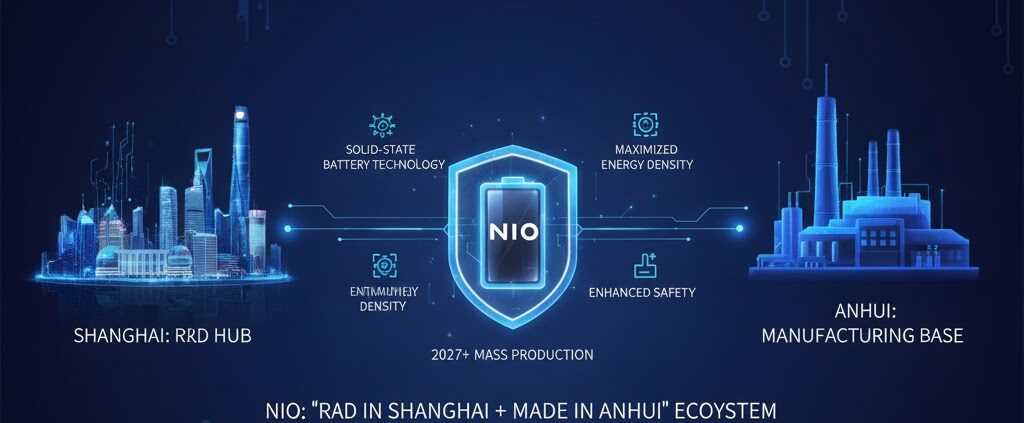
中国のEV大手NIO(上海蔚来汽車)は、上海市嘉定区に次世代動力電池の研究開発(R&D)に特化した新拠点を設立しました。これは、既存の「安徽省での製造」体制と組み合わせることで、「上海での研究開発+安徽省での製造」という強固な垂直統合エコシステムを構築する狙いがあります。
1. 新拠点の戦略的役割
新拠点は、特に2027年以降の市場投入を見据えた固体電池技術の研究開発に注力します。
- 技術的重点: 酸化物系や硫化物系を含む複数の固体電池技術ルートを模索しており、最先端の技術開発を加速させます。
- 運営体制: 2022年に設立した安徽省の電池会社と連携し、上海の高度な研究開発機能と合肥の量産体制をリンクさせ、研究から製造までのリードタイム短縮を図ります。
- 既存インフラの活用: NIOは既に嘉定区に6万平方メートルを超える大規模な試験センターを保有しており、今回の新拠点はこれを補完し、バッテリー戦略の深化を支える重要なピースとなります。
2. 電池戦略の転換と現在地
NIOのバッテリー戦略は近年、大きな変化を遂げています。
- 「脱・重資産」の試み: 2023年後半には、コスト削減と収益化を優先し、バッテリーの自社製造から研究開発へのリソース集中へとシフトしました。
- 技術サービスによる収益化: マクラーレンとの提携により、自社車両用だけでなく、他社向けに4680大型円筒形セルベースのバッテリーパック開発等の技術サービスを提供し、新たな収益源を確立しています。
- エコシステムの統合: CATLとの5年間にわたる戦略的提携や、半固体電池サプライヤーとの連携強化を通じて、社内開発(内製)と外部からの調達・提携のバランスを高度に最適化しています。
関連情報:市場のコンテキストと技術的意義
なぜ今「固体電池」なのか
現在のリチウムイオン電池は液体電解質を使用しており、エネルギー密度の向上や急速充電において限界に近づいています。
- 固体電池のメリット: 電解質を固体にすることで、発火リスクの大幅な低減(安全性)と、現在よりも高いエネルギー密度(軽量・小型化)が実現可能です。
- EVのボトルネック解消: 航続距離の延長と充電時間の短縮はEV普及の最大の障壁ですが、固体電池はその解決策として、2027年〜2030年の普及期に非常に重要な役割を果たすと予測されています。
自動車業界のトレンド:「R&Dの地理的最適化」
NIOが進める「上海(R&D)+合肥(製造)」という体制は、中国のEVスタートアップの間で標準的になりつつあるモデルです。
- 上海: 高度なエンジニアリング人材やテック系スタートアップ、研究機関が集中しているため、次世代技術(固体電池、AI駆動管理システムなど)の開発に適しています。
- 安徽省(合肥市): 工業団地やサプライチェーンが充実しており、自動車製造コストの最適化や大規模量産に適しています。
まとめ:提携と開発の意義
NIOは、製造という「資産の重い」部分を外部と効率的に連携させる一方で、競争力の源泉である「研究開発」には上海の新拠点を通じて投資を惜しまない姿勢を鮮明にしています。この戦略により、技術革新のスピードを落とすことなく、次世代バッテリーの社会実装に向けた先行者利益を狙う構えです。
出典:https://cnevpost.com/2026/03/05/nio-sets-up-new-shanghai-battery-unit-solid-state-tech/
Aiming for Commercialization by 2027: NIO Launches New Shanghai R&D Center for Solid-State Battery Development
Chinese EV giant NIO has established a new facility in the Jiading District of Shanghai dedicated to the research and development (R&D) of next-generation power batteries. This move aims to build a robust, vertically integrated ecosystem by combining this new R&D capacity with the company’s existing manufacturing infrastructure in Anhui Province, creating a “Shanghai R&D + Anhui Manufacturing” model.
1. Strategic Role of the New Facility
The new center focuses on the R&D of solid-state battery technology, with an eye toward market introduction from 2027 onward.
- Technical Focus: The company is exploring multiple technological pathways, including oxide-based and sulfide-based solid-state batteries, to accelerate cutting-edge development.
- Operational Structure: By linking with the battery company established in Anhui in 2022, NIO aims to connect Shanghai’s advanced R&D capabilities with Hefei’s mass production system, thereby shortening the lead time from research to production.
- Utilization of Existing Infrastructure: NIO already operates multiple vehicle and battery testing centers spanning over 60,000 square meters in Jiading District. The new facility complements these existing assets and serves as a vital piece of the company’s deepened battery strategy.
2. Evolution and Current Status of Battery Strategy
NIO’s battery strategy has undergone significant changes in recent years.
- “Asset-Light” Shift: In late 2023, the company shifted its focus from in-house battery manufacturing to R&D to prioritize cost reduction and faster monetization.
- Monetization through Technical Services: Through a partnership with McLaren, NIO has begun providing technical services, such as developing battery packs based on 4680 large cylindrical cells, for other automotive manufacturers, establishing a new revenue stream.
- Ecosystem Integration: NIO is highly optimizing the balance between in-house development and external procurement/partnerships through a 5-year strategic cooperation agreement with CATL and strengthened ties with semi-solid-state battery suppliers.
Market Context and Technological Significance
Why “Solid-State Batteries” Now?
Current lithium-ion batteries use liquid electrolytes, which are nearing their limits in terms of energy density and fast charging.
- Benefits of Solid-State: By using solid electrolytes, the batteries achieve a massive reduction in fire risk (safety) and higher energy density (lighter and more compact).
- Solving EV Bottlenecks: Extending driving range and shortening charging times remain the biggest hurdles for EV adoption. Solid-state batteries are predicted to play a crucial role in overcoming these obstacles during the 2027 to 2030 adoption phase.
Industry Trend: “Geographic Optimization of R&D”
The “Shanghai (R&D) + Hefei (Manufacturing)” model adopted by NIO is becoming a standard for Chinese EV startups.
- Shanghai: With a high concentration of engineering talent, tech startups, and research institutions, it is ideal for developing next-generation technologies like solid-state batteries and AI-driven management systems.
- Anhui (Hefei): With well-developed industrial parks and supply chains, it is optimized for automotive manufacturing costs and large-scale mass production.
Conclusion: Significance of the Development
NIO is clearly demonstrating a commitment to investing in R&D—the source of its competitive advantage—while efficiently collaborating externally on the “asset-heavy” manufacturing side. Through this strategy, the company aims to secure a first-mover advantage for the social implementation of next-generation batteries without sacrificing the speed of technical innovation.


コメント