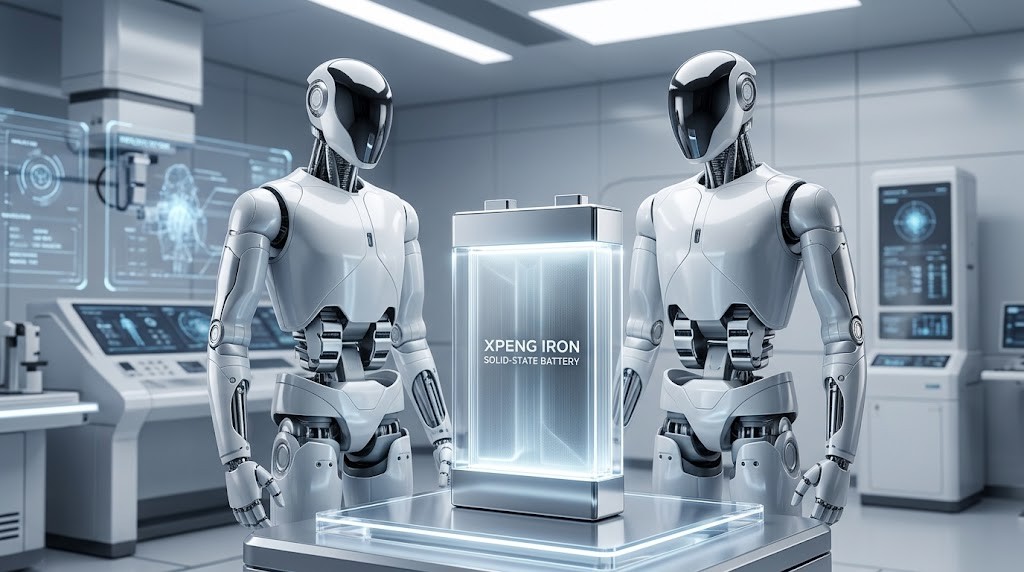
中国のEV大手である小鵬汽車(Xpeng)が開発を進める人型ロボット「アイアン(Iron)」について、専用の固体電池が少量生産ラインから出荷され始めていることが明らかになりました。ロボット本体の本格的な量産・商業展開を見据え、電源供給の要となるバッテリー技術の開発と製造が着実に進められています。
1. 発表のポイント:バッテリーが先行して少量生産へ
- 生産の進捗: Xpengの副社長であるGu Jie氏が明らかにしたところによると、Iron向けの固体電池の出荷が少量ずつ開始された一方、ロボット本体の量産は年末に予定されており、バッテリーが先行して生産段階に入っています。
- ロボットの展開スケジュール: Xpengは2026年末までにIronの量産を開始し、2027年から店舗などの商業施設への導入・展開を予定しています。
- 高い安全性と高エネルギー密度: ロボットの限られた内部スペースに対応するため高エネルギー密度設計を採用しており、熱暴走の拡散防止や、衝撃・釘貫通試験にも耐える高い安全性を備えているとされています。
2. 関連情報と技術的な背景:全固体か半固体か、そしてロボット用電源の課題
- 技術アプローチの変遷: Xpengは当初、2025年11月の発表時に全固体電池の使用を明言していましたが、その後の業界報道(Jipian Labなど)では、量産スケジュールへの適合性から高エネルギー密度の半固体(固体・液体ハイブリッド)電池が採用されるとの見方も示されています。今回の発表でも「固体電池」という表現が使われているものの、具体的な仕様や採用技術の詳細は明かされておらず、今後の動向が注目されます。
- 人型ロボットに求められる電源要件: 二足歩行や複雑な腕の動作を行う人型ロボットは消費電力が非常に大きく、モーターや制御基盤を動かしながら十分な稼働時間を確保するためには、軽量かつ高エネルギー密度な次世代電池の搭載が不可欠です。また、駆動時の発熱や外部衝撃に対する高い安全性も求められます。
- 自動化された製造ライン: Xpengはすでに「アイアン」の生産ラインを稼働させており、中核工程の80%以上を自動化し、自動車グレードの品質管理システムを導入することで、将来的な大量生産と品質の安定化を図っています。
出典:https://cnevpost.com/2026/10/28/solid-state-batteries-xpeng-iron-small-batch-production/
Small-Batch Production Begins for Solid-State Batteries for Xpeng’s “Iron” Humanoid Robot: Current Status of Battery Strategies Toward Commercialization
It has been revealed that dedicated solid-state batteries for the humanoid robot “Iron,” developed by Chinese EV giant Xpeng, have begun shipping from small-batch production lines. Looking ahead to full-scale mass production and commercial deployment of the robot itself, the development and manufacturing of battery technology—the core of power supply—are steadily progressing.
- Key Points of the Announcement: Batteries Enter Small-Batch Production First
- Production Progress: According to Xpeng Vice President Gu Jie, while shipments of solid-state batteries for Iron have begun in small batches, mass production of the robot itself is scheduled for the end of the year, putting batteries ahead in the production stage.
- Robot Deployment Schedule: Xpeng plans to begin mass production of Iron by the end of 2026 and deploy and roll it out in commercial facilities such as retail stores starting in 2027.
- High Safety and High Energy Density: To accommodate the limited internal space of the robot, a high-energy-density design has been adopted. It is said to possess high safety features, including the prevention of thermal runaway propagation and resistance to impact and nail penetration tests.
- Related Information and Technical Background: All-Solid-State vs. Semi-Solid-State, and Challenges in Robot Power Supplies
- Evolution of Technical Approaches: When Xpeng first unveiled the new-generation Iron in November 2025, it stated that the robot would use solid-state batteries. However, subsequent industry reports (such as from Jipian Lab) suggested that high-energy-density semi-solid (solid-liquid hybrid) batteries would be adopted in mass-production versions due to compatibility with production schedules. Although the term “solid-state battery” was used in the latest announcement, specific specifications and details of the adopted technology were not disclosed, warranting close attention to future developments.
- Power Requirements Demanded of Humanoid Robots: Humanoid robots performing bipedal walking and complex arm movements consume massive amounts of power. To secure sufficient operating time while driving motors and control boards, equipping lightweight, high-energy-density next-generation batteries is indispensable. Furthermore, high safety against driving heat generation and external impacts is also required.
- Automated Production Lines: Xpeng has already operated production lines for “Iron,” automating over 80% of core processes and introducing automotive-grade quality control systems to support future mass production and stabilize manufacturing quality.

コメント