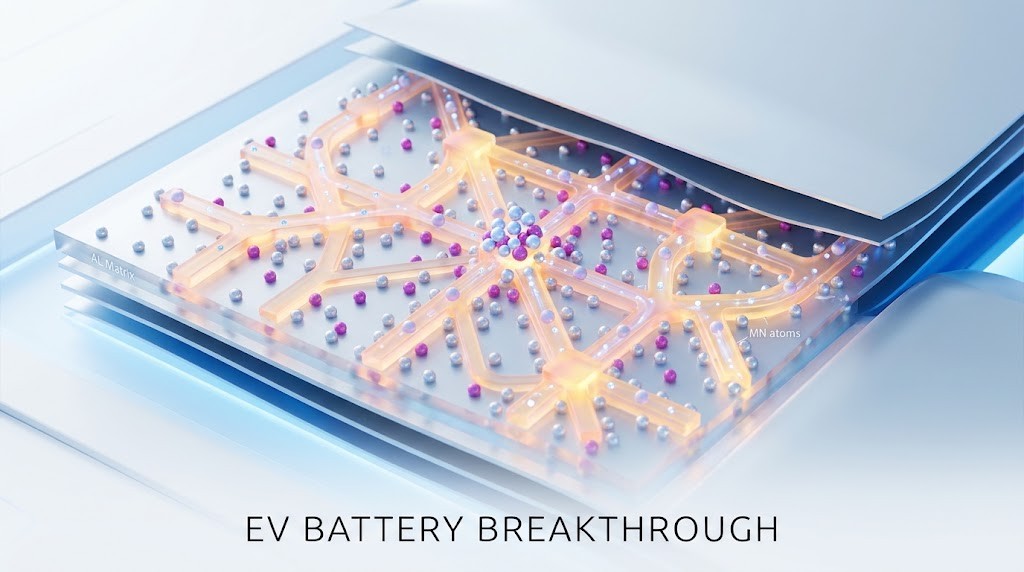
東北大学とUACJによる今回の研究発表は、EV(電気自動車)のコスト削減と大容量化を同時に実現するうえで、極めて重要なブレイクスルーとなります。従来の電池構造を大きく変えるこの技術のポイントと背景を整理して見ていきましょう。
1. 研究の核心:「箔1枚」で寿命と容量の両立
- トレードオフの解消: 従来、アルミニウム箔を負極に使うと、充放電を繰り返すうちに構造が劣化するため、寿命を延ばそうとすると内部にリチウムが残留し、利用できる容量が低下するというトレードオフがありました。
- 微量マンガン(Mn)の魔法: アルミニウムに微量のマンガンを均一に溶け込ませた固溶体を作製。充電時に移動するリチウムに局所的なブレーキをかけることで、電極内部の反応組織が自発的に微細化しました。
- リチウムの通り道(ネットワーク)の形成: 自発的に形成された「結晶粒界のネットワーク構造」がリチウムの通り道として働き、原子がスムーズに移動。内部へのリチウム残留を防ぎ、高容量と長寿命を両立させました。
2. 関連情報:なぜ「アルミニウム箔負極」が注目されるのか?
- 構造の極限的なシンプル化: 通常のリチウムイオン電池は、銅箔の上に黒鉛などの粉末塗料を塗布して負極を作ります。しかし、アルミニウム箔そのものを負極として利用できれば、バインダー(接着剤)や塗布工程が不要になり、製造コストの大幅な削減と軽量化(高エネルギー密度化)につながります。
- 資源の豊富さと環境負荷低減: アルミニウムは地球上に豊富に存在する資源であり、製造プロセス全体の環境負荷(CO2排出量など)を低減できる点も、次世代バッテリーとして大きな強みです。
- EV市場へのインパクト: EVの普及において最大の課題である「価格の高さ」と「航続距離の短さ」を同時に解決するアプローチとして、全固体電池などと並び、実用化への期待が高まっています。
出典:https://eetimes.itmedia.co.jp/ee/articles/2610/28/news027.html
Advance Toward Practical Application of Aluminum Foil Anodes: The Future of Lithium Metal Batteries Paved by Trace Manganese
The recent research announcement by Tohoku University and UACJ marks a crucial breakthrough in simultaneously achieving cost reduction and high capacity for electric vehicles (EVs). Let us examine the key points and background of this technology, which significantly transforms conventional battery structures.
- Core of the Research: Achieving Both Long Life and High Capacity with a Single Foil
- Resolving the Trade-off: Conventionally, using aluminum foil as an anode caused structural degradation with repeated charge and discharge cycles. Thus, attempting to extend cycle life resulted in lithium remaining trapped inside, lowering the usable capacity—a persistent trade-off.
- The Magic of Trace Manganese (Mn): A solid solution was prepared by uniformly dissolving a trace amount of manganese into aluminum. By applying localized braking to the migrating lithium during charging, the reaction microstructure inside the electrode spontaneously refined.
- Formation of Lithium Pathways (Network): The spontaneously formed grain boundary network structure functioned as pathways for lithium, allowing smooth atomic movement. This prevented residual lithium retention inside, successfully achieving both high capacity and long life.
- Background Information: Why Are Aluminum Foil Anodes Attracting Attention?
- Extreme Simplification of Structure: Conventional lithium-ion batteries form anodes by coating powder slurries, such as graphite, onto copper foil. However, utilizing aluminum foil itself as the anode eliminates the need for binders and coating processes, leading to significant manufacturing cost reductions and weight savings (higher energy density).
- Abundant Resources and Reduced Environmental Impact: Aluminum is an abundant resource on Earth, and its ability to reduce environmental impact, such as CO2 emissions across the manufacturing process, is a major strength for next-generation batteries.
- Impact on the EV Market: As an approach to simultaneously solve the biggest challenges in EV adoption—high prices and short cruising ranges—expectations for practical application are growing alongside solid-state batteries and other technologies.


コメント