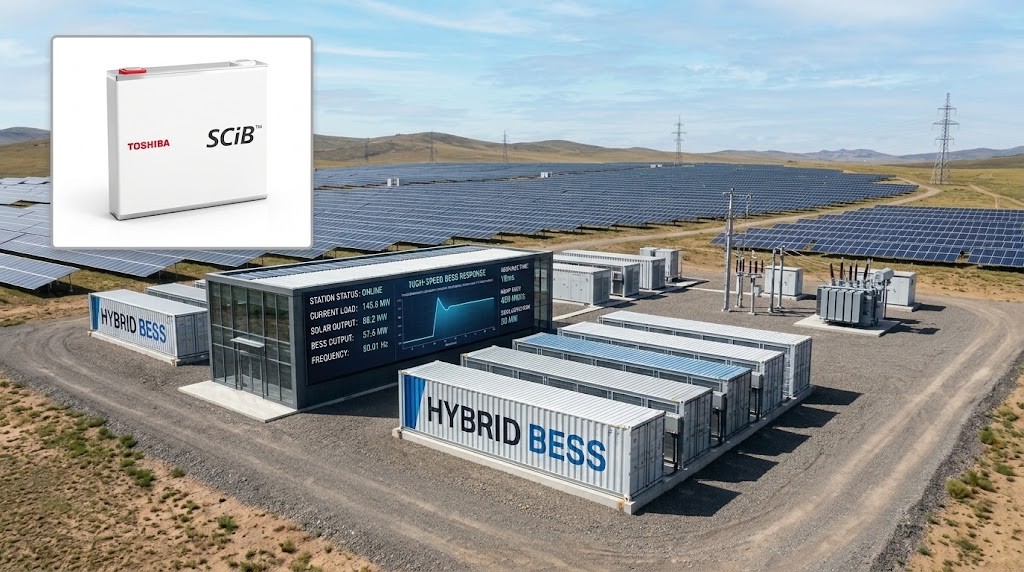
日本の総合電機メーカーである東芝は、モンゴルの国営送電事業者である国家送電網公司(NPTG)が運営するダルハン変電所向けに、高出力と大容量を組み合わせた先進的な蓄電システムの製造を開始しました。本プロジェクトは日本政府の無償資金協力によって進められており、2027年12月の運用開始を予定しています。
1. システムの主な仕様と役割
このシステムは、10MWの太陽光発電所に対し、異なる特性を持つ2種類の蓄電池を組み合わせて接続するハイブリッド方式を採用しています。
- 高出力SCiBバッテリー(電力型): 2MW / 667kWh(稼働時間20分 / 3C)
- 東芝独自のチタン酸リチウム酸化物(LTO)負極を用いた「SCiB」リチウムイオン二次電池を採用しています。
- 充放電の応答速度が非常に速く、太陽光発電の急激な出力変動(ランプ制御)を高頻度で調整する役割を担います。
- 従来型BESS(容量型): 2MW / 15.33MWh(稼働時間約7.66時間)
- サードパーティ製のリン酸鉄リチウム(LFP)電池などが活用されており、長時間の電力供給やピークシフト(電力需要の平準化)を支援します。
2. デュアルバッテリー構成のメリット
単一のバッテリー構成が主流である中で、あえて2種類を組み合わせるのには大きな理由があります。
- 負荷の分散と長寿命化: 短時間の高出力制御をSCiBバッテリーが引き受けることで、大容量のLFPバッテリーにかかる過酷な充放電サイクルの負荷を軽減し、システム全体の寿命を延ばします。
- 役割の分担: 数分単位の細かい需給バランス調整と、数時間単位のエネルギー供給を分業することで、効率的な電力網の運用が可能になります。また、東芝製の高度なエネルギー管理システム(EMS)が、太陽光発電量や電力需要を予測して両システムを最適に制御します。
3. モンゴルのエネルギー事情と背景
モンゴルは、広大な国土と豊富な日照量に恵まれており、再生可能エネルギーの導入に力を入れています。同国は 2030年までに総発電設備容量に占める再生可能エネルギーの割合を30パーセントに引き上げる という目標を掲げています。 しかし、急激な再生可能エネルギーの導入は電力網の不安定化を招くリスクがあるため、今回のような高精度な調整力を持つ蓄電システムの存在が、目標達成に向けた重要なカギとなります。
Toshiba Develops Dual-Battery System Combining “SCiB” and Large-Scale BESS for Microgrids in Mongolia
Toshiba, a major Japanese electrical equipment manufacturer, has started manufacturing an advanced energy storage system combining high output and large capacity for the Darkhan substation, operated by the National Power Transmission Grid (NPTG), the state-owned power transmission company of Mongolia. This project is funded by Japan’s grant aid and is scheduled to begin operation in December 2027.
- Main Specifications and Roles of the System This system adopts a hybrid approach that combines and connects two types of storage batteries with different characteristics to a 10MW solar power plant.
- High-Output SCiB Battery (Power-type): 2MW / 667kWh (20-minute operating time / 3C) It utilizes Toshiba’s proprietary “SCiB” lithium-ion secondary battery featuring a lithium titanate oxide (LTO) negative electrode.
- It features extremely fast charge and discharge response speeds and plays a role in frequently regulating the rapid output fluctuations (ramp control) of solar power generation.
- Conventional BESS (Capacity-type): 2MW / 15.33MWh (approx. 7.66-hour operating time) Utilizing third-party lithium iron phosphate (LFP) batteries and others, it supports long-term power supply and peak shifting (leveling out power demand).
- Advantages of the Dual-Battery Configuration While single-battery configurations remain mainstream, there are major reasons for deliberately combining two types.
- Load Distribution and Extended Lifespan: By having the SCiB battery handle short-term high-output control, it reduces the severe charge-discharge cycle load placed on the large-capacity LFP battery, thereby extending the lifespan of the entire system.
- Division of Roles: By dividing the work between fine supply-and-demand balance adjustments on a minute-by-minute basis and energy supply on an hourly basis, efficient power grid operation becomes possible. Additionally, Toshiba’s advanced energy management system (EMS) predicts solar power generation and power demand to optimally control both systems.
- Mongolia’s Energy Situation and Background Blessed with a vast land area and abundant sunlight, Mongolia is actively promoting the introduction of renewable energy. The country has set a target to raise the share of renewable energy in its total power generation capacity to 30 percent by 2030. However, because the rapid introduction of renewable energy risks causing instability in the power grid, the existence of a high-precision adjustment storage system like this one serves as a crucial key toward achieving that goal.

コメント