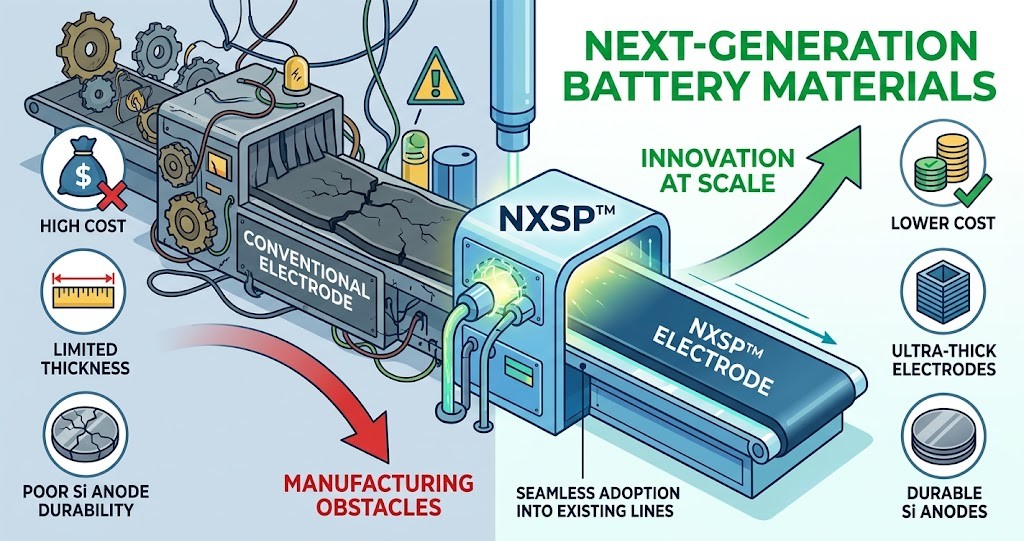
電気自動車(EV)や定置型蓄電システム(ESS)、各種電子機器の急速な普及に伴い、バッテリー産業ではさらなる高エネルギー密度化、急速充電性能、そして低コスト化への要求が急速に高まっています。しかし、電極の製造プロセスにおいて従来使用されているバインダー(結着剤)や導電助剤などの素材は、製造ラインの大規模な改修を必要としたり、電極の厚膜化やシリコン負極の採用における耐久性の壁となったりしていました。
こうした背景の中、先進材料企業のNanoramic社は、既存のバッテリー製造ラインにそのまま導入可能な革新的材料「NXSP™」の標準製品カタログを発表しました。本記事では、この発表の概要と、バッテリー技術の課題解決につながる関連背景について詳しく解説します。
Nanoramic社の発表概要:Neocarbonix®スラリー前駆体(NXSP™)
1. 製品の概要と特長
- 即効性とドロップイン対応: NXSPは、既存の湿式コーティング製造ラインや設備を変更することなくそのまま導入できる(ドロップイン方式)複合バインダー/添加剤代替製品です。
- 主要な用途に対応: EV、定置型蓄電システム(ESS)、家電、ドローン、電動工具など、幅広い市場でセルレベルのコスト削減(1kWhあたり)と性能向上を実現します。
- 米国のサプライチェーン規制対応: 米国防権限法(NDAA)や外国懸念企業(FEOC)に関する規制に準拠した原材料調達を行っており、顧客のコンプライアンス維持を強力にサポートします。
2. 各種電池化学への適用性とメリット
- 正極(カソード)での効果: NCM、NCA、NCMA、LMR、LFPといったあらゆる主要なリチウムイオン正極のほか、ナトリウムイオン電池や全固体電池などの次世代技術にも対応します。活物質含有量の増加、密着性や機械的柔軟性の向上、低抵抗化を実現し、エネルギー密度と出力密度を同時に高めます。さらに電極の厚膜化を可能にし、加工コストおよびセルコストの削減に貢献します。
- シリコン負極(アノード)での効果: 充電時のシリコンの著しい体積膨張に起因する機械的劣化やサイクル寿命の低下といった課題を克服します。高い柔軟性と粘着性、導電性を付与することで、繰り返しの充電サイクルでも高い耐久性を維持し、従来のグラファイト(黒鉛)負極の限界を超える高容量化を後押しします。
関連情報・背景解説
- ドロップイン(Drop-in)方式の持つ重要性
- 電池メーカーが新しい技術や材料を導入する際、工場全体の設備投資(CAPEX)の引き直しが最大のハードルとなります。NXSPのように既存の製造プロセス(スラリー調合・塗工・乾燥・プレス)をそのまま活用できるドロップイン製品は、初期投資コストを大幅に抑えつつ即座に導入できるため、商業化へのスピードが飛躍的に高まります。
- 電極の「厚膜化(厚型電極)」とコスト削減
- 集電体(アルミ箔や銅箔)の上に塗布する活物質(電極層)を厚くできれば、電池全体の重量や体積に占める金属箔やセパレータの割合が減り、1kWhあたりの製造費用や材料コストを直接引き下げることができます。NXSPは密着性と機械的柔軟性を保ちながら厚膜化をサポートします。
- シリコン負極の膨張問題とバインダー技術
- シリコンは従来のグラファイト(黒鉛)に比べて約10倍という理論容量を持ちますが、充放電時に約300%近く体積が膨張・収縮するため、電極構造の崩壊や寿命低下を引き起こします。高度な粘着性と導電性を備えた新世代バインダー技術は、シリコンアノードの実用化において最も決定的な役割を担う要素技術の一つとなっています。
- サプライチェーン規制(FEOC規制など)への影響
- 米国のインフレ削減法(IRA)やFEOC(Foreign Entity of Concern)規制により、中国など特定の国・企業由来の電池材料を使用している製品に対する税額控除の制限が厳格化しています。北米や欧州のメーカーにとって、これらの規制に準拠(NDAA/FEOCコンプライアンス)した材料サプライチェーンを確保することは、市場での競争力を維持するために必須の戦略となっています。
Solving Silicon Anode Expansion and Electrode Thickening Issues: The Power of Nanoramic’s Next-Generation Composite Binder “NXSP”
With the rapid adoption of electric vehicles (EVs), stationary energy storage systems (ESS), and various electronic devices, the battery industry faces surging demands for higher energy density, fast-charging capabilities, and lower costs. However, conventional binders and conductive additives used in electrode manufacturing processes often require large-scale line modifications or create durability bottlenecks when attempting electrode thickening and silicon anode adoption.
Against this backdrop, advanced materials company Nanoramic announced the launch of its standard product catalog for “NXSP™,” an innovative material that can be seamlessly integrated into existing battery production lines. This article provides a detailed overview of this announcement and the surrounding context that addresses key battery technology challenges.
Nanoramic Announcement Overview: Neocarbonix® Slurry Precursor (NXSP™)
- Product Overview and Key Features
- Immediate Impact and Drop-in Capability: NXSP is a composite binder and additive replacement designed for direct drop-in integration into existing wet-coating production lines without requiring equipment modifications.
- Broad Market Applications: Delivers cell-level cost reductions (per 1 kWh) and performance improvements across a wide range of markets, including EVs, stationary energy storage systems (ESS), consumer electronics, drones, and power tools.
- Compliance with U.S. Supply Chain Regulations: Raw materials are sourced in compliance with regulations such as the National Defense Authorization Act (NDAA) and Foreign Entity of Concern (FEOC) rules, strongly supporting customer regulatory compliance.
- Compatibility with Various Battery Chemistries and Benefits
- Cathode Applications: Compatible with all major lithium-ion cathode chemistries, such as NCM, NCA, NCMA, LMR, and LFP, as well as next-generation technologies like sodium-ion and solid-state batteries. It increases active material content, improves adhesion and mechanical flexibility, and lowers resistance to simultaneously boost energy and power density. Additionally, it enables thicker electrodes, reducing processing and cell costs.
- Silicon Anode Applications: Overcomes mechanical degradation and cycle-life instability caused by significant volumetric expansion of silicon during charging. By providing high flexibility, adhesion, and electrical conductivity, it maintains durability through repeated charge-discharge cycles, enabling higher capacities that push beyond the limits of conventional graphite anodes.
Related Information and Background Context
- Importance of “Drop-in” Compatibility
- When battery manufacturers adopt new technologies or materials, capital expenditure (CAPEX) for factory overhauls represents the primary barrier. Drop-in products like NXSP, which leverage existing manufacturing processes (slurry mixing, coating, drying, and pressing), significantly reduce upfront costs and enable immediate deployment, drastically accelerating time-to-market.
- “Electrode Thickening” and Cost Reduction
- Applying a thicker layer of active material onto current collectors (aluminum or copper foil) reduces the relative proportion of metal foils and separators in the total battery weight and volume. This directly lowers manufacturing and material costs per 1 kWh. NXSP supports electrode thickening while preserving mechanical adhesion and flexibility.
- Silicon Anode Expansion Issues and Binder Technology
- Silicon boasts a theoretical capacity roughly 10 times that of traditional graphite, but it expands and contracts by nearly 300% during charge and discharge cycles, causing electrode structural failure and rapid degradation. Next-generation binder technologies offering superior adhesion and conductivity serve as critical enabling solutions for the commercial viability of silicon anodes.
- Impact of Supply Chain Regulations (FEOC, etc.)
- Regulations such as the U.S. Inflation Reduction Act (IRA) and Foreign Entity of Concern (FEOC) rules impose strict limits on tax credits for products containing battery materials sourced from specific countries or entities, such as China. Securing compliant material supply chains (NDAA/FEOC compliance) has become an essential strategy for North American and European manufacturers to maintain market competitiveness.
コメント