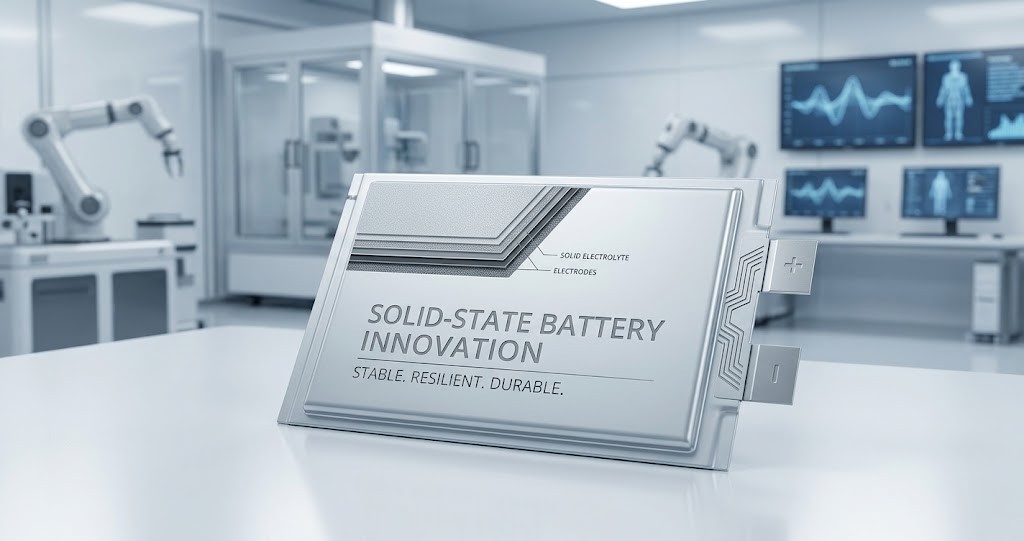
中国の固体電池スタートアップである衛藍新能源(WeLion)がプレIPOで大型調達を進め、創業板(A株)上場へ足固めを進める一方、先行して香港上場を申請した清陶能源(Qingtao)との「固体電池IP0第一号」をめぐる競争が本格化しています。
技術開発・実証フェーズから、資本市場を活用したギガファクトリー規模での量産・事業化競争へとシフトしている中国固体電池市場の最新動向について、補足情報を加えて整理しました。
主要ポイント
- 衛藍新能源の調達・上場動向: 20億元(約480億円)規模のプレIPO調達を実施中。評価額は約200億元。深圳証券取引所「創業板」への2027年上場を目指し、第2期上場指導を完了。
- 強力なバックボーンと出資陣: 中国科学院物理研究所の技術を母体とし、シャオミ(Xiaomi)、ファーウェイ(Hubble Investment)、吉利(Geely)、蔚来(NIO Capital)など主要OEM・IT大手が株主に名を連ねる。
- ライバル清陶能源の先行推移: 2026年4月に香港証券取引所(HKEX)へ上場申請書を提出。シリーズH(評価額約280億元)を経て資金力と市場認知で先行を図る。
- 「半固体電池」での規模拡大と収益の課題: 清陶能源の2025年売上高は9億4300万元(133%増)と拡大し市場シェア首位(33.6%)を保持するも、純損失は13億200万元に拡大し売上総利益率はマイナス26.5%と赤字構造が継続。
技術・業界背景(関連情報)
1. 「全固体」以前に市場化を進める「固液混合(半固体電池)」での先行実装
- NIOや上汽集団での実用化: 衛藍新能源は新興EVメーカーNIOの150kWh超長航続パック向けに半固体(固液混合)セルを供給。清陶能源も筆頭株主である上海汽車集団(SAIC)のプレミアムブランド車等へ搭載を進める。
- 段階的アプローチ: 電解液を数%〜十数%残存させる半固体(Semi-solid)プロセスにより、既存の液系リチウムイオン電池(LIB)の塗工・焼成ラインを活用しながらエネルギー密度360〜400Wh/kg級を達成し、全固体(All-solid-state)までの繋ぎとして先行商用化を推進。
2. 競合環境の激化とコモディティ化リスク
- 液系LIBに対するコスト劣勢: 現時点では歩留まりの課題や電解質材料・被覆材の原価が高く、市場では液系LIBよりも高コストで取引される傾向が残る。規模の経済が効く大手電池メーカー(CATLやBYDなど)との価格競争に耐えうるコスト低減が急務。
- CATLなど電池大手の追い上げ: CATLも2027年頃の全固体電池の小規模量産(2030年本格商用化)を掲げており、ベンチャー各社はメガサプライヤーが量産化する前に資本を確保し、メガファクトリー建設を加速する必要に迫られている。
3. キャピタルマーケット(IPO)依存の背景
- 巨額のCapex(設備投資)要求: 固液混合から将来的な全固体電池への完全移行には、超ドライルーム環境の整備や不活性ガス雰囲気下での加圧・焼成等、新たな製造プロセスの自社立ち上げに莫大なCapexが必要。
- 赤字構造での上場推進: 清陶・衛藍ともに研究開発費および設備投資が先行して大幅な営業赤字が続いており、VC/PE主体のプライベート資金からPublic資金(株式市場)へ切り替え、長期的な研究開発と量産化体制の維持を図る狙いがある。
Race for China’s “First Solid-State Battery IPO” Intensifies: WeLion Raises ¥4.8B in Pre-IPO Round Ahead of Shenzhen Listing
Chinese solid-state battery startup WeLion New Energy (Beijing WeLion) is advancing a major Pre-IPO funding round to bolster its path toward listing on the Shenzhen Stock Exchange’s ChiNext board (A-shares). Meanwhile, rival Qingtao Energy has filed for an IPO in Hong Kong, sparking a full-fledged race to claim the title of the “First Solid-State Battery IPO”.
Below is an overview of the latest developments in China’s solid-state battery sector, which is shifting from tech validation and R&D toward capital-driven gigafactory-scale mass production and commercialization.
Key Points
- WeLion’s Funding & Listing Progress: WeLion is conducting a Pre-IPO funding round targeting 2 billion yuan (~¥48 billion JPY / ~$280 million USD) at a pre-money valuation of approximately 20 billion yuan. Aiming for a 2027 ChiNext listing, the company has completed its second phase of IPO tutoring.
- Strong Academic Heritage & Key Backers: Spun off from the Institute of Physics at the Chinese Academy of Sciences, WeLion boasts a blue-chip investor lineup including major automakers and tech giants such as Xiaomi, Huawei (Hubble Investment), Geely, and NIO Capital.
- Rival Qingtao Energy Takes the Lead in Filings: Qingtao submitted its listing application to the Hong Kong Stock Exchange (HKEX) in April 2026. Following a Series H round that boosted its valuation to ~27.9 billion yuan, Qingtao is attempting to capitalize on early capital and market visibility.
- Scaling Up “Semi-Solid” Batteries Amid Profitability Challenges: According to Frost & Sullivan, Qingtao held the #1 global market share (33.6%) in 2025 for combined semi-solid and all-solid-state battery shipments. While its 2025 revenue surged 133% year-over-year to 943 million yuan, net losses expanded to 1.302 billion yuan with a gross margin of -26.5%, highlighting persistent structural losses across the sector.
Technical & Industry Background
1. Commercial Deployment of Hybrid Solid-Liquid (Semi-Solid) Batteries First
- Adoption by NIO and SAIC: WeLion supplies semi-solid-state cells for EV maker NIO’s ultra-long-range 150 kWh swappable battery pack. Similarly, Qingtao supplies cells for premium EV models under its lead investor, SAIC Motor.
- A Stepping-Stone Approach: By retaining a small percentage of liquid electrolyte, semi-solid processes leverage existing liquid lithium-ion battery (LIB) coating and sintering lines to achieve energy densities of 360–400 Wh/kg. This serves as a commercial bridge before transitioning fully to all-solid-state batteries.
2. Intensifying Competition and Risks of Commodity-Level Price Wars
- Cost Disadvantage vs. Liquid LIBs: Yield bottlenecks and high costs for solid electrolyte precursor materials keep semi-solid cell prices significantly higher than conventional liquid LIBs. Cost reduction is critical to withstand market price pressures.
- Pressure from Battery Giants: Megasuppliers like CATL target small-scale production of all-solid-state batteries around 2027 (with full commercialization by 2030). Startups must secure public market capital immediately to build out gigafactories before tier-1 incumbents commercialize at scale.
3. Reasons Driving Dependence on Capital Markets (IPOs)
- Heavy Capex Requirements: Transitioning from semi-solid to fully all-solid-state chemistry requires massive capital expenditures for specialized ultra-dry rooms, inert gas pressurized sintering facilities, and new manufacturing equipment.
- Financing Operational Deficits: Deep R&D commitments and heavy upfront Capex continue to drive substantial operating losses for both WeLion and Qingtao. Transitioning from private VC/PE funds to public equity markets is necessary to fund long-term R&D and sustain mass-production scale-ups.
コメント