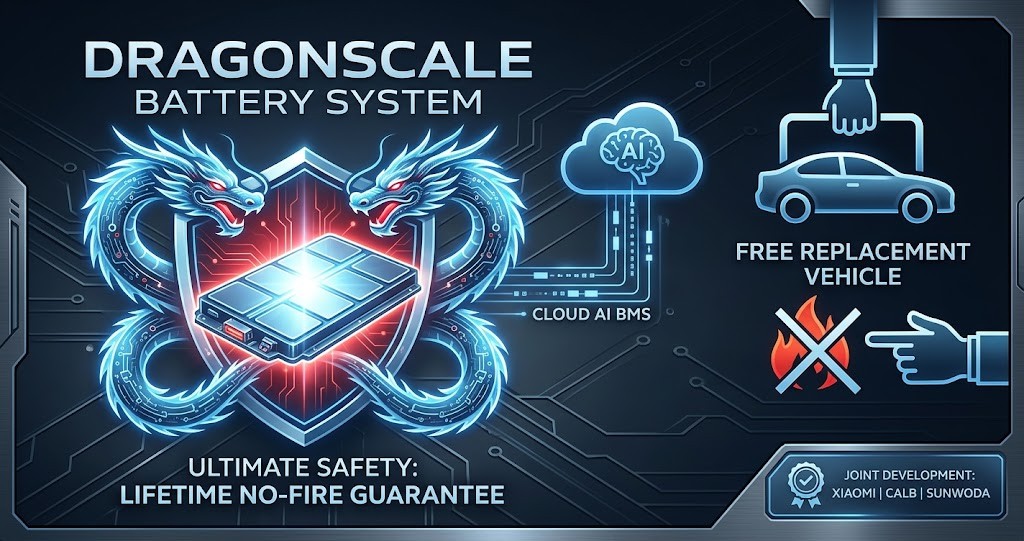
中国のスマートフォンおよび電気自動車(EV)大手であるXiaomi(シャオミ)は、中国バッテリー大手CALB(中創新航)およびSunwoda(欣旺達)と共同開発した新世代バッテリーシステム「Dragonscale(龍甲、ロンジア)」を発表しました。
中国市場におけるEVバッテリーの品質と安全性への懸念に対応するため、Xiaomiは自社の新製品ラインナップに対して「火災発生時の車両無償提供」という非常に強い生涯保証を打ち出し、業界や消費者の間で大きな注目を集めています。
以下に、発表されたニュースの要約および主要な関連技術・背景情報をまとめて記載します。
要約と主要ポイント
1. 新開発バッテリー「Dragonscale(龍甲)」と安全保証の概要
- 提携開発: Xiaomi、CALB、Sunwodaの3社共同開発によるバッテリーシステム。
- 破格の生涯安全保証: 品質上の欠陥による自然発火が発生した場合、同等グレードの車両を無償提供。また、衝突や車体下部の損傷(外部要因)による火災でも、保険金と事故前市場価格の差額をXiaomiが負担。
- 保証の適用条件: 非商用の第一所有者(新車購入者)のみが対象(ライドシェア、レンタカー、中古車は対象外)。Xiaomiのコネクテッドカーサービスへの加入と、正規サービスセンターでの点検整備が必須要件。
2.Dragonscaleの技術的特徴
- 高レベルの物理的安全設計: ミリ秒単位で切り替え可能な高電圧アイソレーターと、冗長化された絶縁材料を搭載。55℃の高温かつフル充電状態(SoC)でセル単体が熱暴走を起こしても、パック全体への延焼を抑え込む構造。
- クラウドAI BMS(バッテリー管理システム): クラウド上のAIがセル状態を常時モニタリング。中国の国家基準と比較してデータサンプリング頻度は10倍、データ取得量は3倍に向上しており、異常検知時にミリ秒レベルで即時対応可能。
3. 搭載車種と納車状況
- 搭載車種: 2026年9月に正式発表された航続距離延長型電気自動車(EREV)SUVシリーズ「Skynomad(スカイノマド)」のN70およびN90モデルに初搭載。既存の純粋電気自動車(BEV)セダン「SU7」やSUV「YU7」(CATLおよびBYDのFinDreams製電池を搭載)への展開は未定。
- 業績と販売背景: 2026年7月の中国国内納車台数は3万1267台となり、ピーク時(2025年12月の5万212台)から減少傾向にある。2026年第1四半期の1台当たり赤字は5600ドルを超えており、高付加価値なEREV「Skynomad」シリーズの投入により収益改善を図る狙いがある。
関連情報・背景解説
1. 中国における新バッテリー安全基準(GB 38031-2025)の施行
中国では2025年後半から2026年にかけて、極めて厳しい新バッテリー安全基準(GB 38031-2025、通称「発火・爆発ゼロ規定」)の運用が本格化しています。従来の規格が「熱暴走発生から乗員が避難するまでの5分間の猶予(警告発出)」を要求していたのに対し、新基準では熱暴走発生後2時間にわたり外部への発火・爆発を完全に防ぎ、客室への煙の流入を抑えることが求められています。Dragonscaleバッテリーはこの新基準を上回る安全性能を目指して設計されています。
2. EREV(航続距離延長型電気自動車)市場の拡大とバッテリー要求
Skynomadが採用するEREV方式は、小型の発電用エンジン(1.5Lターボなど)を搭載し、駆動はすべて電動モーターで行うシステムです。純粋なBEVと比べて大容量ガソリンタンクと中〜大容量バッテリー(50kWh-76kWh級)を組み合わせるため、総合航続距離が1500kmから1700km超に達します。充放電の頻度が高くなる傾向にあるため、Dragonscaleのように高いサイクル寿命とクラウドBMSによる精度の高いセル監視技術が必要とされます。
3. クラウドBMSとコネクテッドデータの活用
今回の保証条件に「コネクテッドカーサービスへの加入」が含まれている背景には、車両のバッテリー状態(電圧、電流、温度、内部抵抗など)を常時クラウドへアップロードし、ビッグデータ解析とAI異常検知を行う仕組みがあります。メーカー側は過充電や急速充電による劣化、熱暴走の前兆を未然に察知して未然に防ぐことができるため、このような「車両無償提供」という過激とも言える保証制度の運用が可能となっています。
Lifetime Warranty for Free Replacement! What Is Xiaomi’s “Non-Flammable Battery”?
Chinese smartphone and electric vehicle (EV) giant Xiaomi has unveiled its new-generation battery system, “Dragonscale” (Longjia), jointly developed with Chinese battery leaders CALB and Sunwoda.
To address quality and safety concerns surrounding EV batteries in the Chinese market, Xiaomi has introduced an exceptionally strong lifetime warranty offering a “free vehicle replacement in the event of a fire” across its new product lineup, drawing significant attention from the industry and consumers alike.
Below is a summary of the announcement along with key technical details and background information.
Summary and Key Highlights
1. Overview of the Newly Developed “Dragonscale” Battery and Safety Warranty
- Joint Development: A battery system co-developed by Xiaomi, CALB, and Sunwoda.
- Unprecedented Lifetime Safety Warranty: If spontaneous combustion occurs due to a quality defect, Xiaomi will provide a replacement vehicle of equivalent specification free of charge. In cases of fire resulting from collisions or underbody damage (external factors), Xiaomi promises to cover the difference between the insurance payout and the pre-accident market value of the vehicle.
- Warranty Conditions: Applies strictly to non-commercial first-hand owners (new car buyers), excluding rideshare, rental, and pre-owned vehicles. Owners must subscribe to Xiaomi’s connected car service and perform routine maintenance at official Xiaomi service centers.
2. Technical Features of Dragonscale
- High-Level Physical Safety Design: Equipped with high-voltage isolators capable of millisecond-level switching and redundant insulation materials. Designed to prevent thermal propagation across the entire pack, even if an individual cell experiences thermal runaway at high temperatures (55 degrees Celsius) and full state of charge (SoC).
- Cloud AI BMS (Battery Management System): AI in the cloud continuously monitors cell conditions. Sampling frequency is 10 times higher and data size is 3 times larger compared to Chinese national standards, enabling immediate millisecond-level responses upon detecting anomalies.
3. Equipped Vehicle Models and Delivery Status
- Target Models: Debuting on the N70 and N90 models of the “Skynomad” extended-range electric vehicle (EREV) SUV series, officially announced in September 2026. Deployment to existing battery electric vehicle (BEV) models like the SU7 sedan or YU7 SUV (currently powered by CATL and BYD FinDreams batteries) remains unconfirmed.
- Financial Background and Deliveries: Domestic monthly deliveries in China stood at 31,267 units in July 2026, roughly halving from the peak of 50,212 units in December 2025. With net losses exceeding 5,600 USD per vehicle in Q1 2026, launching the higher-margin Skynomad EREV series aims to drive profitability.
Relevant Context and Background
1. Implementation of China’s New Battery Safety Standard (GB 38031-2025) From late 2025 into 2026, China has begun enforcing an extremely stringent new battery safety standard (GB 38031-2025, informally known as the “zero fire and explosion rule”). While previous standards required a 5-minute warning window between thermal runaway and cabin evacuation, the new regulation mandates preventing external fires, explosions, and smoke ingress into the passenger cabin for up to 2 hours following a thermal event. The Dragonscale battery was engineered to exceed these rigorous guidelines.
2. Expansion of the EREV Market and Battery Requirements The EREV architecture used in the Skynomad combines a small power-generating engine (such as a 1.5L turbo) with fully electric motor propulsion. Pairing a large gas tank with a medium-to-large battery pack (50 kWh to 76 kWh class) enables extended total ranges between 1,500 km and over 1,700 km. Because EREV batteries undergo more frequent charge and discharge cycles, they demand high cycle life and precise cell monitoring via cloud BMS technology.
3. Leveraging Cloud BMS and Connected Vehicle Data Requiring a subscription to connected car services allows Xiaomi to upload real-time battery parameters (voltage, current, temperature, internal resistance) to the cloud for big data analytics and AI anomaly detection. By spotting early indicators of degradation, overcharging risks, or thermal runaway before they manifest, Xiaomi can actively mitigate hazards—enabling them to back their vehicles with a bold free-replacement warranty.

コメント