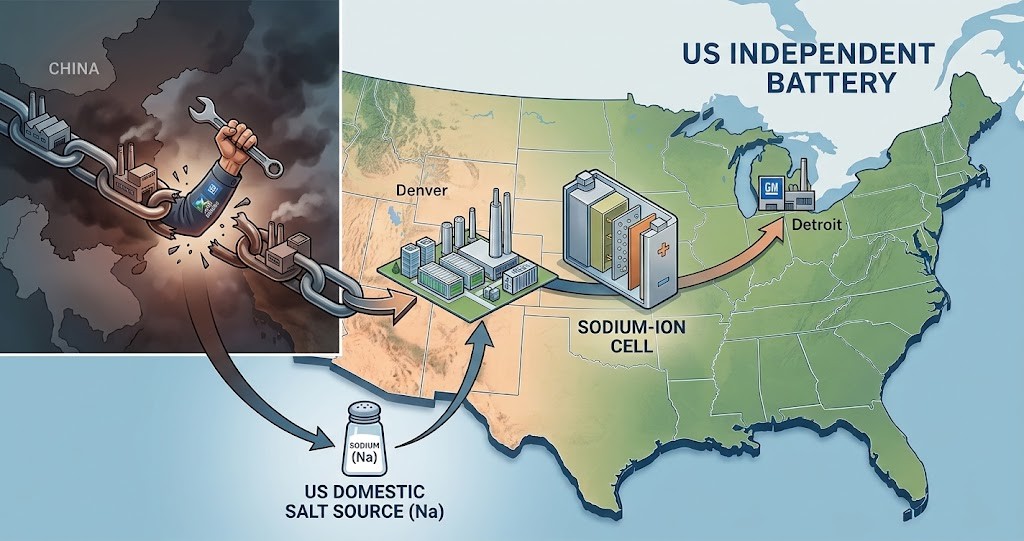
世界的な電気自動車(EV)およびエネルギー貯蔵システム(ESS)の普及に伴い、バッテリー産業における中国への極度な依存が安全保障やサプライチェーン上の懸念事項となっています。国際エネルギー機関(IEA)のデータによると、中国はEV用バッテリーの正極活物質で約85%、負極活物質で90%以上、セル生産全体で約80%のシェアを握っています。
こうした状況下、米トランプ政権は米国内におけるバッテリー供給網の構築と対中依存度の低減を強く求めています。これに対し、ライバルのフォード・モーターが中国大手CATLからの技術ライセンス供与を巡り政権から厳しい批判を受ける中、GMは国内スタートアップとの提携や自社投資を通じて、中国技術を「飛び越える(飛躍する)」自前・国内完結型のバッテリー開発戦略を鮮明にしています。
記事の重要ポイントと関連情報のまとめ
1. GMの戦略とナトリウムイオン電池の開発計画
- 次世代電池の国内生産推進: GMは2-3年後の国内供給網確立を目指し、米国内の原材料とサプライチェーンを活用したバッテリー開発を進めています。
- Peak Energyとの提携: デンバーを拠点のスタートアップ企業Peak Energyと提携し、ESS(定置型エネルギー貯蔵システム)向けのナトリウムイオン電池を開発中。2029年頃の商業生産開始を目指しています。
- 脱中国材料依存: 中国が精錬や供給を支配するリチウムやチタンの副産物(硫酸第一鉄など)への依存を減らし、米国で豊富に調達可能なソーダ灰由来のナトリウムなどの素材を活用します。
- ESSにおける技術的メリット: ナトリウムイオン電池は、広い動作温度範囲と優れた耐熱性を持ちます。これにより、従来ESSでコストや構造の複雑化の要因となっていた「アクティブ冷却(液体冷却や強制空冷など)」を不要にし、運用・所有コストの大幅な削減が可能になります。
2. 米国政情とフォードとの対比
- 政権からの批判: トランプ政権のショーン・ダフィー運輸長官は、フォードが中国CATLから技術ライセンスを受けて米国でLFP(リン酸鉄リチウム)電池を生産する計画に対し、「深刻な懸念」を表明しました。
- GMの差別化方針: GMのバッテリー・サステナビリティ担当副社長であるカート・ケルティ氏(元テスラのバッテリー幹部)は、中国技術の模倣や既存サプライチェーンでの直接競争を避け、米国産のリソースで完結する新しい技術(ナトリウムイオン電池など)へ飛躍する「飛び級(Leapfrog)」アプローチを強調しています。
3. 開発拠点への投資と課題
- ウォーレン・バッテリーセル・イノベーションセンター: GMはデトロイト郊外の技術キャンパス内に9億ドルを投じ、50万平方フィート(約4万6000平方メートル)を超える試作製造施設を建設中で、2026年後半に操業開始予定です。
- 専門家が指摘する課題: バッテリー専門家サム・アブエルサミド氏らは、中国がナトリウムイオン技術の開発でも先行している点を挙げ、北米だけで完全なサプライチェーンを構築するには長年の歳月と膨大な追加投資が必要であると指摘しています。
関連情報・背景解説
- 定置型エネルギー貯蔵システム(ESS)とデータセンター需要の急増
- AI(人工知能)の急速な普及に伴い、データセンターの電力消費量が爆発的に増加しています。GMがESS向けバッテリーの国産化を急ぐ背景には、EV向けだけでなく、電力インフラやデータセンター向けのバックアップ電源としての巨大な市場需要が存在します。
- ナトリウムイオン電池(Na-ion)の技術的特性と位置付け
- 構造と作動原理: リチウムイオン電池と類似したインターカレーション構図を持ちますが、電荷キャリアとしてナトリウムイオン(Na+)を使用します。
- コストと資源量: ナトリウムは地殻中に豊富に存在(食塩やソーダ灰)するため、リチウムに比べて原材料コストが著しく安価です。また、集電体に高価な銅箔ではなくアルミニウム箔を正極・負極の両方に使用できるため、セルコストの低減が可能です。
- 安全性を極低温特性: 熱暴走のリスクが比較的低く、低温環境下での充放電特性や脱溶媒和挙動にも優れています。一方、エネルギー密度は現行の最高水準のリチウムイオン電池(NMCなど)には及ばないため、重量制限の少ない定置型ESSや小型街乗りEV(エントリーモデル)への適用が先行しています。
- LFP(リン酸鉄リチウム)電池における中国の圧倒的優位性
- LFP電池はコバルトやニッケルを使用しないため安全性が高く安価ですが、その特許および製造ノウハウ、前駆体(FePO4など)のサプライチェーンの9割以上を中国企業(CATL、BYD等)が占めています。米国企業がLFPを内製化しようとしても中国依存を完全に絶つことが難しいため、GMはLFP代替としてのナトリウムイオン電池開発に注力しています。
GM Means Business on Ending China Reliance: Targeting a Turnaround with US-Made Sodium-Ion Batteries
As electric vehicles (EVs) and stationary energy storage systems (ESS) expand globally, extreme reliance on China across the battery industry has raised significant security and supply chain concerns. According to International Energy Agency (IEA) data, China controls approximately 85% of global production for cathode active materials, over 90% for anode active materials, and roughly 80% of total cell manufacturing.
Under these circumstances, the Trump administration strongly urges building domestic battery supply chains in the US and reducing dependence on China. In contrast to rival Ford Motor, which faces sharp criticism from the administration over licensing technology from Chinese battery giant CATL, GM is defining a domestic, self-reliant strategy to “leapfrog” Chinese technology through partnerships with US startups and direct internal investments.
Key Article Highlights and Context
1. GM’s Strategy and Sodium-Ion Battery Development Plans
- Promoting Domestic Next-Gen Cell Production: GM is advancing battery development using domestic US raw materials and supply chains, targeting a self-contained supply network within 2 to 3 years.
- Partnership with Peak Energy: Partnering with Denver-based startup Peak Energy to develop sodium-ion cells for stationary ESS, aiming for commercial production around 2029.
- Ending Material Reliance on China: Reducing dependence on Chinese-dominated refining and material supplies—such as lithium or titanium byproducts like ferrous sulfate—by leveraging abundant US domestic resources, including soda ash-derived sodium.
- Technical Advantages for ESS: Sodium-ion batteries offer a wide operating temperature range and superior thermal stability. This eliminates the need for active cooling systems (such as liquid cooling or forced air) that add cost and complexity to conventional ESS, significantly reducing operational and ownership costs.
2. US Political Landscape and Contrast with Ford
- Administration Criticism: Transportation Secretary Sean Duffy expressed “serious concerns” over Ford’s plan to manufacture lithium iron phosphate (LFP) batteries in the US under a technology licensing agreement with China’s CATL.
- GM’s Differentiated Path: Kurt Kelty, GM’s Vice President of Battery and Sustainability (and former Tesla battery executive), emphasizes a “leapfrog” approach—avoiding direct competition with established Chinese supply chains or copying their tech, and instead jumping straight to superior, fully domestic alternatives like sodium-ion.
3. Investment in Development Facilities and Challenges
- Warren Battery Cell Innovation Center: GM is investing 900 million USD in a tech campus outside Detroit to build a prototype manufacturing facility exceeding 500,000 square feet (approx. 46,000 square meters), set to begin operations in late 2026.
- Expert-Identified Challenges: Battery experts like Sam Abuelsamid note that China is also actively developing sodium-ion technologies, stressing that establishing a fully independent supply chain exclusively within North America will require years of effort and substantial capital.
Relevant Context and Background
Surging ESS Demand Driven by Data Centers With the rapid growth of AI, power consumption at data centers is expanding exponentially. GM’s push to domesticate ESS battery production responds not only to EV market trends, but also to massive demand for backup power across grid infrastructure and data center operations.
Technical Characteristics and Positioning of Sodium-Ion (Na-ion) Batteries
- Structure and Mechanism: Operates on an intercalation mechanism similar to lithium-ion batteries, but uses sodium ions (Na+) as charge carriers.
- Cost and Resource Abundance: Sodium is abundant in the Earth’s crust (derived from rock salt and soda ash), making raw material costs dramatically lower than lithium. Furthermore, aluminum foil can be used for both positive and negative current collectors instead of expensive copper foil, driving down cell production costs.
- Safety and Low-Temperature Performance: Demonstrates a relatively low risk of thermal runaway, along with strong charge/discharge capability and favorable desolvation behavior at low temperatures. While energy density remains lower than high-end lithium-ion chemistry (such as NMC), it is ideally suited for stationary ESS and compact urban EVs where weight constraints are less restrictive.
China’s Dominance in LFP (Lithium Iron Phosphate) Batteries LFP batteries offer high safety and low cost by eliminating cobalt and nickel. However, Chinese firms (such as CATL and BYD) control over 90% of the patents, manufacturing know-how, and precursor supply chains (e.g., FePO4). Because US automakers face structural difficulties in completely severing Chinese ties while building in-house LFP supply, GM is prioritizing sodium-ion battery development as a viable alternative to LFP.
コメント