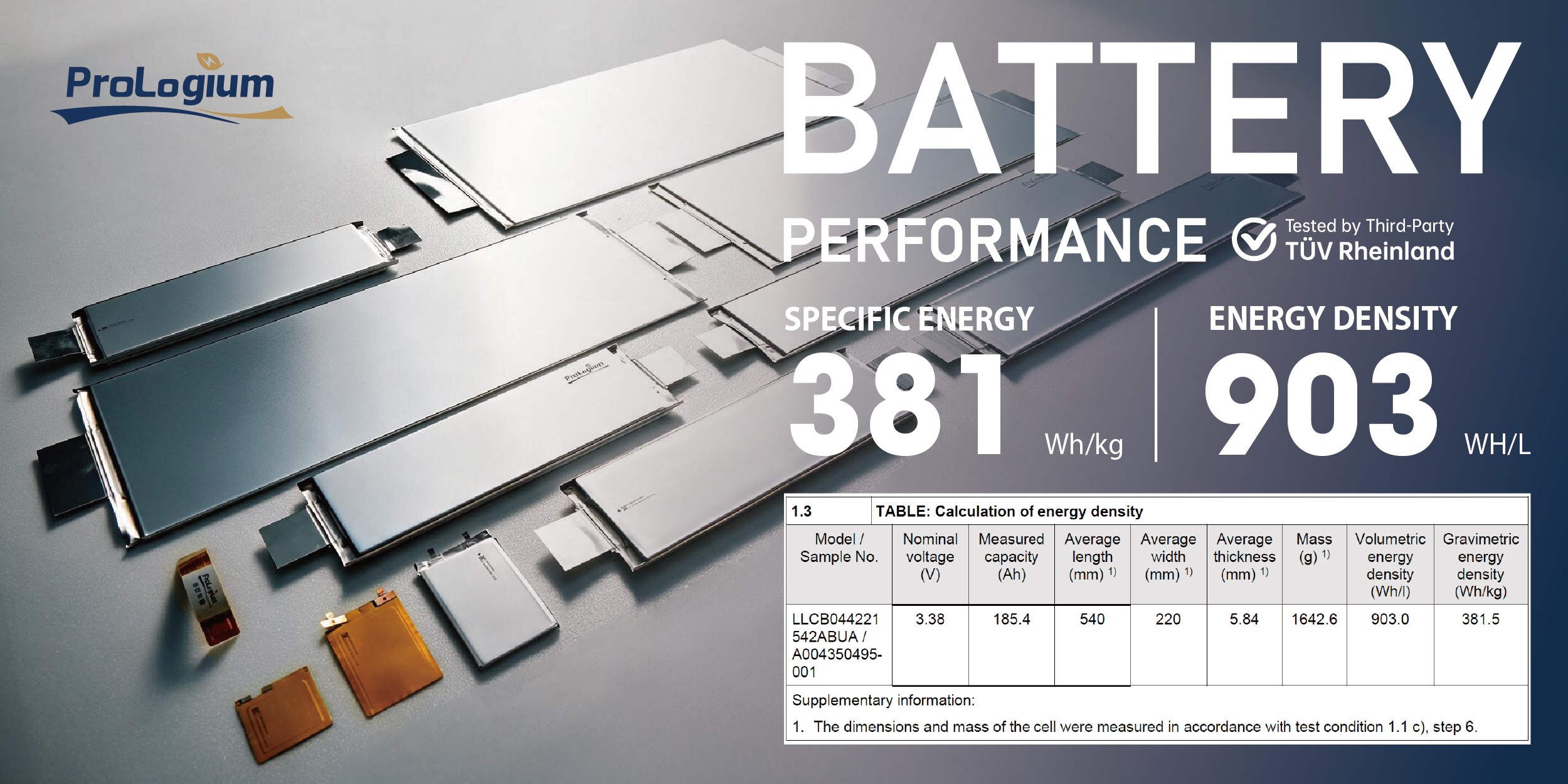
ProLogium Technology(輝能科技)が台湾のギガレベル工場にて高エネルギー密度の第3.5世代リチウムセラミック電池の量産を開始しました。
業界内で多くの全固体電池開発が試作段階にとどまるなか、同社は量産化と国際規格への準拠を実現しており、EV(電気自動車)市場をはじめとする次世代電池産業において重要な節目となるニュースです。
発表された要点を以下のとおりまとめました。
要点まとめ
1. 高密度セルの量産開始と安全性の検証
- 高エネルギー密度の達成: 185.4 Ahの大型セルにおいて、重量エネルギー密度 381 Wh/kg、体積エネルギー密度 903 Wh/L を実現(TUV試験報告)。
- 全固体電池としての適合判定: UL Solutionsによる中国の国家規格「GB/T 43568-2026」に基づいた試験において、120度Cの真空下で6時間放置後の重量減少率は 0.05%未満 でした。同規格が定める全固体電池の最大許容値(0.5%)を大幅に下回っており、正式に全固体電池として分類されます。なお、同規格はIEC(国際電気標準会議)にも国際標準の参考として提出されています。
2. Logithium アーキテクチャと段階的量産モデル
- 独自技術: セラミックセパレータと独自のエッジフレーム構造を統合した Logithium アーキテクチャ が製造基盤となっています。
- 段階的な製造拡大: 2013年の枚葉式(Sheet-by-sheet)生産から始まり、2017年のロールツーロール(Roll-to-roll)方式への移行、2024年の第3世代ギガプラットフォーム稼働を経て、着実に生産精度と歩留まりを高めてきました。累計出荷数は 240万個 を超えています。
3. 自動車用途での採用とグローバル展開
- 車載標準認証と納入実績: 自動車品質規格 IATF 16949 を取得済み。米国の著名オーディオ機器メーカーや、北米販売数トップ3に入る日本の自動車メーカーへ供給され、リピート注文は 175件以上、累計納入実績は 90万個 を超えています。
- 次世代への移行可能性: 完全無機電解質を採用予定の「第4世代」へ移行する際も、独自アーキテクチャの共通性により、既存のギガレベルラインの設備改修は 約10% に抑えられます。
- 世界展開: 台湾を開発・検証拠点、フランスを大規模生産拠点とし、北米やアジア太平洋地域では現地パートナーと連携した段階的な製造・供給ネットワークを計画しています。
背景と技術的意義(関連情報)
- 全固体電池(Solid-State Battery)とは:従来の液状電解質を固体の電解質に置き換えた電池です。可燃性の有機溶媒を減らした(あるいは無くした)ことで発火リスクが劇的に低下し、エネルギー密度の向上と急速充電を両立できる「次世代電池の極めて重要な技術」として世界中で開発競争が行われています。
- エネルギー密度の比較基準:現在一般的なEV用リチウムイオン電池(液状電解質)の重量エネルギー密度は概ね 200 – 300 Wh/kg 程度です。ProLogiumが達成した 381 Wh/kg および 903 Wh/L は、同じ重量・容積でより長い航続距離を確保できることを意味します。
- 新規市場への波及:車載用EVだけでなく、ペイロード(積載量)や飛行時間の制限が厳しいドローンなどの無人機システム、さらには高い信頼性と高出力が要求されるAIデータセンターのバックアップ電源など、新分野への応用も見込まれています。
ProLogium Begins Mass Production of Gen 3.5 Solid-State Batteries Achieving 381 Wh/kg
ProLogium Technology has commenced mass production of its high-energy-density Gen 3.5 lithium ceramic batteries at its giga-level facility in Taiwan. While many solid-state battery developments in the industry remain stuck in the prototype phase, the company has achieved both mass production and compliance with international standards, marking a major milestone for the EV (electric vehicle) market and the next-generation battery industry.
Below is a summary of the key points announced:
Key Takeaways
1. Mass Production of High-Density Cells and Safety Verification
- Achievement of High Energy Density: A large 185.4 Ah cell achieved a gravimetric energy density of 381 Wh/kg and a volumetric energy density of 903 Wh/L (TUV test report).
- Classification as Solid-State Battery: In testing by UL Solutions based on China’s national standard GB/T 43568-2026, the weight loss rate after 6 hours under vacuum at 120 degrees C was less than 0.05%. This is significantly below the maximum allowable threshold of 0.5% defined by the standard, officially qualifying the cell as a solid-state battery. This standard has also been submitted to the IEC (International Electrotechnical Commission) as a reference for international standardization.
2. Logithium Architecture and Phased Mass Production Model
- Proprietary Technology: The Logithium architecture, which integrates a ceramic separator with a unique edge-frame structure, serves as the manufacturing foundation.
- Phased Expansion of Manufacturing: Starting with sheet-by-sheet production in 2013, transitioning to a roll-to-roll process in 2017, and launching the Gen 3 giga-platform in 2024, ProLogium has steadily improved manufacturing precision and yield rate. Cumulative shipments have exceeded 2.4 million cells.
3. Adoption in Automotive Applications and Global Expansion
- Automotive Standard Certification and Delivery Record: ProLogium has obtained the IATF 16949 automotive quality management certification. Its batteries are supplied to a prominent US audio equipment manufacturer and a top-three Japanese automaker by North American sales volume, with over 175 repeat orders and total deliveries exceeding 900,000 units.
- Seamless Transition to Next Generation: When transitioning to Gen 4, which is planned to feature an all-inorganic electrolyte system, the shared proprietary architecture limits required facility modifications on existing giga-level lines to approximately 10%.
- Global Expansion: ProLogium plans a global manufacturing and supply network, using Taiwan as its development and verification base, France as its hub for large-scale production, and localized partnerships in North America and the Asia-Pacific region.
Background and Technical Significance (Context)
- What is a Solid-State Battery?: A battery that replaces traditional liquid electrolytes with solid electrolytes. By reducing or eliminating flammable organic solvents, fire risks are dramatically lowered. It represents a critical next-generation battery technology that enables both higher energy density and fast charging, driving intense global development competition.
- Energy Density Comparison: Typical lithium-ion batteries with liquid electrolytes currently used in EVs have a gravimetric energy density of around 200 – 300 Wh/kg. The 381 Wh/kg and 903 Wh/L achieved by ProLogium mean that vehicles can secure longer driving ranges with the same weight and volume.
- Impact on New Markets: Beyond EV applications, adoption is expected in new sectors, including unmanned aerial systems (such as drones) that face strict payload and flight-time limitations, as well as backup power supplies for AI data centers requiring high reliability and output.
コメント