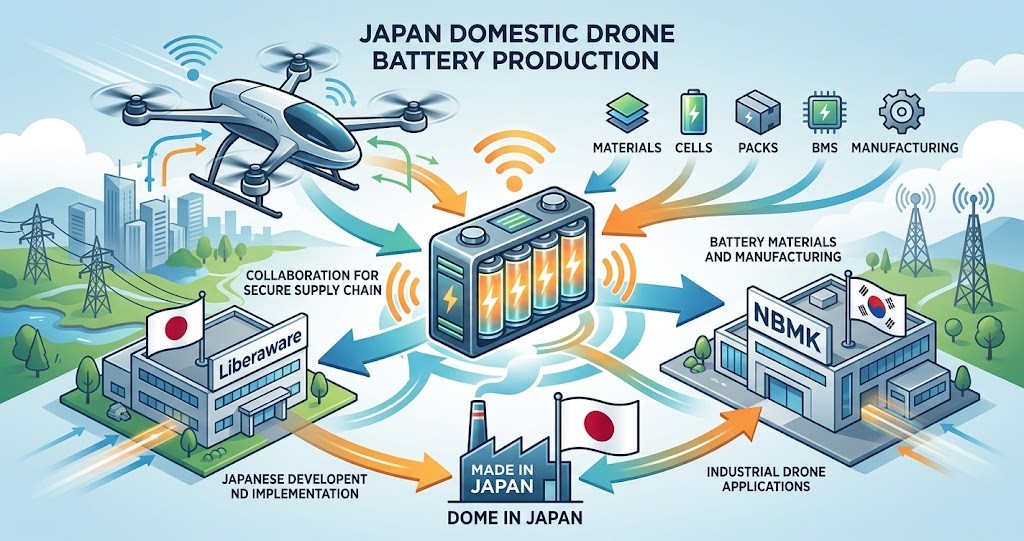
ドローン(無人航空機 / UAV)の産業利用が急速に広がる中、機体の飛行性能や安全性を左右するバッテリーの安定調達および国産化は、経済安全保障や防災・点検インフラの観点から非常に重要なテーマとなっています。以下は、Liberawareによるドローン用バッテリーの国内生産検討に関する最新動向と、その技術的・市場的背景をまとめたレポートです。
1. 発表の概要
産業用ドローン開発を手掛けるLiberaware(千葉市中央区)は、ドローン用バッテリーの日本国内における生産・供給体制の構築と共同事業化に向け、NEO Battery Materials Korea(NBMK)と意向書(LOI)を締結しました。Liberawareの子会社であるHINOTATEもこの連携に参画し、国内での生産体制や供給方法についての検討を進めます。
本連携では、LiberawareおよびHINOTATEが蓄積してきたUAVの開発・社会実装に関する知見と、NBMKが有するバッテリー材料、電極、セル、パック、バッテリーマネジメントシステム(BMS)の開発・生産技術を組み合わせます。これにより、ドローンの最重要構成部品の一つであるバッテリーの国内サプライチェーン構築を目指します。
2. 検討項目および推進体制
今後の事業化に向けて、以下の項目について協議・検討が行われる予定です。
- 生産・供給体制の協議: 国内における生産施設、設備、立地、生産能力のほか、材料・部品、BMS、ケースなどの調達ルートを検証します。
- 製造および品質管理: セルの組み立て、パック生産、検査、品質管理の手順確立に加え、技術支援、トレーニング、各種認証の取得を目指します。
- 供給先と拠点活用: Liberawareおよび国内外のUAVメーカーへの供給体制に加え、主要材料・部品の国内生産の可能性を模索します。また、NBMKの韓国・金堤(キムジェ)生産拠点の活用も含め、市場需要や支援策を踏まえた事業性を評価します。
※なお、現時点では投資額、生産量、購入量、技術ライセンス、事業開始時期などは確定しておらず、今後の事業性評価および協議を経て別途契約により定められる計画です。
3. 関連情報および背景解説
ドローンにおけるバッテリー(LiB/BMS)の重要性と技術的背景
- 高い出力密度と重量制限: ドローン用バッテリーには、限られた重量の中で長い飛行時間を確保するための高エネルギー密度と、離陸や強風時に必要な高出力を両立させることが求められます。
- BMS(バッテリーマネジメントシステム)の役割: 飛行中のセルバランシング、電圧・温度監視、残量予測を行うBMSは、墜落リスクを未然に防ぐ重要な安全装置です。高度なBMSとセル設計の一体化が機体の信頼性を大きく高めます。
- 機体とバッテリーの一体最適化: Liberawareが得意とする狭小空間点検用超小型ドローンなどでは、機体構造とバッテリー形状・重量配分の高次元な一体設計が不可欠です。
国内サプライチェーン構築(国産化)の市場的意義
- 経済安全保障と調達リスクの軽減: 現在、産業用ドローン向けバッテリーやセルの多くは海外依存度が高く、地政学リスクや物流遅延による供給途絶リスクが存在します。国内生産体制を整えることで、重要インフラ点検や防災用途における安定供給が可能となります。
- セキュリティ対応: 政府調達や重要インフラ分野で使用されるドローンにおいては、サプライチェーンの透明性とセキュリティ担保が厳しく求められる傾向にあります。国内での組み立て・検査・品質管理体制の確立は、こうした需要に対応する上でも強力な差別化要素となります。
出典:https://www.logi-today.com/995706
Will Domestic Production of Drone Batteries Become a Reality? Liberaware Signs LOI with Korea’s NBMK to Promote Supply Chain Establishment
As the industrial use of drones (Unmanned Aerial Vehicles / UAVs) expands rapidly, securing a stable procurement and domestic production of batteries—which dictate flight performance and safety—has become a critical topic from the perspectives of economic security, disaster prevention, and inspection infrastructure. Below is a report summarizing the latest developments regarding Liberaware’s consideration of domestic battery production, along with its technical and market background.
1. Overview of the Announcement
Liberaware (Chiba City, Chiba Prefecture), a developer of industrial drones, signed a Letter of Intent (LOI) with NEO Battery Materials Korea (NBMK) to establish a domestic battery production and supply framework in Japan and explore a joint business partnership. HINOTATE, a subsidiary of Liberaware, will also participate in this collaboration to evaluate domestic production structures and supply methodologies.
This collaboration combines Liberaware and HINOTATE’s expertise in UAV development and social implementation with NBMK’s development and production technologies for battery materials, electrodes, cells, packs, and Battery Management Systems (BMS). Through this synergy, the companies aim to build a domestic supply chain for batteries, one of the most vital components of UAVs.
2. Key Evaluation Items and Implementation Framework
The following items will be discussed and evaluated toward future commercialization:
- Discussions on Production and Supply Structures: Verifying domestic production facilities, equipment, site locations, and production capacity, as well as procurement routes for materials, components, BMS, and casings.
- Manufacturing and Quality Control: Establishing procedures for cell assembly, pack production, testing, and quality management, while aiming for technical support, training, and acquisition of necessary certifications.
- Supply Destinations and Production Base Utilization: Exploring supply channels for Liberaware as well as domestic and international UAV manufacturers, alongside the possibility of domestic production and supply of key materials and components. Additionally, assessing business feasibility in light of market demand and government support measures, including the utilization of NBMK’s production facility in Gimje, South Korea.
Note: At present, investment amounts, production volumes, purchase volumes, technology licensing, and business start dates have not been finalized and will be determined through separate agreements following further feasibility assessments and discussions.
3. Related Information and Technical/Market Background
Technical Background and Importance of Batteries (LiB/BMS) in Drones
- High Output Density and Weight Constraints: Drone batteries must achieve a balance between high energy density—to ensure long flight times within strict weight limits—and the high power output required during takeoff or strong winds.
- Role of the BMS (Battery Management System): The BMS plays a critical role as a safety device that prevents crash risks by performing cell balancing, voltage and temperature monitoring, and remaining capacity prediction during flight. Integrating advanced BMS with cell design significantly enhances overall aircraft reliability.
- Integrated Optimization of Aircraft and Battery: In ultra-small drones specialized for narrow-space inspection—an area of expertise for Liberaware—a high-level integrated design combining the aircraft structure, battery shape, and weight distribution is essential.
Market Significance of Establishing a Domestic Supply Chain (Domestic Production)
- Economic Security and Mitigation of Procurement Risks: Currently, many batteries and cells for industrial drones rely heavily on overseas suppliers, presenting risks of supply disruption due to geopolitical factors or logistics delays. Establishing a domestic production system ensures a stable supply for critical infrastructure inspections and disaster prevention applications.
- Security Compliance: Drones used in government procurement and critical infrastructure sectors face strict requirements regarding supply chain transparency and security assurance. Establishing domestic assembly, testing, and quality control systems serves as a powerful competitive differentiator to satisfy these demands.

コメント