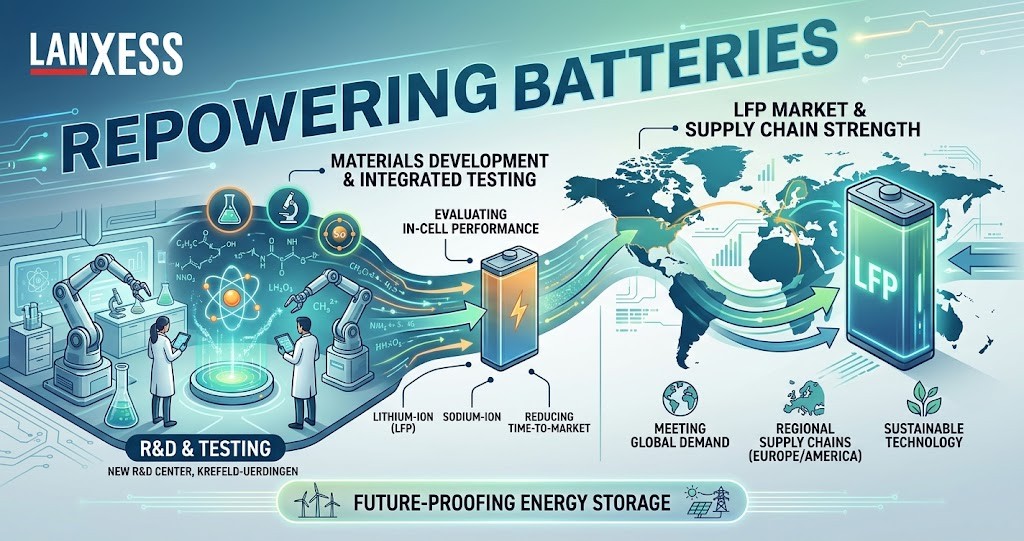
特殊化学品大手であるドイツのランクセス(LANXESS)は、急速に需要が拡大するリチウムイオン電池(特にLFP)および次世代電池分野における市場地位を固めるため、素材開発と検査体制の統合を強化しています。持続可能な環境対応技術や供給網(サプライチェーン)の欧米回帰といった国際的な背景を踏まえ、ランクセスの取り組みと関連市場動向を以下にまとめます。
ランクセスによる電池事業強化と市場動向の概要
1. 新研究開発拠点の開設と検査機能の拡充
- 拠点の概要: ドイツのクレーフェルト=ウエルディンゲン拠点に新たな電池研究所を開設。
- 技術的アプローチ: 酸化鉄やリン酸鉄をベースとした電池材料の試作・評価を、電池セル内で直接実施できる体制を整備。
- 対象技術の拡大: LFP(リン酸鉄リチウム)電池に加え、正極材にピロリン酸鉄ナトリウムを用いるナトリウムイオン電池など、次世代電池材料の評価・開発にも対応。
- 狙い: 材料特性が電池性能や加工性に与える影響を早期に評価・検証し、電池メーカーの要求に応じた開発期間の短縮を図る。
2. LFP電池市場の拡大と地域的変化
- グローバル需要の増大: 電気自動車(EV)向けに加え、再生可能エネルギー用の定置型蓄電池(ESS)、データセンター、重要インフラ向け需要が急速に増加。
- 市場予測: 中国ではEVの約75パーセント(4分の3)にLFP電池が採用済み。欧州においても、2030年までにLFPの市場シェアが現在の10パーセントから50パーセントに拡大すると予測されている(ローランド・ベルガー試算)。
- サプライチェーンの再編: アジア(特に中国)依存からの脱却を目指し、欧州および北米で独自のバリューチェーン構築が進行中。
3. 環境負荷を低減した材料開発と実績
- バッテリーグレード酸化鉄: 100年以上にわたる製造知見を活かし、LFP正極材向けの特殊酸化鉄を開発・市場投入。2024年ICISイノベーションアワードを受賞。
- 環境配慮型リン酸鉄前駆体: 鉄とリン酸を直接用いる独自の製造プロセスを開発。従来の大量の塩水廃水を伴う手法と比較して、環境負荷を低減。
4. 電池バリューチェーン全体を網羅するポートフォリオ
- 電解質および精製技術: 電解質塩用化学品や、リチウム・ニッケル・コバルトの抽出・精製に使用されるイオン交換樹脂(製品名: Lewatit)を供給。
- 熱管理・安全ソリューション: 高電圧用途向けの合成冷却剤、電解質・樹脂向け難燃剤、高電圧部品用オレンジ着色剤を提供。
- リサイクル(使用済み電池処理): 使用済み電池から金属を回収するブラックマス処理、金属回収、廃水処理用の化学薬品や樹脂を開発し、サーキュラーエコノミーに対応。
5. 【関連情報】欧米化学メーカーの電池資材戦略と背景
- レアメタルフリーへの移行潮流: コバルトやニッケルを使用しないLFP電池やナトリウムイオン電池は、コスト面・安全性・資源リスクの観点から欧米自動車メーカーの間で急速に採用が進んでいる。
- 欧州電池規制(EU Battery Regulation)の影: EUではリサイクル材の使用割合義務化や炭素足跡(カーボンフットプリント)の開示が求められており、ランクセスが推進する「廃水削減プロセス」や「金属回収技術」は、厳格化する欧州規制への合致を助ける要素となっている。
出典:https://batteryindustry.net/lanxess-strengthens-battery-expertise/
LANXESS Establishes New R&D Center: Strengthening Expansion of LFP and Next-Generation Battery Materials
German specialty chemicals giant LANXESS is strengthening the integration of its material development and testing operations to solidify its market position in the rapidly expanding lithium-ion battery (particularly LFP) and next-generation battery sectors. Against the international backdrop of sustainable green technologies and the reshoring of supply chains to Europe and North America, LANXESS’s initiatives and related market trends are summarized below.
Overview of LANXESS’s Battery Business Expansion and Market Trends
1. Opening of New R&D Center and Expansion of Testing Capabilities
- Facility Overview: LANXESS opened a new battery laboratory at its Krefeld-Uerdingen site in Germany.
- Technical Approach: Established a system capable of directly prototyping and evaluating iron oxide and iron phosphate-based battery materials within battery cells.
- Broader Technology Scope: In addition to LFP (lithium iron phosphate) batteries, the lab supports the evaluation and development of next-generation battery materials, such as sodium-ion batteries utilizing sodium iron pyrophosphate as a cathode material.
- Objective: Rapidly assess and verify how material properties impact battery performance and processability, shortening development cycles to meet battery manufacturers’ requirements.
2. Expansion and Regional Shifts in the LFP Battery Market
- Growing Global Demand: Demand is rising sharply not only for electric vehicles (EVs) but also for stationary energy storage systems (ESS) used in renewable energy, data centers, and critical infrastructure.
- Market Forecast: LFP batteries are already used in approximately 75 percent (three-quarters) of EVs in China. In Europe, Roland Berger forecasts that LFP’s market share will expand from its current 10 percent to 50 percent by 2030.
- Supply Chain Restructuring: To reduce reliance on Asia (particularly China), independent value chains are actively being established in Europe and North America.
3. Low-Impact Material Development and Achievements
- Battery-Grade Iron Oxide: Leveraging over 100 years of manufacturing expertise, LANXESS developed and commercialized specialized iron oxide grades for LFP cathodes, winning the 2024 ICIS Innovation Award.
- Eco-Friendly Iron Phosphate Precursors: Developed a proprietary production process utilizing iron and phosphoric acid directly. Compared to conventional methods that generate large volumes of saline wastewater, this approach significantly reduces environmental impact.
4. Comprehensive Portfolio Across the Battery Value Chain
- Electrolytes and Purification Technologies: Supplies chemicals for electrolyte salts and ion exchange resins (brand name: Lewatit) used to extract and refine lithium, nickel, and cobalt.
- Thermal Management and Safety Solutions: Offers synthetic coolants for high-voltage applications, flame retardants for electrolytes and plastics, and orange colorants for high-voltage components.
- Recycling (End-of-Life Battery Processing): Supports the circular economy by developing process chemicals and resins for black mass processing, metal recovery, and wastewater treatment during battery recycling.
5. Related Context: Battery Material Strategies of Western Chemical Manufacturers
- Shift Toward Rare-Metal-Free Chemistries: LFP and sodium-ion batteries, which avoid cobalt and nickel, are being rapidly adopted by Western automakers due to lower costs, enhanced safety, and reduced supply risks.
- Impact of the EU Battery Regulation: With mandatory recycled content targets and carbon footprint disclosure requirements in the EU, LANXESS’s low-wastewater processes and metal recovery technologies directly align with increasingly stringent European regulations.

コメント