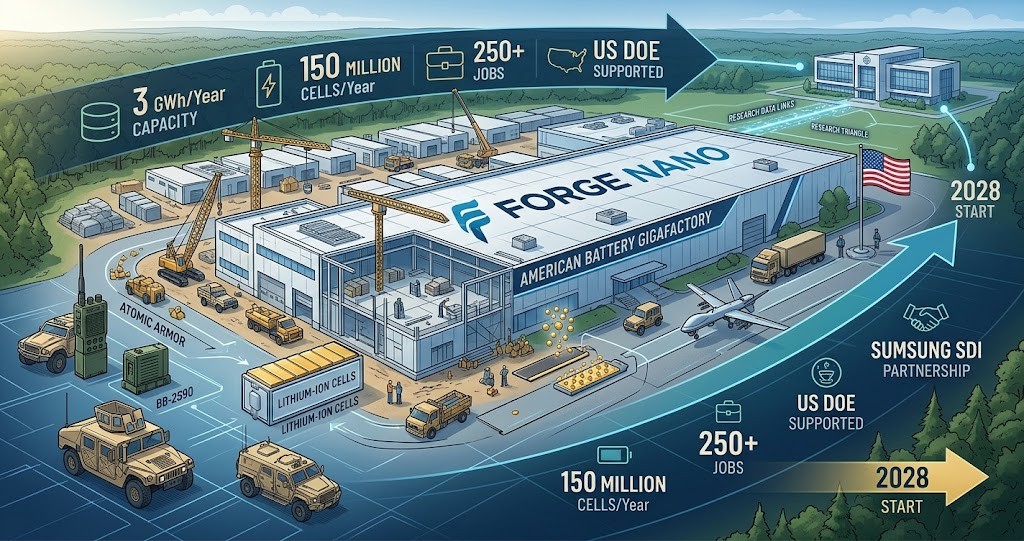
米国で安全なバッテリーサプライチェーンの構築が進む中、先端材料メーカーのForge Nano社が大規模な国内製造拠点の着工を発表しました。2026年8月19日、同社はノースカロライナ州モリスビルにて、エネルギー省の支援を受けたリチウムイオン電池工場「アメリカのバッテリー・ギガファクトリー」の起工式を開催しました。
以下に本ニュースの要点と、背景となる関連情報をまとめてお届けします。
プロジェクトの要点
- 施設概要: 既存施設を約31万5000平方フィートに拡張し、フル稼働時には年間最大3ギガワット時(GWh)の製造能力を確立。年間約1億5000万個のバッテリーセルを生産可能。
- 雇用・投資: 250人以上の雇用を創出。米国エネルギー省から最大1億ドルの非希薄化資金を受け、サムスンSDIからも2000万ドルの戦略的投資を獲得。
- 戦略的パートナーシップ: サムスンSDIとの提携により、製造ノウハウの導入やセルの受託製造、正規販売を実施。Forge Nano独自の表面処理技術「Atomic Armor」のサムスン製品への適用も推進。
- スケジュール: 2028年の稼働開始を予定。これは2028年に発効する国防権限法(NDAA)のバッテリー調達制限(外国依存の脱却)のタイミングに一致。
関連情報・背景解説
1. 原子層堆積(ALD)技術「Atomic Armor」の重要性 Forge Nano社が強みを持つALD(Atomic Layer Deposition)は、材料の表面に原子レベルの極薄被膜を形成する技術です。電池の電極にこの被膜を施すことで、劣化を防ぎ、熱安定性や寿命を大幅に向上させることができます。AI向け半導体製造で培われた超高精度なナノコーティング技術をバッテリーに応用できる点が同社の強みです。
2. 防衛・国家安全保障における「電池の脱中国依存」 軍用ドローン、暗視装置、通信機器(BB-2590無線機など)、軍用車両に至るまで、現代の防衛装備品はバッテリーへの依存度が極めて高くなっています。これまで米国のバッテリーサプライチェーンは外国(特に中国)に大きく依存しており、地政学的リスクやサプライチェーン断絶の脆さが問題視されていました。本施設は国防用途に耐えうる安全な国内供給網を確立する役割を担います。
3. ノースカロライナ州「リサーチ・トライアングル」の存在 建設地であるモリスビルは、ノースカロライナ州の主要大学や研究機関が集積する「リサーチ・トライアングル」地域に位置します。高度なエンジニアや製造人材の確保が容易であり、物流の利便性も高いため、全米でも有数の先端製造業ハブとして急速に発展しています。
本ギガファクトリーの建設は、単なるクリーンエネルギーへの移行にとどまらず、防衛・航空宇宙・産業分野における米国の技術的優位性とサプライチェーンの自給率を高める重要な取り組みと言えます。
Applying Cutting-Edge Atomic Layer Deposition Technology: Forge Nano Breaks Ground on Mass Production Facility for AI Chips and Defense Batteries
As efforts to build a secure battery supply chain in the U.S. accelerate, advanced materials company Forge Nano has announced the groundbreaking of a large-scale domestic manufacturing facility. On August 19, 2026, the company held a ceremony in Morrisville, North Carolina, to mark the start of construction on “America’s Battery Gigafactory,” a lithium-ion battery plant supported by the U.S. Department of Energy.
Below is a summary of the key points of this news, along with relevant background information.
Key Project Highlights
- Facility Overview: Expands the existing site to approximately 315,000 square feet, establishing a manufacturing capacity of up to 3 gigawatt-hours (GWh) per year at full operation—capable of producing around 150 million battery cells annually.
- Jobs and Investment: Will create over 250 jobs. Funded with up to $100 million in non-dilutive funding from the U.S. Department of Energy, alongside a $20 million strategic investment from Samsung SDI.
- Strategic Partnership: Collaboration with Samsung SDI will bring manufacturing expertise, contract manufacturing of cells, and authorized distribution. The partnership also promotes integrating Forge Nano’s proprietary surface treatment technology, “Atomic Armor,” into Samsung products.
- Timeline: Operations are scheduled to begin in 2028, aligning with battery procurement restrictions under the National Defense Authorization Act (NDAA) taking effect that year to phase out reliance on foreign supply chains.
Background and Related Information
1. Significance of Atomic Layer Deposition (ALD) Technology “Atomic Armor” Atomic Layer Deposition (ALD), in which Forge Nano specializes, is a process that applies ultra-thin atomic-scale coatings to material surfaces. Applying this coating to battery electrodes prevents degradation while significantly improving thermal stability and lifespan. The company’s core strength lies in leveraging ultra-high-precision nano-coating techniques—originally developed for AI semiconductor manufacturing—and adapting them to battery applications.
2. Reducing China Reliance for Defense and National Security Modern defense equipment—ranging from military drones and night-vision devices to communication systems (such as BB-2590 batteries) and military vehicles—relies heavily on batteries. Historically, the U.S. battery supply chain has depended significantly on foreign sources (particularly China), posing geopolitical risks and vulnerabilities to supply chain disruptions. This new facility will serve to establish a secure domestic supply network suitable for national defense needs.
3. Strategic Location in North Carolina’s “Research Triangle” Morrisville is situated within North Carolina’s “Research Triangle,” a major hub for leading universities and research institutions. The area offers easy access to highly skilled engineering and manufacturing talent, along with strong logistical advantages, accelerating its growth as one of the premier advanced manufacturing hubs in the United States.
The construction of this gigafactory goes beyond a simple transition to clean energy; it represents a key step toward strengthening U.S. technological leadership and supply chain self-reliance across the defense, aerospace, and industrial sectors.


コメント