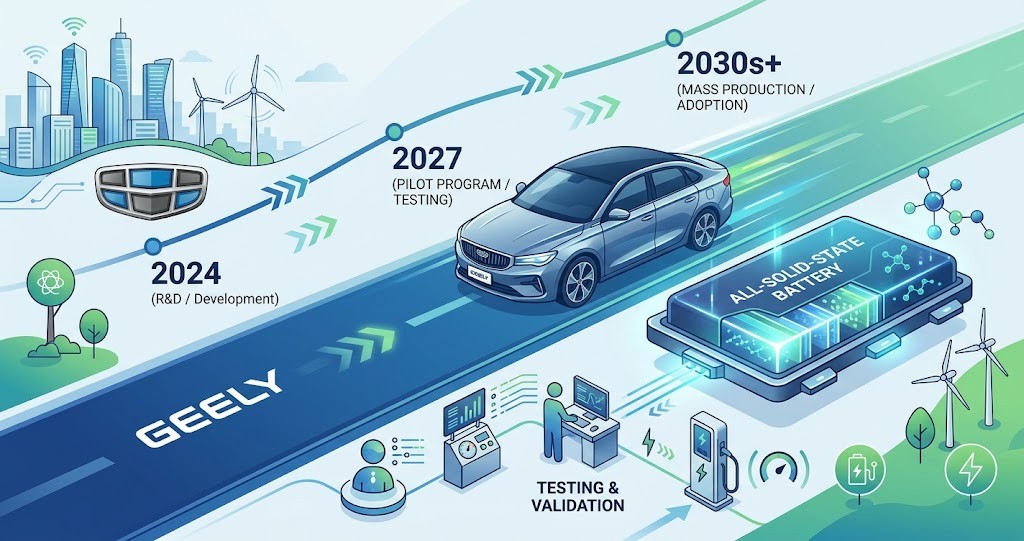
中国の自動車大手である吉利汽車(Geely)が、次世代電池として期待される全固体電池の実用化に向けた具体的なロードマップを公表しました。2026年8月20日の報道によると、同社は2027年からグループ内の車両を用いた全固体電池のパイロットプログラム(試験運用)を開始する計画です。
以下に本ニュースの要点と、背景となる関連情報をまとめてお届けします。
吉利汽車の発表要点
- スケジュール: 2027年から傘下ブランドの車両に自社開発の全固体電池を搭載し、試験運用を開始。すでに2026年から実地試験を実施中。
- 対象ブランド: Geely(吉利)、Zeekr、Lynk & Co、Volvo、Polestar、Lotus、Smartなどグループ内のブランドが対象(初期導入モデルや台数は未公表)。
- 性能目標: 最先進モデルでパックレベル最大500 Wh/kgのエネルギー密度を目指す。1回の充電で1000 kmを超える航続距離を実現し、ディーゼル車と同等水準を目指す。
- 材料開発での連携: 米国の化学大手Dow(ダウ)と提携。マイナス40度からプラス120度までの広範な温度域で安定性を維持する固体電池用接着剤を開発中。
関連情報・背景解説
1. エネルギー密度「500 Wh/kg」が持つインパクト 吉利が掲げるパックレベルでの500 Wh/kgという数値は、現在普及しているリチウムイオン電池(パックレベルで100〜150 Wh/kg程度)の3倍以上に相当する極めて野心的な目標です。同じ重量・スペースで航続距離を大幅に伸ばせるため、EVの最大の課題である「航続距離の不安(レンジ・アンザエティ)」を根本から解決する可能性があります。
2. 2027年における「中国EV・電池大手」の動向 中国の自動車・電池産業にとって、2027年は全固体電池の実証フェーズにおける重要な節目となりつつあります。
- BYD: 2027年からデモ車両への搭載と小規模生産(二重固体電解質システム)を計画。本格的な商業化は2020年代末を見込む。
- CATL: 2027年までの試作生産を目指すが、製造上の難易度の高さから大量生産への展開時期については慎重な姿勢を維持。
3. 「試作・試験運用」から「量産(商業化)」への高いハードル 全固体電池は製造コストの高さや、充放電を繰り返すことによる膨張・劣化、固体電解質と電極の接触維持など技術的・製造上の課題が多岐にわたります。各社とも2027年前後に走行テストや限定的な導入(パイロット運用)を進めるものの、一般消費者向けの大規模な量産・市場投入は2020年代末から2030年頃になると予想されています。
吉利汽車の取り組みは、自社開発の電池技術と米化学企業との共同開発を融合させ、グループ全体のマルチブランドを展開力を活かして次世代EV市場での主導権を狙う戦略的な一手と言えます。
出典:https://batteryindustry.net/geely-plans-solid-state-battery-trials-starting-in-2027/
Tripling Energy Density: Geely Reveals Impressive Specs for Next-Gen All-Solid-State Batteries
Major Chinese automaker Geely Auto has announced a concrete roadmap for the commercialization of next-generation all-solid-state batteries. According to reports on August 20, 2026, the company plans to launch a pilot program in 2027 using vehicles across its portfolio.
Below is a summary of the key points of this news, along with relevant background information.
Key Highlights of Geely’s Announcement
- Schedule: Pilot testing of in-house developed all-solid-state batteries will begin in 2027 across group brand vehicles. Real-world road testing is already underway in 2026. Car News China他 1 件
- Target Brands: Applies to brands under the group umbrella, including Geely, Zeekr, Lynk & Co, Volvo, Polestar, Lotus, and Smart (initial deployment models and volume remain unannounced). Autoblog
- Performance Targets: The flagship variant aims for an energy density of up to 500 Wh/kg at the pack level. It targets a driving range exceeding 1000 km on a single charge, reaching parity with diesel vehicles. CarNewsChina.com他 1 件
- Material Development Partnership: Partnered with U.S. chemical giant Dow. They are co-developing adhesives for solid-state batteries that remain stable across an extreme temperature range from minus 40 to plus 120 degrees Celsius.
Background and Context
1. The Impact of a 500 Wh/kg Energy Density Geely’s target of 500 Wh/kg at the pack level represents an ambitious goal, more than triple the density of current mass-market lithium-ion batteries (roughly 100 to 150 Wh/kg at the pack level). Significantly increasing range within the same weight and footprint addresses “range anxiety”—one of the primary consumer hurdles for EVs.
Car News China
2. Trends Among Chinese EV and Battery Giants for 2027 The year 2027 is shaping up to be a critical milestone for the validation phase of all-solid-state batteries across China’s automotive and energy sectors.
- BYD: Plans to deploy dual-solid electrolyte batteries in demo vehicles and start small-scale production in 2027, with full commercialization expected toward the end of the decade. CarNewsChina.com
- CATL: Aims for prototype pilot production by 2027, though maintaining a cautious stance on mass-market rollout due to manufacturing complexities. EVINDIA
3. High Hurdles from Pilot Testing to Commercial Mass Production All-solid-state batteries face steep technical and manufacturing challenges, including high production costs, physical expansion and degradation during charge cycles, and maintaining contact between solid electrolytes and electrodes. While multiple players are targeting 2027 for road tests and limited pilot deployments, full-scale mass production for the general consumer market is projected for the late 2020s to around 2030.
Electrek
Geely’s strategy leverages in-house battery research alongside joint material development with a foreign chemical leader, positioning the company to capitalize on its multi-brand ecosystem and claim leadership in the next-generation EV market.
コメント